

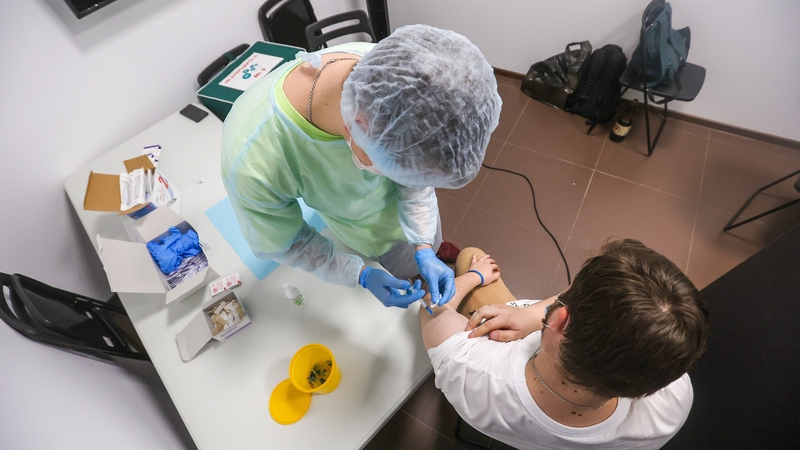
Covid-19 infections are rising again in Europe after falling for two and a half months, mainly because of the Delta variant in the UK and Russia, according to a tally by AFP today.
The two countries have experienced not only the most new cases in Europe, but also the most rapid spread among those that have recorded more than 1,000 cases per day.
Russia has recorded 20,400 daily cases for the last seven days, or a 25% increase in a week, while the UK has registered 16,400 daily infections, up 70%, according to the tally based on official sources.
Russian and UK officials blame the Delta strain, first identified in India, for the vast majority of new cases.
Driven by the situation in both countries, infections in Europe are rising again, now at the rate of 56,800 new cases per day - 21% more than a week ago.
Between 12-18 June, this measure had hit its lowest point across the continent since mid-September, when there were around 46,000 daily cases.
On the other hand, the virus continues its retreat in several other countries among the worst hit since the pandemic reached Europe in January 2020.
Some 1,820 new daily cases have been recorded in France in the last seven days, or 23% fewer than the preceding week, 714 in Italy (35% fewer) and 650 in Germany (31%).
The number of people dying is starting to rise again across Europe, although more slowly, with nearly 1,100 deaths recorded daily, around 8% higher over the previous week.
But these numbers are still well below those reached at the height of the pandemic when more than 5,700 were dying daily in January.
Russia accounts for more than half of the new deaths recorded in Europe, with nearly 600 deaths daily on average for the last seven days - or 33% higher than the previous week.

In the UK, there has been a near-doubling of new deaths in two weeks, from around ten daily to 17 last week.
But the number is still far below levels during the peak in January when nearly 1,250 people died every day.
India's richest state gears up to protect children from looming third wave of Covid-19
India's western state of Maharashtra is training thousands of health workers in how to care for children afflicted with Covid-19 as a first line of defence against surges involving new variants, health officials and experts said.
The state, home to the financial capital of Mumbai, was the worst hit by a devastating second wave of infections in April and May that killed hundreds of thousands, and is still reporting a quarter of all new cases nationwide.
It has re-imposed curbs to rein in the fast-spreading Delta variant that has touched off new outbreaks globally, even as daily national tallies stand at their lowest in nearly two months, allowing some states to re-open businesses.
"We are training thousands of health workers, who are usually the first point of contact for families, on how to deal with Covid care in children," Suhas Prabhu, head of the state's paediatric task force, told Reuters.
While there is no data showing children are more vulnerable, a government survey in Mumbai from April to mid-June showed the presence of virus antibodies in at least half of those younger than 18.
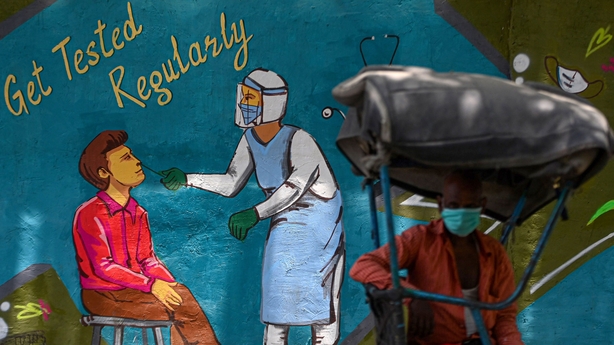
"The experts are indicating that a sizeable number of children are likely to be infected in the third wave," said government adviser Dr Subhash Salunke.
Paediatric critical care remained a 'weak link' in the health system, the former World Health Organization official said.
India has yet to approve any vaccines for children.
Maharashtra, with a population of more than 114 million, is one of the country's most populous states, and has reported 50 cases of the new Delta Plus variant that India has designated as being of concern.
From 400,000 cases a day in May, daily new infections now stand at 37,566, health ministry data showed.
India's case tally stands at 30.31 million, with a death toll of 397,637.
Meanwhile, the country today authorised the emergency use of Moderna's Covid-19 vaccine as it seeks to ramp up its vaccination drive.
Moderna's shot is the fourth to be approved by New Delhi after Oxford-AstraZeneca's Covishield and Covaxin, which was developed by Indian firm Bharat Biotech, and Russia's Sputnik V.
Rwanda closes schools following Covid surge
Rwanda hardened coronavirus-related restrictions today, including closing schools, to combat a rise in coronavirus cases.
The East African country has been broadly successful in containing the pandemic but has been battling flare-ups in recent weeks following the emergence of new variants.
Schools will be closed in the capital Kigali and eight other virus hotspots for two weeks starting on 1 July.
Restaurants will be limited to takeaway service while both private and public offices will be closed to everyone except for essential workers.
Social gatherings including those held in homes and family visits have been prohibited.
A night-time curfew has been lengthened by an hour.
However, international travel and tourism will continue.
"Citizens are reminded of the critical importance of complying with the health measures. Penalties will be applied for non-compliance," Prime Minister Edouard Ngirente said in a statement, adding that the fresh measures will be reviewed after a fortnight.
The country of 13 million people has so far avoided the worst of the pandemic after it imposed one of Africa's first lockdowns and implemented a rigorous regime of testing and contact tracing.
