

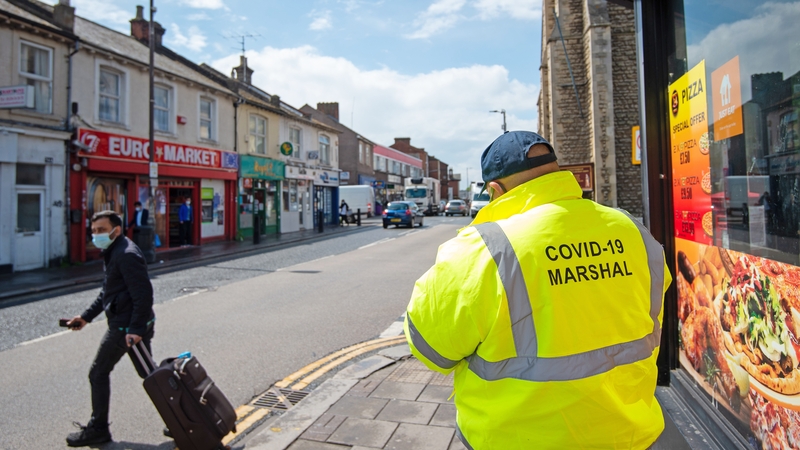
The spread of the coronavirus variant first detected in India could lead to the return of local lockdowns in England, MPs have acknowledged.
The rise in cases of the highly transmissible variant of concern risks the next stage of England's road map out of lockdown, currently pencilled in for 21 June, being delayed.
But if outbreaks are limited, MPs could opt instead to push ahead with the reopening while keeping some areas under restrictions in an echo of the controversial tiers system.
Cabinet minister George Eustice still wants the 21 June measures, which would see most remaining restrictions scrapped, to go ahead but said: "We can never rule out that there may have to be a delay."
Asked whether it was possible for parts of the country to enjoy new freedoms next month while others are kept under restrictions, Mr Eustice said: "That would be an option and we cannot rule anything out, obviously, at this stage."
He said the "preferred outcome" would be to drive up vaccination rates in areas where there have been outbreaks.
Bolton, Blackburn with Darwen and Bedford are the areas ministers are most concerned about.
Bedford's director of public health said she was "really worried" about the spread of the variant in the area.
Vicky Head said there had been 80 confirmed cases of the variant in Bedford and one of the striking things about the variant is just how transmissible it is.
"If someone goes to school and tests positive, we are then seeing their whole family test positive," she said.
"I am really worried about it.
"Everyone needs to understand just how transmissible this variant is."
Professor Gabriel Scally, a member of the Independent Sage group of scientists and a leading public health expert, said "we should be throwing the kitchen sink at this" in places like Bolton and Blackburn to reduce infection.
Speaking on Sky News, he said vaccinating younger age groups, thorough contact tracing and support for people to self-isolate was needed.
"We also need to stop the importation of it and that means better border controls, a proper quarantine system," he said.
"We've been let down badly by the large number of cases that the UK has imported of this dangerous variant that was first identified in India."
Despite concerns the Indian variant is even more transmissible than the dominant Kent strain, the latest easing of lockdown restrictions went ahead as planned yesterday across most of England, Scotland and Wales.
It meant pubs and restaurants were able to welcome customers inside while people were able to socialise indoors and to hug family and friends outside their own households.
In Northern Ireland a decision is due this week on whether the next stage of easing can go ahead as planned on Monday.
Experts warn Australia is becoming a 'hermit nation'
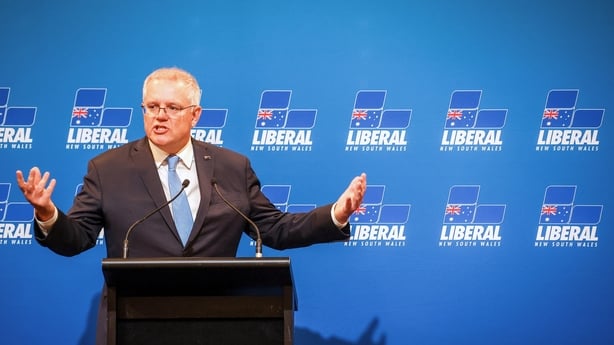
Australian Prime Minister Scott Morrison has defended his "Fortress Australia" Covid-19 restrictions as experts warned that plans to keep the borders closed for another year will create a "hermit nation".
"Everyone is keen to get back to a time that we once knew," Mr Morrison said in the face of growing calls for international borders to reopen.
"The reality is we're living this year in a pandemic that's worse than last year."
Last March, Australia took the unprecedented step of closing its borders to foreign visitors and banning its citizens from leaving.
That prompted the first population decline since World War I, stranded tens of thousands of Australian citizens overseas and separated hundreds of thousands of residents from family members.
But the country now has almost no community transmission and life for most is relatively normal.
And the government's recent suggestion that borders could remain closed for another year has sparked fierce debate.
Australian Medical Association president Omar Khorshid warned: "Australia cannot keep its international borders closed indefinitely."
He called for improved quarantine facilities and vaccination efforts to permit borders to slowly open.
"At some point, it will not be possible to justify the maintenance of border closures given their impact on lives and livelihoods," he said.
A University of Sydney task force examining how Australia can safely reopen this week went further, warning the country "cannot continue to lock itself off from the world as a hermit nation indefinitely".
The economic impact of border closures has been blunted by massive stimulus spending, but a growing number of business leaders from hard-hit industries are also speaking out.
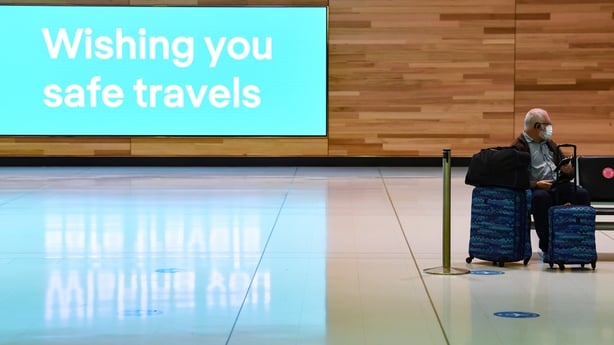
Virgin Australia CEO Jayne Hrdlicka led the charge, arguing Australia needs to accept that Covid-19 will not be eradicated and borders should gradually reopen.
"Some people may die, but it will be way smaller than with the flu," she said.
Mr Morrison called the comments "somewhat insensitive", insisting he would maintain the tight border regime as long as necessary.
"I'm not going to take risks with Australians' lives," he said.
The border closures appear to have widespread public support. A recent Newspoll survey showed 73% of Australians want travel banned until at least mid-2022.
Slowly, officials are starting to link reopening borders to vaccine targets.
So far only three million doses have been delivered in a country of 25 million people.
Singapore approves Covid-19 vaccine for 12 to 15-year-olds
Singapore has authorised the use of the Pfizer-BioNTech Covid-19 vaccine for those aged 12 to 15 years old in a bid to extend protection to more groups as the country tackles a recent increase of infections, officials said.
"The data showed that the Pfizer-BioNTech Covid-19 vaccine demonstrated high efficacy consistent with that observed in the adult population," the health ministry said in a statement,adding "its safety profile is also consistent with the known safety profile in the adult population".
The government will also extend the interval between two-dose Covid-19 vaccines to six to eight weeks, from three to four weeks currently, it said.
