


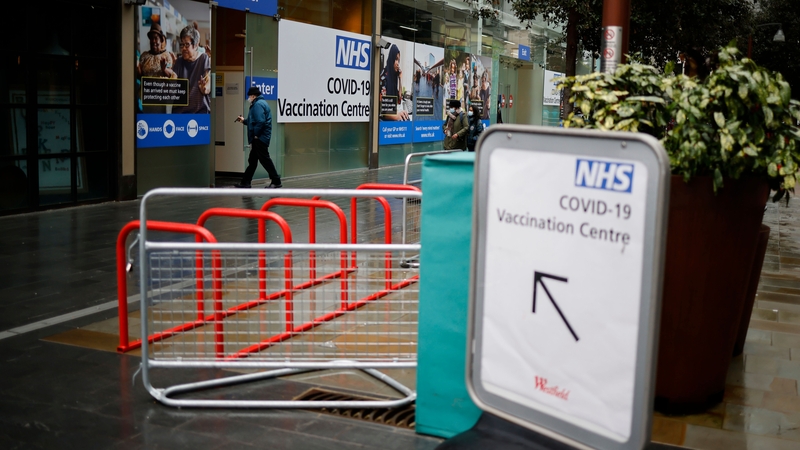
Around 1.7m more people will be added to the shielding list in England after experts identified additional adults at serious risk of Covid-19, health officials have said.
Letters will be arriving imminently telling people they should be in the shielding group.
Those newly identified as being at higher risk because of multiple factors, including underlying health conditions, will get priority access for vaccines, officials confirmed.
The list was expanded after scientists developed a new tool that assesses whether someone is at risk of severe disease or death.
The tool looks at multiple factors including age, ethnicity, body mass index (BMI), other health conditions and also postcode, which is indicative of levels of deprivation.
The predictive risk model was developed by researchers led by scientists at Oxford University.
Around 2.2m people are currently on the list in England, many of whom were identified for a single reason, such as specific cancers, people on immunosuppression drugs or those with severe respiratory conditions.
The additional 1.7m will bring the number on the list to almost 4m.
Some will have already been offered a Covid-19 jab, officials said, but those who have not will be able to get their vaccines "as quickly as possible".
Officials will be advising that shielding continues until 31 March, said Dr Jenny Harries, deputy chief medical officer for England.
She said the group, if they join the list, will receive the additional support available to those deemed to be clinically extremely vulnerable, including medicine deliveries, priority slots for supermarkets and statutory sick pay.
Dr Harries told a press briefing: "We have a new, evidence-based, data-driven, predictive risk model which allows us to identify adults with multiple risk factors that make them more vulnerable to Covid-19.
"We can now identify additional people and help protect them now and in the future.
"All of these people who are identified for the first time are those who have not had an individual clinical condition that we've previously been able to identify through the clinically extremely vulnerable group, but they are people who have multiple personal risk factors and underlying health conditions which move them into a higher risk group."
Dr Harries said the approach was "risk averse" to "protect as many people as possible".
Meanwhile, the head of the country's vaccine task force has said every adult in the UK could receive both doses of a vaccine by August or September.
Britain has vaccinated 15.6m people with a first dose and 546,165 with a second dose, the fastest roll-out per capita of any large country.
"We're probably talking August time or September time all done, maybe sooner if we need to," Clive Dix told Sky News.
New variant with potentially concerning mutations found in UK
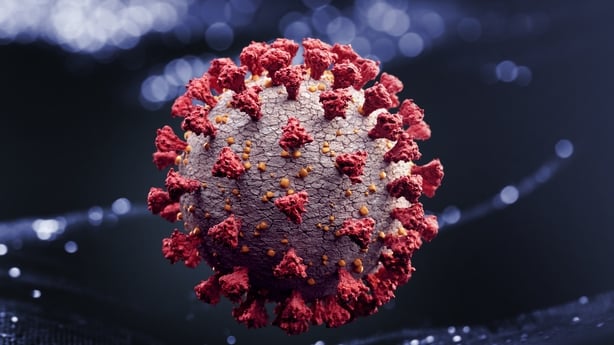
British scientists have identified 38 cases of another new variant of coronavirus, which has a key mutation that is thought to reduce the effectiveness o fvaccines.
Known as B.1.525, the variant contains a genetic change called E484K, also found in the Brazilian and South African variants.
Public Health England (PHE) has said there is no evidence that the mutations in the new variant make the virus more transmissible or cause severe disease.
Laboratory studies have shown that viruses with the E484K mutation can escape human defences, making them more efficient at evading natural and vaccine-triggered immunity.
It has also been seen in other countries, including Australia, Denmark, Nigeria and the US.
Professor Yvonne Doyle, PHE medical director, said: "PHE is monitoring data about emerging variants very closely and where necessary public health interventions are being undertaken, such as extra testing and enhanced contact tracing.
"There is currently no evidence that this set of mutations causes more severe illness or increased transmissibility."
The experts said the variant has alterations in its genetic material that make it similar to the Kent variant, which is the dominant virus in the UK.
Dr Simon Clarke, an associate professor of cellular microbiology at the University of Reading, told the Guardian newspaper that the presence of the E484K mutation was known in the South Africa variant to confer a degree of resistance to some vaccines.
He said: "We don't yet know how well this (new) variant will spread, but if it is successful it can be presumed that immunity from any vaccine or previous infection will be blunted."
Dr Clarke said the new variant should be included in efforts to boost testing to pick up variants of concern.
He said: "I think that until we know more about these variants, any variants which carry E484K should be subject to surge testing as it seems to confer resistance to immunity, however that is generated."
Scientists are already working on new vaccines to target coronavirus variants, some of which may become available during autumn.
The British government said a further 799 people had died within 28 days of testing positive for Covid-19, bringing the UK total to 118,195.
Separate figures published by the UK's statistics agencies for deaths where Covid-19 has been mentioned on the death certificate, together with additional data on deaths that have occurred in recent days, show there have now been 137,000 deaths involving Covid-19 in the UK.
The government also said that, as of 9am today, there had been a further 10,625 lab-confirmed cases of coronavirus in the UK.
It brings the total number of cases in the UK to 4,058,468.
