
Few will look back at January 2021 fondly.
Case numbers ballooned following the Christmas period and the country faced a further tightening of restrictions.
As Level 5 continues, there's no doubt the last number of weeks have been challenging for everyone.
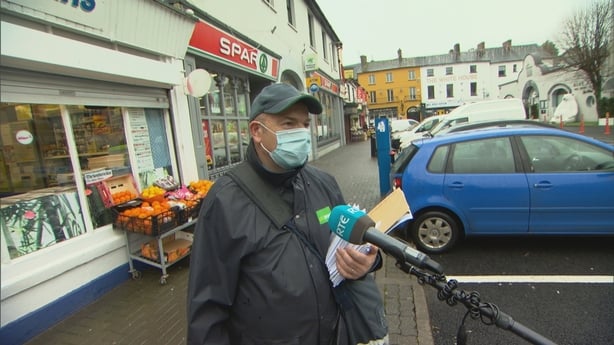
In Kinsale, postman Paul McCarthy sees the impact.
"People are really down with it now, maybe it's the weather.
"If it were later in the year, people may feel they could get out in it, but certainly the mood is down this time around".
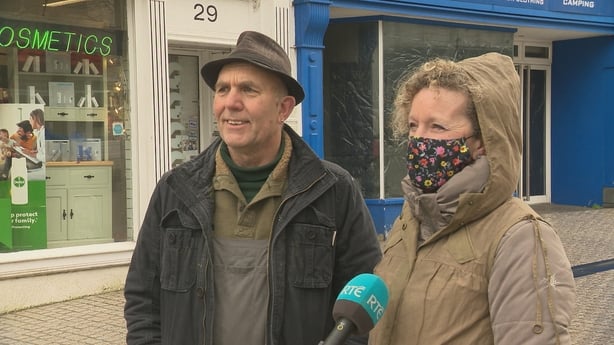
In Waterford, Peter and Christine Power, who are self-employed can only hope restrictions don't last too much longer.
"It's a sad situation for everyone", Christine said.
"As you can see there's no one in town, it's desperate. We try to walk when the weather allows, get out and see what's going on, but there's nothing going on".
People are doing what they can to cope and they are also doing their bit to help others in the process.
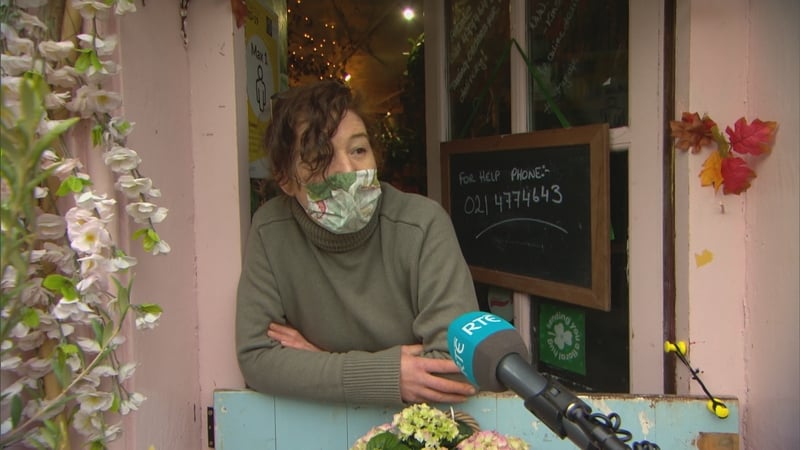
In Kinsale, Brenda Jolly, who runs the Daisy Chain flower shop, spends a lot of time speaking to older people on the phone who want to talk.
"They're trying to send flowers to their children, they're elderly people and you're on the phone for ages chatting, that's a big thing. After those phone calls you feel like you've done some good," she said.
When it comes to self-care, people have been getting out for walks or playing music.
Charlene Griffin said if she gets out and walk it does help, but she acknowledges the "strange, very strange" times in which we are living.
One in every five in the population is struggling according to latest research by the Department of Psychiatry at Trinity College Dublin, to the point where anxiety is creating difficulty coping.
Brendan Kelly, Professor of Psychology TCD and Consultant Psychiatrist at Tallaght University Hospital, said while that figure represents nearly a million people, enormous resilience is evident.
"We see amazing coping, amazing resilience and people being very strong, to an extent that certainly I would not have predicted prior to this," he said.
However, Professor Kelly expressed worry over people focusing on the current restrictions.
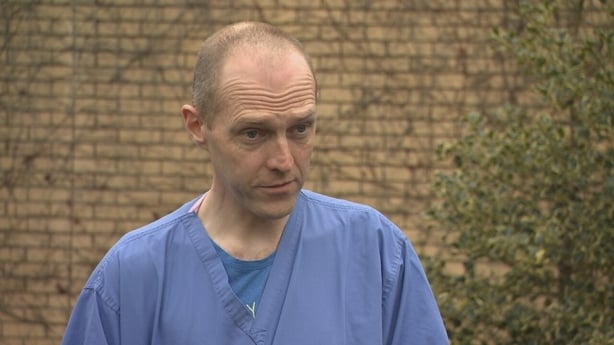
He pointed out that added to the knowledge that staying at home, wearing face coverings and keeping distant all make a difference, there's now an extra tool in the battle against Covid - the vaccine.
As a health care worker, Prof Kelly said he has been very privileged to have been vaccinated and described the psychological affect as "extraordinary".
"It really feels like hope and optimism and that's a feeling that is almost unfamiliar. That's the extra dollop of hope that we have now and it's quite significant.
"As recently as six months ago, scientists were telling us there mightn't be a vaccination available for three years or five years and now there's quite a number of vaccinations approved. That is happening and that's what makes a difference this time," he said.
GP surgeries around the country are also seeing the impact the restrictions are having on the population.
Assistant Medical Director of the Irish College of General Practitioners Dr Brian Osborne runs a practice in Knocknacarra in Galway.
He said while there is no hard data on an increase in the number of people attending for mental health reasons, anecdotally, it has gone up.
"Pre-pandemic there might have been one or two consultations a day, now it's much more. We're getting four, five or six phone calls about concerns over mental health," he said.
The vast majority of mental health conditions are managed in a GP setting where people are listened to, counselled and risk assessed.
Sometimes people require lifestyle interventions or brief interventions around avoiding excess alcohol, exercising, maintaining regular sleep routines, and staying connected and avoiding excess media regarding the pandemic.
We need your consent to load this rte-player contentWe use rte-player to manage extra content that can set cookies on your device and collect data about your activity. Please review their details and accept them to load the content.Manage Preferences
Dr Osborne also points out the benefit of talk therapy, which helps in the vast majority of cases, rather than medication.
"Sometimes people aren't aware they're anxious and they could present with different symptoms, sometimes those symptoms could be irritability, poor sleep, pains in your back, pains in your neck, chest pain or bowel problems.
"These are different ways anxiety can present and as general practitioners we're used to teasing out those issues and getting to the nub of the issue".
He said while the vast majority of people have been affected by the latest restrictions, he is most concerned for older people, young people and adolescents and people with pre-existing mental health conditions.
People with schizophrenia and bipolar disorder, who have a lack of support from family and friends, are relapsing more and the relapses appear to be worse than previous episodes.
He also said it needs to be acknowledged that while restrictions have affected all of society, people in more socially disadvantaged areas may have been more affected.
"The lack of schooling is really hitting home there, a large body of research shows that to be out of school for two weeks or more, it has a huge detrimental impact on children and it's worse in disadvantaged areas. I think it's really important that as soon as it's safe to get children back to school," he said.
For the HSE's mental health supports and services, click here