



The number of people infected with coronavirus is at the highest level recorded in England since May, according to a study.
The research, which saw more than 167,600 volunteers tested in England between 6 and 22 January, showed that Covid-19 infections remained very high throughout this time, with one in 64 people infected.
The findings from Imperial College London's React study show infections in England have flattened but are at the highest level recorded by the researchers, with the indication of a decline in the last week of the survey.
The main findings from the eighth round of the study suggest national prevalence was 1.57%, or 157 per 10,000 people infected, and it estimated the national reproduction number to be at 0.98 with a range of 0.92 to 1.04.
Regional prevalence was highest in London at 2.83%, while in the south west it was 0.87%.
Prevalence increased nationally in all adult age groups and was highest in 18 to 24-year-olds at 2.44%, while prevalence in the over-65s is 0.93%, almost one in 100.
Professor Paul Elliott, director of the programme at Imperial College, said: "The number of people infected with the virus is at the highest level that we've recorded since we began testing last May.
"We're not seeing the sharp drop in infections that happened under the first lockdown and if infections aren't brought down significantly, hospitals won't be able to cope with the number of people that need critical care.
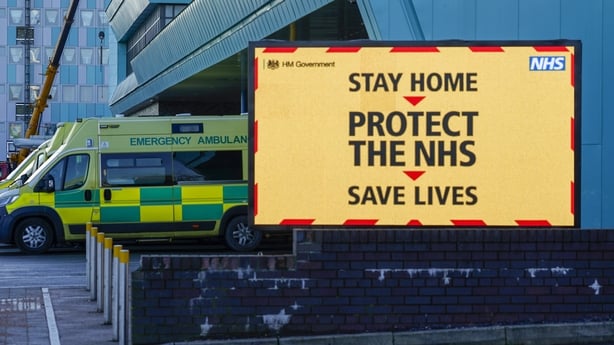
"We all need to stay at home wherever possible and help bring the virus under control and protect our already over-stretched health system."
Prof Elliott added: "I think the suggestion now that there is a decline happening, particularly in some regions may reflect now that the restrictions through lockdown are beginning to have some effect on the prevalence."
He said that even though there is a suggestion of "a downtick", it is by no means as fast as happened in the first lockdown.
"When we were first in the field in May, there was a rapid decline in prevalence," he said.
The researchers say it will be some time before the impact of vaccination reduces pressures on hospitals.
It is not yet known whether being vaccinated stops someone from passing the virus on to others.
Steven Riley, professor of infectious disease dynamics at Imperial College London, said the UK government would have to look at a number of different data sets, including information on hospital admissions and positive Covid-19 tests, in order to get the most reliable expectation of what will happen in the coming weeks.
"We do know the 'R' value at the end of the first lockdown and that was substantially lower than the 'R' values that we're measuring now, which is consistent with the other data," he said.
Prof Riley also commented on data from around Christmas, saying the concern was that social mixing would cause a spike in infections, but this was not the case.
He explained: "You would have expected a peak a week to 10 days after that increased mixing, and in our data we don't see evidence of that and it's certainly not in the ONS (Office for National Statistics) and some of the other data sources.
"I would note that we have seen substantial increases in infections in the older age groups who are most at risk.
"So, even though there was not an obvious spike in the absolute number, we are seeing considerably higher levels of infection in the most at risk older, so the intergenerational mixing during Christmas may have contributed to that."
The React study from Imperial College London and Ipsos Mori has been conducted every month since May, excluding December.
Health Secretary Matt Hancock said the findings were a "stark reminder" of the need to remain vigilant.
The study comes as Prime Minister Boris Johnson earmarked 8 March as the date to begin the reopening of England's schools.
The target is based on progress in vaccinating the most vulnerable groups in society by mid-February and then giving the jab time to take effect.
Mr Johnson and Home Secretary Priti Patel have also set out plans for tougher controls on international travel to reduce the risk of importing mutant strains.
The measures include a ten-day quarantine in hotel for travellers from 30 high-risk countries which are currently subject to travel bans including South Africa, Portugal and many South American nations.
