


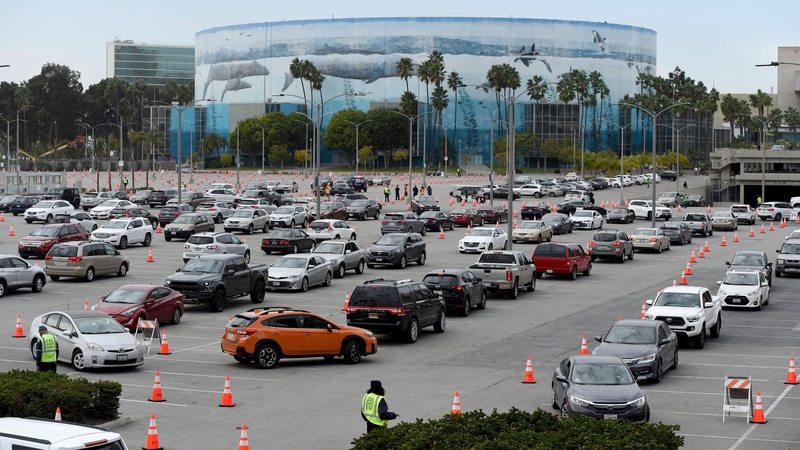
The US coronavirus death toll topped 400,000 today, according to a Reuters tally, as the country hardest hit by the pandemic struggled to meet the demand for vaccines to stem the spread of infection.
States including Michigan, New Jersey, New York, Oregon, South Carolina and Vermont have shown signs of vaccine supply strain and are asking for more doses of both approved vaccines, one from Pfizer-BioNTech and the other from Moderna.
The number of deaths has spiked since Christmas.
During the past three weeks, US coronavirus fatalities have totalled 63,793 compared with 52,715 deaths in the three weeks prior to Christmas, an increase of 21%, according to a Reuters analysis.
The daily Covid-19 death numbers crossed 4,000 for the first time on 6 January.
Eighteen US states, including California, Pennsylvania, Texas and Washington reported their highest daily death numbers in January, according to the Reuters tally.
The number of coronavirus cases has risen across all US regions and today crossed 24 million since the pandemic started.
While seriously ill patients are straining healthcare systems in parts of the country, especially in California, the national rate of hospitalisations has levelled off in the past two weeks and was near 124,000 today.
Meanwhile, US President-elect Joe Biden led a tribute to those Americans who lost their lives to coronavirus, as he arrived in Washington on the eve of his inauguration.
"It's hard sometimes to remember, but that's how we heal. It's important to do that as a nation," Biden said in brief remarks near the edge of the reflecting pool, where lights lining the water were turned on as a memorial to those who have died.
"Let us shine the lights in the darkness along the sacred pool of reflection and remember all who we lost," he said.
It comes as Joe Biden has proposed a $1.9trn aid package that includes $415bn to bolster the response to the virus and the rollout of Covid-19 vaccines.
Lockdown measures extended until mid-February in Scotland
Lockdown restrictions are to be extended until at least the middle of February in Scotland, with schools remaining closed to the majority of pupils, Nicola Sturgeon has announced.
The First Minister told the Scottish parliament that Covid-19 case numbers have "stabilised and even declined".

But she said any relaxation of lockdown while cases remain high could "quickly send the situation into reverse".
As a result, Scotland is to remain in lockdown until at least the middle of February and schools will also remain closed to the majority of pupils.
Ms Sturgeon told MSPs: "That means that the lockdown restrictions - including the strict stay-at-home requirement - will remain in place across mainland Scotland and some island communities until at least the middle of February."
She added: "The cabinet decided today that - except for vulnerable and key worker children - school and nursery premises will remain closed until mid-February."
The situation will be reviewed on 2 February, Ms Sturgeon said, adding: "If it is at all possible, as I very much hope it will be, to begin even a phased return to in-school learning in mid-February, we will."
Scotland was placed into lockdown on 4 January to tackle the rising spread of the new coronavirus strain.
The measures include a legally enforceable stay-at-home order.
All non-essential shops, pubs, cafes, bars, gyms and hairdressers are closed and travel restrictions prevent anyone leavening their local authority area, with limited exceptions.
Schools were initially meant to emerge from Scotland's second lockdown on 1 February.
Denmark makes homeless a priority in vaccine roll-out
Denmark has announced it will include homeless people among those given priority for Covid-19 vaccines, after calls from charities and officials to care for the vulnerable group.
The Scandinavian country started vaccinations on 27 December and is currently among the quickest in the European Union, in terms of jabs per capita, in the vaccine roll-out.
The Danish strategy has been split into 12 priority groups, of which the first five are currently offered the vaccine although this also depends on the region they live in.
"Homeless and socially vulnerable people who are particularly at risk are vaccinated in category 5," the Ministry of Social Affairs said in a statement.
Those in the group but not deemed to be particularly at risk will still be "given priority before the general population", it added.
According to social services, Denmark has about 6,500 homeless people, and the decision follows calls from charities and elected officials who have pointed to an increased risk of transmission among the homeless.
"There is an urgent need to prioritise our most vulnerable, the people living in the streets, those with the largest and most complex need for help. Vaccines + aid packages - now!" the legal aid group Gadejuristen (The Street Lawyers) said in a post on Facebook.
Nearly 3% of the Danish population has received the first dose of the Covid-19 vaccine already and 0.5% has also had the second dose, making Denmark one of the leading countries in the EU.
Germany set to extend restrictions until mid-February
German Chancellor Angela Merkel wants to extend a lockdown to restrict coronavirus infections until 15 February, Bild newspaper reported, citing a draft resolution of the federal government.
Ms Merkel is due to meet the premiers of the federal states today to decide on extending a current lockdown which has closed most shops and schools and introducing new restrictions.
She is likely to agree with regional leaders on stricter requirements for working from home among other measures.
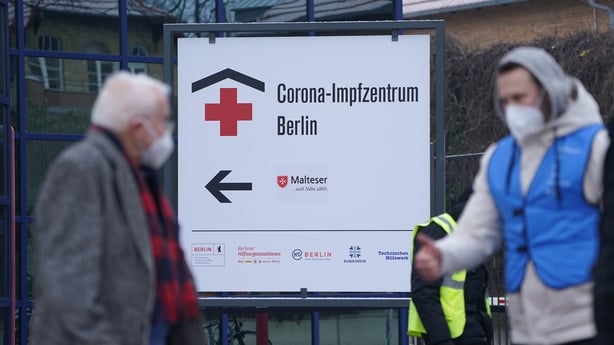
New infections have been decreasing in recent days and pressure on intensive care units has eased slightly, but virologists are worried about the possible spread of more infectious variants of the virus.
"The infection numbers have been going down for several weeks or stagnating and that's good. Now we are facing a very aggressive mutation that we have to respond to," Berlin Mayor Michael Mueller said.
Mr Mueller said curfews, already in place in states including southern Bavaria and Baden-Wuerttemberg, would be under discussion but were unlikely to be imposed everywhere.
"(On curfews) states will want to decide on the basis of infection numbers in individual states," he said.
The focus would be on boosting working from home, he said.
"There are some places of production where workers have to be present but there is much more room for manoeuvre," said Mr Mueller, adding states aimed to get employers to have to justify why employees had to come to work.
Also up for discussion is a compulsory wearing of heavy duty masks in shops and on public transport which offer more protection than cloth coverings, said Mr Mueller.
The number of confirmed coronavirus cases had risen by11,369 to 2.05 million, the Robert Koch Institute (RKI) for infectious diseases reported. The death toll was up 989 at 47,622.
"We will have to step it up a notch to bring the current early successes to the finish line," Economy Minister Peter Altmaier told broadcaster RTL/n-tv.
Covid-19 still circulating at a 'worrying' level in France
French Health Minister Olivier Veran said the coronavirus was still circulating at a "worrying" level in France, but stopped short of recommending a third national lockdown.
"We already took a tough decision last week to impose a 6pm curfew on the country as a whole," Mr Veran told France Inter radio.
"I cannot say we will impose a confinement but the circulation of the virus remains worrying."
Taiwan cancels new year festival after local infections reported
Taiwan has cancelled a major festival during the upcoming Lunar New Year holiday as it reported four locally transmitted cases of Covid-19, the biggest daily rise in local infections in nearly 11 months.
Taiwan, which has kept the pandemic well under control thanks to early and effective prevention methods, has been unnerved by new domestic transmissions, first in December and now in a hospital in the northern city of Taoyuan.
It has reported 868 cases, the majority of which were imported, including seven deaths, with 102 in hospital being treated.
The Taiwan Lantern Festival, an annual celebration to mark the end of the upcoming Lunar New Year in mid-February, will be cancelled this year because of Covid-19, the Ministry of Transportation and Communications said, citing the recent local infection cases.
The festival, which features oversized lanterns and fireworks displays, attracts hundreds of thousands of visitors every year and has become a major selling point for the government to attract tourists from overseas.

The announcement came shortly after Taiwan reported four locally transmitted cases of Covid-19, the most since last February.
All four cases are related to the Taoyuan hospital outbreak and Taiwan's health ministry is planning to move more than 200 patients out of the hospital into isolation wards.
"We strongly recommend that large-scale events be cancelled," said Health Minister Chen Shih-chung. "The situation is under our control at the moment because the cases can be clearly traced."
China's latest Covid outbreak worst since March 2020
China is battling the worst outbreak of Covid-19 since March 2020, with one province posting a record daily rise in cases.
China reported more than 100 new Covid-19 cases for a seventh day today.
Of those, 106 were local infections, with 43 reported in Jilin, a new daily record for the northeastern province, and 35 in Hebei province, which surrounds Beijing, the National Health Commission said.
The Chinese capital itself reported one new case, while Heilongjiang in the north reported 27 new infections.
Tens of millions of people have been in lockdown as some northern cities undergo mass testing for coronavirus amid worries that undetected infections could spread quickly during the Lunar New Year holiday, which is just weeks away.
Hundreds of millions of people travel during the holiday, due to kick off in mid-February this year, as migrant workers return home to see family.
Authorities have appealed to people to avoid travel in the run-up to the holiday and stay away from mass gatherings such as weddings.
