


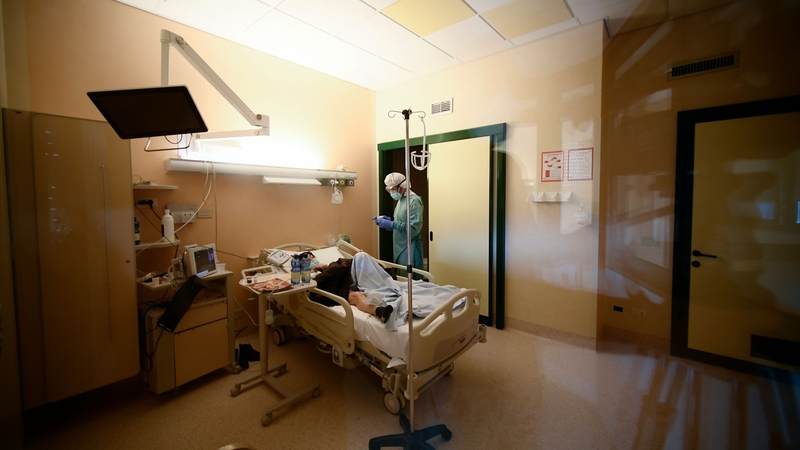
Italy has recorded a further 553 coronavirus-related deaths, taking its total toll past 70,000, the country's health ministry has said.
The daily tally of new infections increased to 14,522, up from 13,318 the day before.
The first Western country to be hit by the virus, Italy now becomes the fifth nation in the world to surpass 70,000 deaths, with an updated total of 70,395, the highest in Europe.
It has also registered some 1.99 million cases to date.
The number of swab tests carried out in the past day rose to 175,364 from a previous 166,205, the health ministry said.
Patients in hospital with the virus stood at 24,546, down by 402 from the day before. There were 216 new admissions to intensive care units, compared with 201 on Tuesday.
The current number of intensive care patients decreased by 63 to 2,624, reflecting those who died or were discharged after recovery.
When Italy's second wave of the epidemic was accelerating fast in the first half of November, hospital admissions were rising by around 1,000 per day, while intensive care occupancy was increasing by about 100 per day.
Elsewhere in Europe, the Czech government will close non-essential shops, services and ski-lifts and enforce a stricter curfew from Sunday as it seeks to curb another rise in Covid-19 infections and hospitalisations.
Health Minister Jan Blatny said the government approved moving the country onto the highest level of the government's risk index, triggering tighter restrictions that will largely lock down the country of 10.7 million during the holiday season.
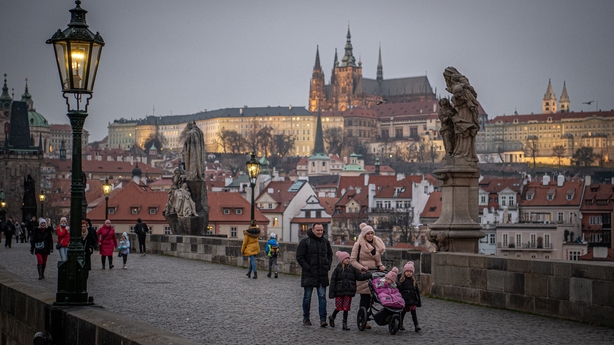
Covid-19 infections have risen throughout December, coming after the government only just loosened restrictions at the beginning of the month after curbing one of Europe's biggest spikes in infections in October and November.
On Tuesday, the daily infection tally rose above 10,000 for the first time since 6 November.
The country has already re-closed bars and restaurants, so the new restrictions will hit retail outlets and services such as hairdressers.
Shops selling essential goods will stay open, although supermarkets will be only be allowed to sell essentials.
Other items can be ordered online.
A nighttime curfew will shift its start to 9pm, from 11pm, and public gatherings will be limited to two people outside families.
Religious services will be allowed for up to 10% of seat capacity. Ski lifts will close.
In schools, only first and second-graders will return to classrooms after Christmas break while other students will start with distance learning.
Mr Blatny said the government will meet in the first week of January to review measures, which are set to last until 10 January.
Restrictions during the second wave of the pandemic have hit the Czech economy although not as hard as after the initial outbreak when factories also idled, leading to a record second-quarter contraction.
Meanwhile, Switzerland has started its Covid-19 vaccine roll-out, with a care home resident in her 90s becoming the first person to receive an approved shot.
The woman was given the Pfizer-BioNTech vaccine just four days after it was approved by national regulators.
Switzerland is battling stubbornly high coronavirus cases. The country of 8.6 million people has seen a total of more than 415,000 infections and over 6,300 deaths since the pandemic began.
Britain was the first country in the world to deploy the Pfizer-BioNTech vaccine on 8 December.
The European Union is scheduled to start vaccinations on 27 December. A date of 30 December has been set in Ireland for the first vaccinations here.
