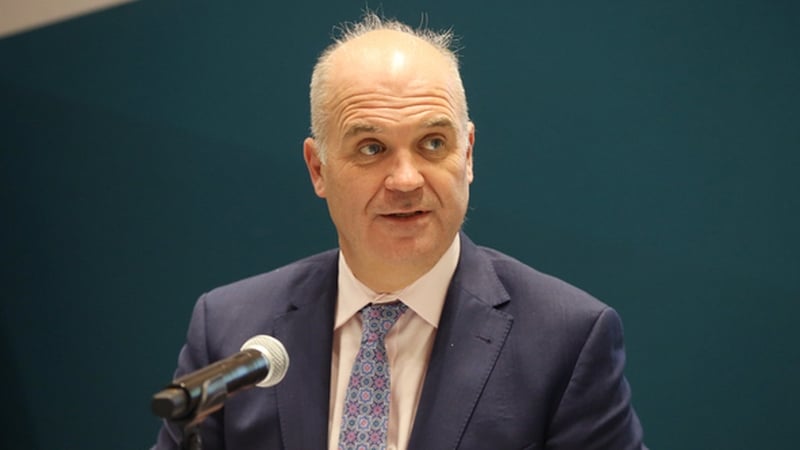

Chief Medical Officer Dr Tony Holohan has praised the efforts of young people in bringing down Covid-19 infection rates as three further deaths and 248 new cases were reported today.
A total of 2,123 people have died with Covid-19 in Ireland and there have been 75,756 positive cases.
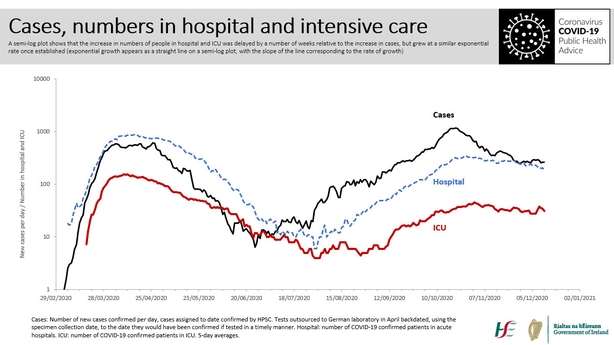
The number of people in ICU is down four to 31. There are 185 coronavirus patients in hospitals with 10 additional hospitalisations in the past 24 hours.
This is the first time the number of people with Covid-19 in hospital has dipped below 200 in more than two months.
Hospitalisations in the second wave of this pandemic peaked at 354 at the end of October.
Dr Holohan said: "Ireland currently has the lowest incidence in Europe and has protected against the significant mortality and severe illness that many European countries, as well as the United States, have experienced.
"Our younger generation led the way, with the incidence in the 19-24 year age group reduced from 432 per 100,000 population to 41 per 100,000 population. This is an enormous achievement.
"We all need to recognise how well our younger generation has reduced their contacts and helped to protect the whole population. We all now need to follow this example in the weeks ahead.
"We can do this by planning from now for Christmas to reduce our social contacts and limit our activities to those that are essential and most important to us."
Professor Philip Nolan, chair of the Irish Epidemiological Modelling Advisory Group, said on Twitter that hospitalisations lag behind cases.
"This is why we worry about high case numbers, and the risk of a third wave in January.
"If we see a rise in cases we cannot wait around until we have increasing numbers of people in hospital and ICU to convince ourselves we have a problem. We'll need to act quickly."
He added: "The fundamental message: a small, safe, careful Christmas with those that matter the most to us will limit the levels of disease in January, and save lives."
Speaking on RTÉ's Saturday with Katie Hannon earlier today, Prof Nolan said we are in a "delicate and fragile position" and that reducing the duration of time that people spend together and keeping the numbers low will help reduce the overall risks of Covid-19.
He said people are hearing the public health message and the attitude among many people is that they can see the finish line and the protection of a vaccine.
Prof Nolan said: "Being able to see that finish line gives people hope and strength."
He also appealed for people not to put older or vulnerable people under pressure to go to other houses or make them feel obliged to have visitors to theirs.
"This Christmas is not the time for social mixing," he told listeners.
The 14-day incidence rate of Covid-19 per 100,000 population nationally is now 81.5. Counties with the most infections include Donegal (216.7), Kilkenny (191.5), Louth (173) and Carlow (158.1).
Counties with the lowest rates of the disease are Leitrim (18.7), Kerry (19), Cork (23.6) and Westmeath (25.9).
Northern Ireland has reported that a further nine people have died from Covid-19. It takes the death toll there to 1,120.
There were 476 additional cases of the virus also reported, bringing the cumulative total to 57,733.
There are 409 confirmed coronavirus patients in hospital, with 27 in ICU, 23 of whom are on ventilators.
Mid and East-Antrim has the highest rate seven-day incidence rate of infection per 100,000 with 279.9 and the lowest is 82 in Ards and North Down.
A meeting of the Government's Regulators' Forum yesterday heard about a high level of compliance with Covid-19 regulations in businesses and other organisations.
The forum comprises bodies such as An Garda Síochána, the Health and Safety Authority, various Government departments and Fáilte Ireland.
A high level of inspections will continue, following 22,000 inspections already carried out to date.
A number of concerns around compliance were highlighted at the forum, including encouraging people to shop at off peak times and the importance of wearing face masks in public areas.
There was also a reminder for people to support their team in a safe way ahead of a number of high profile GAA matches this weekend.
It's good that numbers in hospital and ICU are falling. Behind each number is a human story of illness and loss. Hospitalisations lag behind cases, and sadly what we are seeing now is the impact on older and vulnerable people infected towards the end of the recent surge. 2/5 pic.twitter.com/aag4VQloty
— Professor Philip Nolan (@President_MU) December 12, 2020
Meanwhile, the Government has received a plan for how the Covid-19 vaccine will be rolled out across the country.
It is due to be published on Tuesday, after it has been considered by Cabinet.
The report from the High Level Vaccine task force will set out the role that doctors, pharmacists and public health nurses will play in administering them.
The Pfizer/BioNTech vaccine is due to arrive in Ireland between seven and 10 days after it is given approval by the European Medicines Agency.
The EMA has said it will take a decision before 29 December, with several other vaccines expected to be approved early in the New Year.
The task force report, which was submitted to Government late last night, will make recommendations on whether retired healthcare staff should be deployed to help with administering up to eight million doses of the vaccines.
This was considered by the task force as the Government is keen to ensure that the operation does not place unnecessary strains on other areas of the health service.
The Pfizer-BioNTech vaccine comes in large batches, requires two doses, and needs specialised deep freeze storage.
It is expected to be delivered first to 45,000 people in nursing home and residential settings and to healthcare workers.
The Moderna vaccine, due for approval early next month, is less technical to store meaning pharmacists and GPs are likely to play a greater role in administering it to the wider population.
Each HSE area will make its own properties available to create vaccine hubs, likely to include old health board offices or facilities, but not schools.
Another big part of the plan will be collecting information for science purposes including the age profile of who receives the jabs, the possible side effects and success rates.
This will require a consent form and work has been undertaken with the Data Protection Commission to ensure it is compliant with existing laws.
A coordinated information campaign is also being planned to ensure widespread uptake of the vaccines.
Additional reporting Mary Regan