


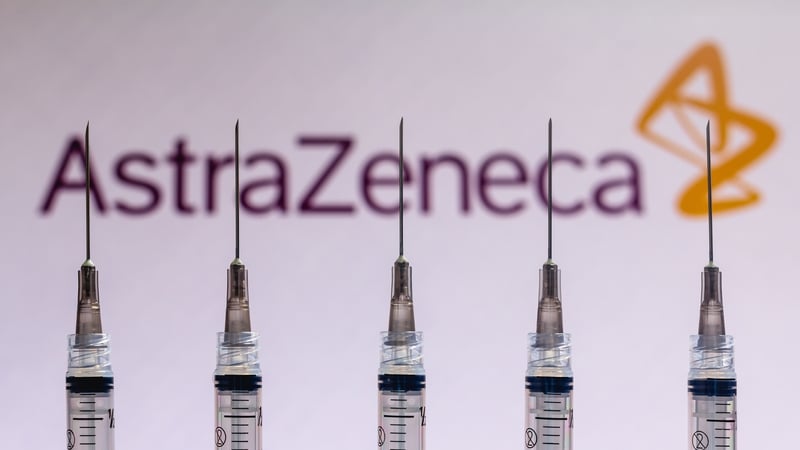
Pharmaceutical giant AstraZeneca's Russian branch said it would use part of Russia's homemade Sputnik V vaccine in further clinical trials, a major sign of recognition for a jab that has been viewed with scepticism by the West.
Russia was one of the first countries to announce the development of a coronavirus vaccine, which it named Sputnik V after the Soviet era satellite.
While the jab is yet to complete its third and final phase of testing involving some 40,000 volunteers, its developers have said that interim trial results showed 95% efficacy.
"Today we announce a clinical trial programme to assess the safety and immunogenicity of a combination of AZD1222, developed by AstraZeneca and Oxford University, and Sputnik V, developed by Russian Gamaleya Research institute," AstraZeneca said in a statement published on its website in English and Russian.
The pharmaceutical company said that adults aged 18 and over will be enrolled in the trials, expected to start before the end of the year.
While the Sputnik V jab uses human adenovirus vectors, AZD1222 relies on adenovirus from chimpanzees. Both are administered in two doses.
Russia's Direct Investment Fund (RDIF), which was involved in the development of Sputnik V, said in its own statement that on 23 November it offered AstraZeneca "to use one of the two vectors of the Sputnik V vaccine in additional clinical trials of its own vaccine".
Russia announced the registration of Sputnik V back in August, after it had completed the second phase of trials on under 100 volunteers, raising concerns from scientists at home and abroad.
Analysts viewed the fast-track registration and the early launch of mass vaccination as an effort for Russia to bolster its geopolitical influence.
Several Russian allies - including India, Venezuela and Belarus - have said they would take part in clinical trials for the jab, while Kremlin-friendly governments have pre-ordered more than a billion doses of Sputnik V.
Ignoring accusations by Britain of Russian-linked hackers targeting vaccine research, Moscow has said it is open to cooperation with Western countries.
The vaccine's developers said it will be available on international markets for less than €8.40 per dose and that it can be stored at between 2-8C instead of the temperatures far below freezing required for some other vaccines.
In its statement today, AstraZeneca said that "combinations of different Covid-19 vaccines may be an important step in generating wider protection through a stronger immune response and better accessibility".
The British-Swedish drugmaker added that cooperation with the Gamaleya Research Institute is "important to explore the potential of vaccine combinations unlocking synergies in protection and accessibility through a portfolio approach."
The pharmaceutical giant had earlier said that its vaccine was on average 70% effective.
Head of RDIF Kirill Dmitriyev said on Friday that the collaboration will be a "unique example of cooperation between scientists from different countries in jointly fighting coronavirus".
While Russia's second wave has continued to surge in recent weeks, the country has refrained from reimposing a strict nationwide lockdown as it did in the spring and pinned its hopes on mass vaccination.
Last week Russia started a large-scale public vaccination drive, offering Sputnik V initially to people in high-risk groups including medical workers and teachers.
Today it reported 613 virus deaths over the past 24 hours, surpassing the 600 mark for the first time since the beginning of the pandemic.
Total fatalities stood at 45,893, while infections jumped to 2,597,711, placing Russia's caseload fourth-highest in the world.
Russia has reported a much lower death rate than other badly hit countries, raising concerns that authorities have downplayed the outbreak.
Data published by the country's federal statistics service on Thursday indicated excess deaths of nearly 165,000 year-on-year between March and October, suggesting virus deaths could be much higher.
US buys additional 100 mn doses of Moderna vaccine
The US said it was purchasing 100 million more doses of the Covid-19 vaccine candidate developed by Moderna, amid reports the government passed on the opportunity to secure more supply of the Pfizer jab.
The agreement brings the total number of Moderna doses bought by the US to 200 million, enough to immunize 100 million people with the two-shot regimen.
"Securing another 100 million doses from Moderna by June 2021 further expands our supply of doses across the Operation Warp Speed portfolio of vaccines," said Health and Human Services Secretary Alex Azar.
A statement by the New York state-based biotech firm said that the new order would be delivered by the second quarter of 2021, while the first order would be completed by the first quarter.
The total federal funding allocated to Moderna for the vaccine mRNA-1273, which it co-developed with the National Institutes for Health (NIH), now stands at $4.1 bn (€3.4bn)
The latest deal comes after media reports that over the summer the US decided against extending its order of the Pfizer-BioNTech vaccine beyond the 100 million doses it had initially ordered, allowing other countries to buy up precious supply.
An emergency use authorization is thought to be imminent for the Pfizer jab, which is also a two-dose regimen, after an independent expert committee voted in its favor on Thursday.
A similar expert panel will be convened to discuss the Moderna-NIH vaccine on 17 December, and emergency approval could follow soon after.
It has been found to have an efficacy of 94.1% in a clinical trial involving 30,000 people.
Both these frontrunners use mRNA (messenger ribonucleic acid) technology, a new approach which delivers genetic instructions to human cells to make them express a surface protein of the SARS-CoV-2 virus.
This simulates an infection and prepares the immune system in case it encounters the real virus.
Developing these vaccines is faster than more traditional approaches, which often rely on using weakened or inactivated forms of disease-causing microbes.
The main drawback that has been identified so far is that mRNA molecules, which are encased in fatty particles, have to be stored at ultra cold temperatures: -70 degrees Celsius for Pfizer's, -20 degrees Celsius for Moderna's.
US health secretary says Covid vaccinations could start by Monday
Meanwhile, the United States could start injecting the first Americans with the Pfizer-BioNTech Covid-19 vaccine by Monday, the country's health secretary said.
Alex Azar told news channels that final details were being ironed out, after an expert committee convened by regulators voted to grant the two-dose vaccine emergency approval for people aged 16 and over.
The Food and Drug Administration issued a statement saying it had told Pfizer it would now "rapidly work toward finalization and issuance of an emergency use authorization."
Mr Azar told ABC News that authorities were working with Pfizer on logistics and "we could be seeing people get vaccinated Monday, Tuesday of next week".
"So, it's very close. It's really just the last dotting of I's and crossing of T's," he added.
Those outstanding matters include getting a fact sheet ready for doctors, Mr Azar told Fox Business.
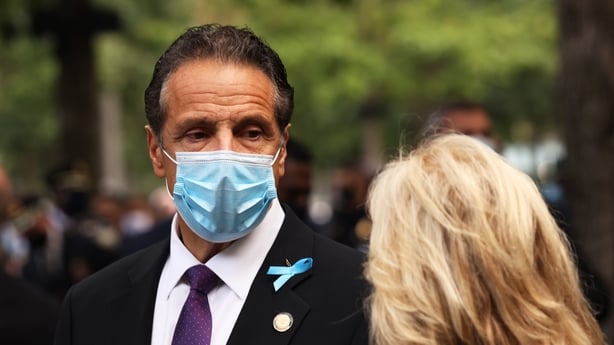
New York's Governor, Andrew Cuomo, said 170,000 doses of the Pfizer vaccine will be in New York by Sunday or Monday and an additional 346,000 dose of the Moderna vaccine will be in New York in the week of 21 December.
Mr Cuomo said indoor dining in New York City will come to a halt on Monday, as Covid-19 hospitalisations fail to stabilise and the infection rate rises.
The governor acknowledged indoor dining is not at the top of a list of settings driving the rise in new cases led by household gatherings, but said rising hospitalizations and New York City's high density were worrying factors.
"You put the CDC caution on indoor dining together with the rate of transmission and the density and the crowding, that is a bad situation," Mr Cuomo told a news briefing.
Once the vaccine receives an Emergency Use Authorization (EUA), the federal government's Operation Warp Speed program will oversee its distribution to thousands of sites across the country.
Before that happens, a committee from the Centers for Disease Control and Prevention (CDC) also has to recommend the vaccine, then the agency itself has to accept that recommendation.
The first of these meetings takes place today and the second on Sunday, but they are at this stage viewed as pro forma.
The expert committee voted 17 in favour, four against, with one abstention, on the matter of approving Pfizer's vaccine, which a clinical trial has shown to be 95% effective.
Brazil studies 58 cases of Covid-19 re-infection - health ministry
Brazil's Health Ministry is studying 58 suspected cases of Covid-19 re-infection after confirming the first case of a person getting re-infected with the illness caused by the coronavirus, a ministry spokeswoman said.
The first case was a health worker in the northern city of Natal, a 37-year-old woman, who tested positive in June and again 116 days later in October, the ministry said yesterday.
The re-infection was confirmed by the FioCruz biomedical research center in Rio de Janeiro, it said in a statement.
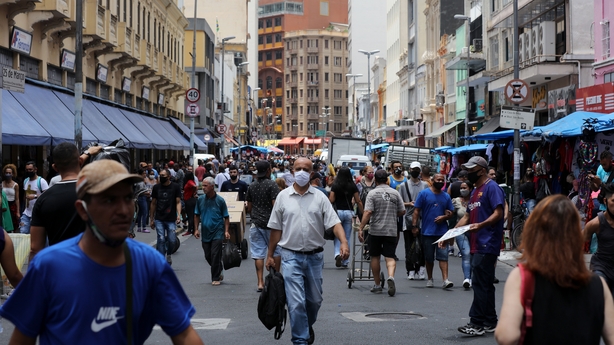
So far 58 suspected cases of re-infection have been reported and are being studied, the spokeswoman said.
The cases involve people who tested positive and their re-infection must be confirmed as a separate infection and not the re-appearance of the same infection, she said.
The FioCruz researcher who did the genetic sequencing of the infection of the case in Natal, Paola Resende, said it looked like the woman did not generate enough anti-bodies to avoid getting infected again more than 90 days later.
Ms Resende told Reuters that the woman was infected by a separate strain of coronavirus the second time.
"The pathogen of the sample collected in June belonged to the B.1.1.33 strain and the October sample was from the B.1.1.28 strain. Both had already been detected in Brazil," she said.
Brazil reported 53,030 additional confirmed cases of the novel coronavirus in the past 24 hours and 646 deaths from Covid-19, the Health Ministry said.
The South American country has now registered 6,834,829 cases since the pandemic began, while the official death toll has risen to 180,411, according to ministry data.
Brazil has the world's second highest death toll behind the United States and the third highest case count behind the United States and India.
