


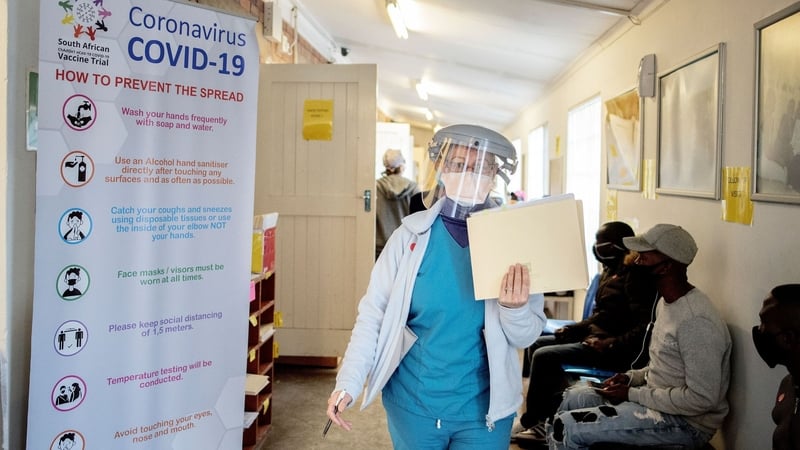
Localised coronavirus outbreaks in parts of South Africa have raised fears that the country could see a resurgence in cases compounded by gatherings during the upcoming festive season.
Officials in Africa's hardest virus-hit country are scrambling to contain infections after a flare-up was reported in the impoverished Eastern Cape province and adjacent Western Cape province last month.
The national number of new daily cases crept over 3,000 last week, up 50% from an average of 2,000 earlier in November.
More than half the increase is driven by infections in the Eastern Cape and around 25% by cases in the Western Cape.
"(The) small cluster outbreaks which we are seeing ... are transient," Health Minister Zweli Mkhize said during an emergency trip to the Eastern Cape.
"Something has to be done," he stressed.
South Africa's coronavirus transmission rate had slowed significantly after infections peaked in July, with less than three daily cases detected per 100,000 people between the end of August and the start of November.
"We are not in a second wave, but in these two provinces ... we are in the midst of a resurgence," said the government's chief Covid-19 advisor Salim Abdool Karim.
If the new outbreaks are not contained, he warned, it would be "just a matter of time" before the uptick hits the whole country.
Hospitals in the Eastern Cape's largest city of Port Elizabeth are already struggling, although local government officials insist they are coping.
Doctors still reeling from the first wave have asked international medical charity Doctors Without Borders (MSF) to assist at three main public facilities.
"Hospitals indeed are overwhelmed with much higher numbers of patients ... some say even higher than in July," said MSF doctor Colin Pfaff, project medical response coordinator in the province.
"Facilities are struggling with lack of staff," he added, blaming "chronic deficiencies" and coronavirus infections among healthcare workers.
Private facilities are also feeling the pinch.
"Our Eastern Cape hospitals are incredibly full at the moment," Richard Friedland, head of South Africa's leading private healthcare provider Netcare, told AFP.
More beds are being added, "so we still have capacity to treat cases," he added.
While the provincial government insists hospitals are neither "full" nor "overflowing", the national doctors' association this week accused the health ministry of failing to adequately support "overworked" staff.
In the Western Cape, authorities are pondering targeted restrictions.
"We must first do everything possible, through our individual and collective action to ensure the resurge is rolled-back," Western Cape Premier Alan Winde said.
Coronavirus has infected over 792,000 people in South Africa and killed more than 21,600 despite months of strict movement restrictions.
President Cyril Ramaphosa has ruled out a second lockdown for the time being.
The first nationwide shutdown earlier this year severely battered Africa's most industrialised economy, throwing at least 2.2 million out of work.
Nationally, pressure is on to rein in new infections before the end-of-year holidays, when millions of people criss-cross provinces to spend Christmas with family and friends.
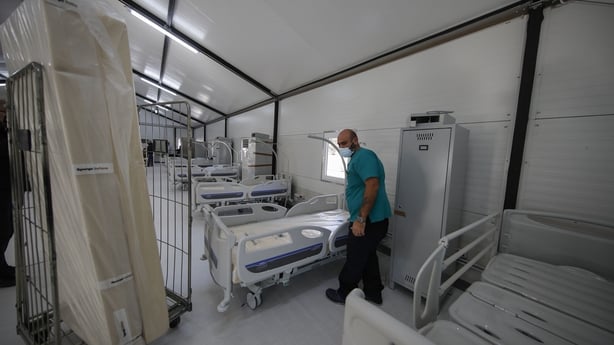
Italy curbs Christmas travel to avoid virus 'third wave'
Italy has announced national travel restrictions for the Christmas holidays designed to limit the spread of Covid-19 in the European country first hit by the pandemic.
The new rules, together with an existing curfew and other regulations already in place, seek to curb circulation throughout the country during the festive period by limiting the number of gatherings.
Earlier this year, a punishing lockdown of all Italy's 60 million residents helped bring the outbreak under control, but the government is trying to avoid missteps made over the summer after the lockdown lifted, when the return of vacationers fuelled a new rise in cases.
"If we let down our guard now, the third wave is just around the corner," Health Minister Roberto Speranza told parliament.
Travel between Italy's regions will be prohibited from 21 December through 6 January, with people barred from travelling outside their own towns on 25, 26 December and 1 January.
The decree includes the "strong recommendation" to avoid hosting those who do not live together.
Other regulations set to be signed later today are expected to mandate a ten-day quarantine for those arriving in Italy from foreign countries, beginning on 20 December.
The move is in part designed to prevent Italians from travelling to ski slopes that are still open in neighbouring EU countries.
The government is expected to retain a colour-coded risk-based system that imposes varying levels of anti-coronavirus restrictions on different regions.
Bars and restaurants are expected to remain closed in regions in red or orange zones. A current 6pm closure in yellow zones may remain, as may a nationwide 10pm curfew.
In yellow zones, where eateries are open but required to shut at 6pm, the government is debating whether to allow restaurants to serve lunch on Christmas Day and 26 December.
Ski slopes are expected to be off-limits, as well as cruises.
The health ministry reported 20,709 new cases yesterday and 684 deaths, bringing the cumulative toll to more than 1.6m infections.
