


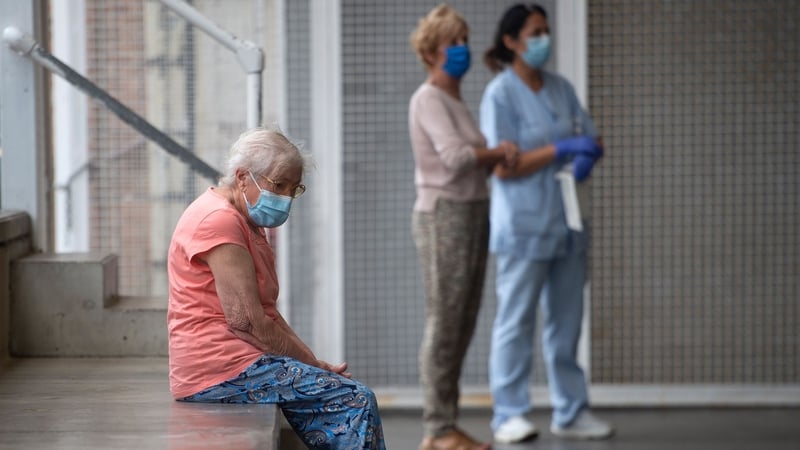
New restrictions to stop the spread of the new coronavirus, including the closure of discos and a partial ban on smoking outdoors, went into effect in two Spanish regions.
The small, northern wine-growing region of La Rioja and the southeastern region of Murcia are the first Spanish regions to implement a raft of new measures which Spain's Health Minister Salvador Illa unveiled in Friday to be enforced nationwide as the country battles a surge in the disease.
The measures include the closure of all discos, night clubs and dancing halls, while restaurants and bars are required to close by 1:00 am, with no new guests allowed in from midnight.
Visits in retirement homes will be limited, while smoking outdoors in public places is banned when a distance of two metres cannot be maintained.
The ban on smoking on the streets is already in place in two of Spain's 17 autonomous regions, Galicia and the Canary Islands.
Spain's remaining regional governments are expected to start implementing the new measures in the coming days.
The Basque Region, which neighbours La Rioja, plans to go a step further and will tomorrow declare and "health emergency" which will allow it to impose greater restrictions on the size of public gatherings and establish selective confinement in areas where there is a high risk of transmission of the disease.
Nearly 29,000 people have died so far from Covid-19 in Spain, which declared a state of emergency between 14 March and 21 June that allowed the central government to impose restrictions nationwide.
With the state of emergency subsequently lifted, autonomy has been handed back to the regional authorities.
The health ministry has had to negotiate with them to impose the new measures on a nationwide basis.
Spain has a population of 47 million and its infection rate of 110 cases per 100,000 inhabitants is higher than in other European countries.
More than 21.52 million people have been reported to be infected by the novel coronavirus globally and 765,038 have died, according to a Reuters tally.
S Korea accuses church pastor as Covid-19 cases surge
South Korea accused a conservative pastor of violating self-isolation rules and obstructing contact tracing at a church where 240 infections have fuelled the country's worst outbreak in over five months.
The focus on the Sarang Jeil Church, led by Rev Jun Kwang-hoon, revived bad memories of the country's biggest outbreak, among followers of a secretive Christian sect back in February.
South Korea today reported 279 new cases, more than double the 103 reported on Friday, with most of the new infections found in and around Seoul.
Aside from the infections linked to the church, there were also smaller clusters, including some 30 cases linked to a Starbucks outlet in the city of Paju, north of Seoul.
The surge in cases prompted authorities to reimpose tighter social distancing curbs in the Seoul metropolitan area.
The health ministry said it had filed a complaint against Rev Jun, an outspoken government critic, for violating self-isolation rules by participating in a rally yesterday, and for "obstructing" a medical investigation into the outbreak by failing to provide a full list of church members for testing and tracing.
Yesterday, a National Liberation Day holiday in both Koreas, thousands of demonstrators participated in street protests against President Moon Jae-in's policies, defying a ban on rallies in the capital.
President Moon said the latest outbreak posed the biggest challenge to efforts combat Covid-19 since the large cluster of infections traced to the Shincheonji Church of Jesus, a secretive religious sect, six months ago.
On 1 August, South Korean authorities arrested the sect's founder, Lee Man-hee, for allegedly hiding crucial information from contact-tracers.
President Moon warned of "stern and strong measures" against"some churches," calling their behaviour an "unforgivable act that threatens public lives."
