


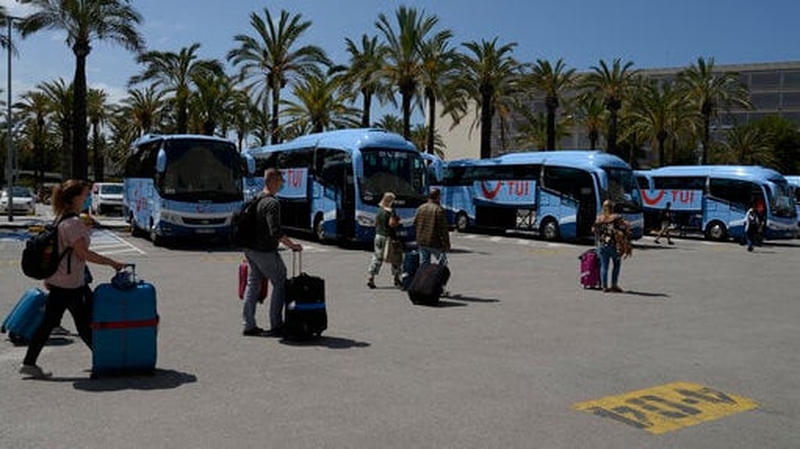
A planeload of German tourists flew to Spain's Mallorca island earlier today, taking part in a test of plans to reopen the popular destination as the country emerges from its coronavirus lockdown.
The 180 Germans flew from Duesseldorf to Mallorca, the largest island in the sunny Balearic archipelago, six days before Spain is to open its borders in general on 21 June.
Almost 11,000 tourists from Germany are to follow in the coming days.
Regional officials and tour operators set up the pilot programme in an important test for the Spanish tourism sector, which accounts for about 12% of gross domestic product.
The country had imposed some of the tightest lockdown measures in Europe, and had one of the highest mortality rates at more than 27,000.
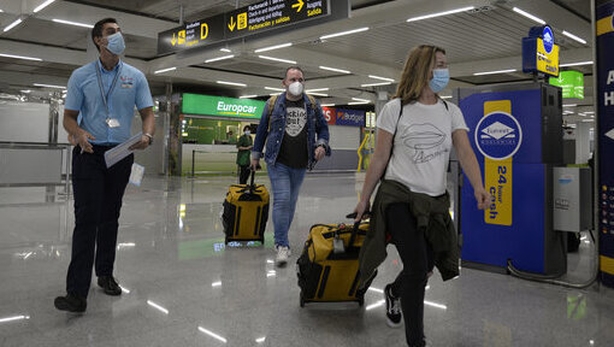
The pilot project will be subject to strict health guidelines and visitors will have their temperature taken on arrival, but will not be quarantined, regional authorities have said.
Should virus symptoms appear, a follow-up phone check is planned as part of an agreement between the regional government and German tour operators.
Mallorca is a major holiday destination for German tourists, drawing around 4.5 million last year.
The Balearic island chain also includes Menorca, Ibiza and Formentera.
Europe begins easing travel restrictions
From Iceland to Greece, many travel restrictions for European Union visitors will ease today, but it will not be a return to unfettered travel for the Schengen area's 420 million inhabitants.
Instead, the right of travel will depend on where you live and where you are going.
For example, some countries such as Greece and Britain will mandate quarantines, and the Czech Republic has a traffic-light system, barring entry for tourists from 'orange' or 'red' countries such as Portugal and Sweden.
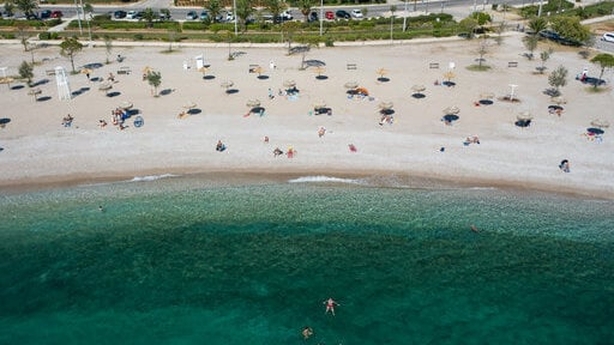
Greece will mandate quarantines for those arriving from a string of airports in eight EU countries.
Denmark will allow in tourists from Iceland, Germany and Norway, but notably not Sweden, on condition they book at least six nights' accommodation.
Britain's mandatory two-week quarantine for visitors means British people will face the same confinement in France.
Before the crisis, an average of 3.5 million people crossed an internal EU border every day, according to a European Parliament report last year, some 1.7 million of them commuting to work.
Many of the latter are now working from home, while continued restrictions and health concerns are expected to curb tourism and business travel.
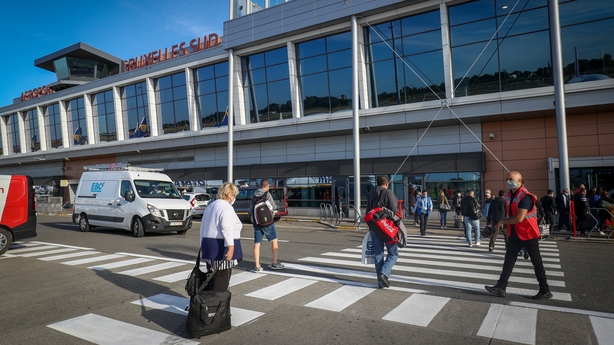
At Brussels Airport, day one of the reopening will see around 60 flights operating, 10% of the normal 600.
The Schengen area of 22 EU countries plus Iceland, Liechtenstein, Norway and Switzerland operates control-free crossings, but they have been mostly closed for three months to all but goods traffic and critical workers.
European Home Affairs Commissioner Ylva Johansson urged Schengen members last week to lift internal border controls by today, to allow a gradual reopening to other countries from July.
The move could help salvage the part of the summer season for Europe's battered travel and tourism industry.
With recreation and culture, the sector makes up almost 10% of the EU economy and an even bigger chunk in Mediterranean countries, some of which were hit hardest by the pandemic.
Read:
Latest coronavirus stories
In France, the health minister has said the worst part of the coronavirus epidemic is behind his country, but people must remain vigilant as the virus continues to circulate.
"The largest part of the epidemic is behind us but the virus is not dead. We did not completely defeat it and we are controlling its circulation. We continue testing", Olivier Veran told LCI television.
France reported on Sunday nine new coronavirus deaths over the previous 24 hours, taking the total to 29,407. It was the fifth day in which the number of fatalities remained below 30.
President Emmanuel Macron said yesterday he was accelerating France's exit from its coronavirus lockdown, with restaurants and cafes in Paris allowed to reopen fully from today, the same day France lifts restrictions at its borders for European Union travellers.

Asked if he feared a new wave of infections following news of a fresh cluster of novel coronavirus cases centred around a wholesale market in China, Mr Veran said he was not worried but vigilant.
Meanwhile, Denmark will hand out cash to its citizens in a bid to stimulate the economy, the finance ministry has said, while announcing plans to phase out generous aid packages introduced at the beginning of the coronavirus crisis.
The cash payout will be financed by Danes' own holiday allowance, which had been frozen over a revamp of the holiday pay system, originally meant to be paid out as an additional pension when people retire.
Three out of five of the frozen weeks will be paid out before October, amounting to roughly 60 billion Danish krone (€8bn), Finance Minister Nicolai Wammen said.
Elsewhere, the number of coronavirus cases rose to more than 10,000 in the Czech Republic, Health Ministry data showed today.
The country of 10.7 million has 10,024 confirmed cases as of the end of yesterday, with 329 deaths and 7,226 recovered.
The daily rise in case numbers has been in the range of 31-74 over the past two weeks.
Czech authorities opened their borders to travel from most European Union countries earlier this month and it has raised the limit for public gatherings to 500 people.
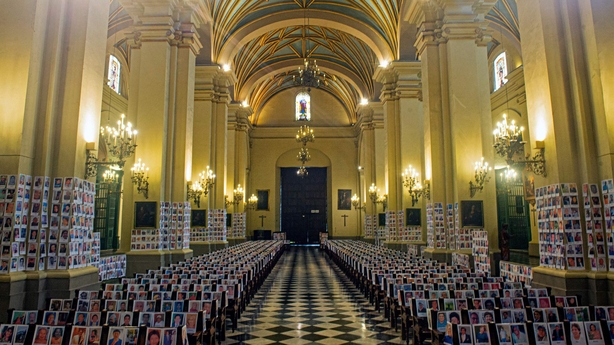
In South America, Peruvian peasant brigades, who battled leftist rebel groups decades ago, are now doling out rough justice in a bid to slow the spread of the novel coronavirus in the Andean country, which has the region's second-highest number of cases after Brazil.
The elected community militias, who in normal times address cases such as infidelity and robberies of chickens, or go after badly behaved mayors, judges and other officials, say they now use lashes to punish those breaking quarantine.
"According to the crime, you can punish with lashes", Aladino Fernández, the president of a group in the northern highland region of Cajamarca, told Reuters by telephone.
Thailand has reported no new coronavirus infections or deaths, maintaining the total of 3,135 confirmed cases and 58 fatalities.
It is the second time in five days that no cases were reported and marked 21 days without a local transmission. There are 2,987 patients who have recovered.
All recent cases have been found in quarantine among Thais returning from abroad, said Taweesin Wisanuyothin, a spokesman for the government's Covid-19 task force.
Hong Kong's Disneyland theme park said it will reopen on 18 June to a reduced number of visitors and with enhanced health measures after the coronavirus outbreak forced it to close in late January.
The Chinese-ruled city has reported only a handful of new cases recently, with its total so far standing at 1,110 infections and four deaths.
The majority of the park's shopping and dining locations will restart operations with "controlled capacity", while social distancing measures will be implemented in queues, restaurants and other facilities. Hotel services will also resume gradually.
Disinfection will be carried out more frequently and hand sanitisers will be made available for visitors, who will be required to go through temperature screening, wear a face mask and sign a health declaration.
Ocean Park, the city's other theme park, reopened on Saturday after politicians approved a HK$5.4bn (€619.93bn) bailout plan last month to keep it running for another year.
Shanghai's Disneyland re-opened in May.
While many restrictions related to the coronavirus have been gradually lifted, Hong Kong's borders remain almost fully closed and group gatherings are limited to eight people.
More than 7.91 million people have been reported to be infected by the novel coronavirus globally and 432,038 have died, according to a Reuters tally.
Infections have been reported in more than 210 countries and territories since the first cases were identified in China in December 2019.
