


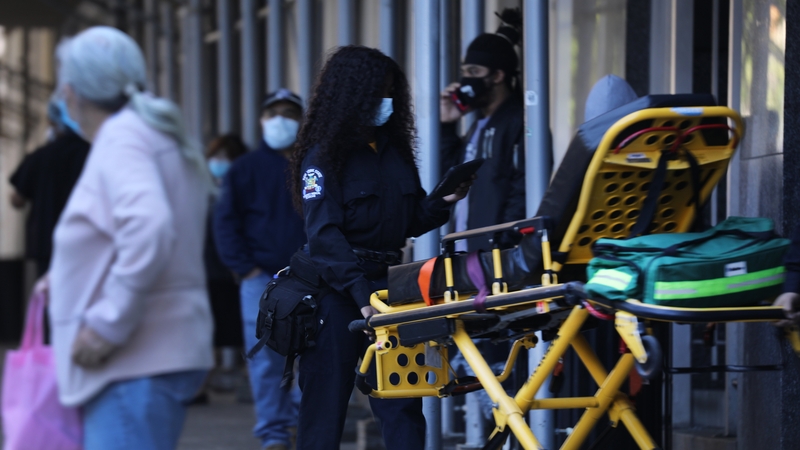
The top infectious diseases official in the US has warned that ending lockdowns too quickly could trigger uncontrollable new coronavirus outbreaks, as the global death toll closes in on 300,000.
The stark words from Dr Anthony Fauci came as much of the United States and Europe press ahead with easing curbs that have confined billions to their homes to stem the spread of the disease.
Opening up continues despite the toll spiking in some of the world's most populated countries, with Brazil, Russia and the US all reporting bad news.
Concerns were compounded by Dr Fauci's warning to Congress that a run of 14 days with drop in cases was a vital first step before lifting lockdowns.
"If a community or a state or region doesn't go by those guidelines and reopens... the consequences could be really serious," he said.
"There is a real risk that you will trigger an outbreak that you may not be able to control."
Dr Fauci said the true number killed by the epidemic in the US is likely higher than the official toll of over 82,000 - the world's highest.
Yesterday, the US registered 1,894 coronavirus deaths in 24 hours, a steep rise after daily tolls fell below 1,000 the previous two days.
Dr Fauci's cautionary message stands at odds with rhetoric from President Donald Trump, who has pressed for rapid steps to rekindle the devastated US economy before a November election.
Mr Trump has sought to shift focus onto the role of China, where the virus first emerged in December.
Republican allies in the Senate have proposed legislation that would empower the president to impose sanctions on Beijing if it does not give a "full accounting" for the outbreak.
"The Chinese Communist Party must be held accountable for the detrimental role they played in this pandemic," said Senator Jim Inhofe.
"Their outright deception of the origin and spread of the virus cost the world valuable time and lives as it began to spread."
In the House of Representatives meanwhile, Democrats unveiled a $3 trillion virus response package, the largest yet, to fund efforts to fight the pandemic and provide emergency payments to millions of American households.
The lifting of lockdowns has gathered pace across Europe, with France beginning to reopen primary schools and nurseries.
Teachers wore face masks and desks were separated as children filed back into classrooms.
Russia began easing lockdown rules even as infections surged past 232,000 - now the second most cases in the world after the US.
The nation hit the landmark after a week of reporting more than 10,000 daily infections.
President Vladimir Putin's spokesman, Dmitry Peskov, has also tested positive for the virus.
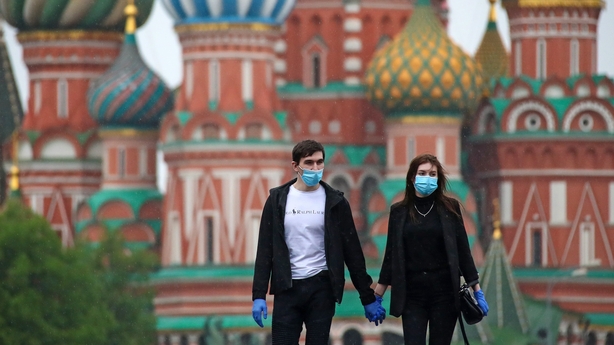
For those braving public transport in Moscow, masks and gloves were a must in line with new anti-virus rules.
Indian Prime Minister Narendra Modi announced a $270 billion economic stimulus as the country’s economy lumbers back to life after a prolonged shutdown.
Its giant railway network also restarted, despite a recent surge in infections, with 3,600 recorded on Monday.
The country of 1.3 billion imposed a strict lockdown in late March, which Mr Modi's government has credited with keeping cases to a modest 70,000, with around 2,300 deaths.
Fears of a second wave of cases remain across much of the Asian continent, with Chinese state media reporting that the city of Wuhan, where the virus was first detected, plans to conduct virus tests on the entire 11 million population.
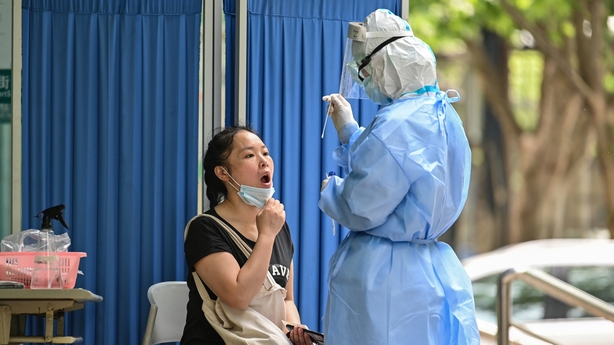
The proposal comes after Wuhan reported the first cluster of new infections since the city reopened on 8 April after a 76-day lockdown.
In Australia, authorities urged people to stay on guard against new outbreaks of the coronavirus as mobility restrictions are eased this week.
New South Wales state, of which Sydney is capital, recorded six new cases overnight after none yesterday, with three linked to community transmission.
With some restrictions on movements set to be lifted in New South Wales on Friday, Premier Gladys Berejiklian warned residents to not let their guard down.
"It is important for us to all take precautions because there will be many more people out and about, and out and about for recreation as opposed to other reasons," she told reporters.
"We should feel very fortunate we are in this position as we ease restrictions ... but it also means we have to maintain our vigilance and get tested if we have the mildest symptoms."
In Victoria state, where lockdown laws are being eased to allow small dinner parties, fishing and hikes, new cases rose by seven after 17 the previous day.
Australia hopes to remove most of the restrictions imposed in March within three months in an attempt to get nearly one million people back to work.
Elsewhere, a 113-year-old woman, believed to be the oldest person living in Spain, was reported to have beaten the coronavirus at a retirement home where several other residents died from the disease.
Maria Branyas became infected in April but fought off the illness during weeks of isolation in her room.
Her daughter said her mother was "in shape, wanting to talk, to explain, to reflect - she has become herself again".
