
Primary school managers and principals have said reopening schools in September will be incredibly challenging and that schools will need significant additional funding if it is to happen.
They say schools will need to have guidance from the Department of Education by the end of this month in order to have enough time to plan.
They outline a litany of potential problems but are also concerned by the fact that there is huge uncertainty around what the public health situation will require at that time.
They say that significant additional funding will be needed to provide personal protective equipment for staff, to install hand sanitisers, and to install hot water in toilets. Many primary schools do not have hot water in toilets.
Over 550,000 children attend primary schools here.
Cleaning is also presenting a problem. Schools complain that their ancillary grants do not currently cover the cost of very basic cleaning. If and when the schools reopen they will need far deeper and labour intensive cleaning regimes to be put in place.
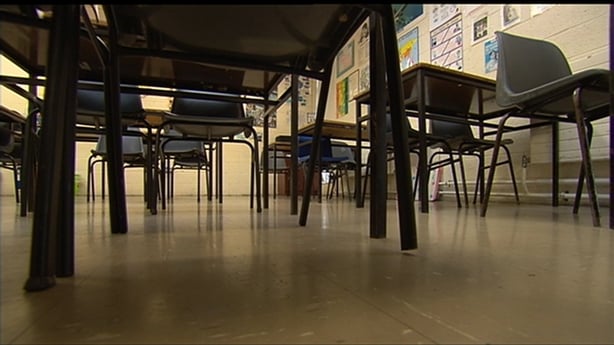
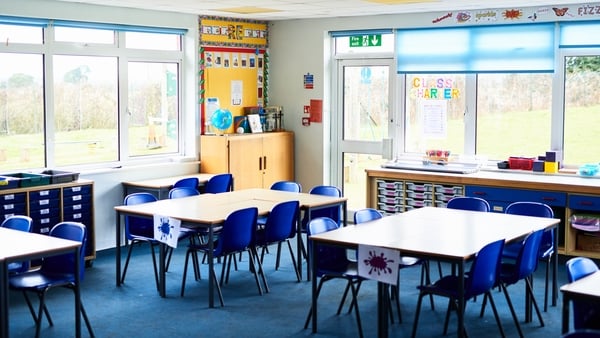
Among the "major problems" identified are the fact that a significant proportion of children rely on bus transport to get to school, and the difficulty in accommodating children in existing classroom infrastructure under social distancing protocols.
Those travelling to school by bus include vulnerable children with underlying health difficulties.
There are suggestions that students may be brought back to school in stages – with some years, such as exam years at second level – prioritised over others.
Children may also be obliged to alternate between days or weeks at school and time at home.
This would lead to reduced numbers on any given day, which would allow for the implementation of social distancing measures.
Staffing
However such reduced numbers plans bring their own problems.
Among the workers that any kind of alternating school attendance system would create childcare difficulties for are teachers themselves.
The huge majority of teachers here are women and many of them have young families. How will those teachers be able to go to work if their own children have to be at home on certain days or weeks?
School managers also point to the current staffing crisis in education. They say that schools survive because teachers come in to work even when they are ill, with a cold for instance. Come September that will not be possible. Anyone with any such symptoms will have to stay at home.
They also point to the fact that the gender and age profile of the profession means that a high proportion of teachers are pregnant at any given time, and would have valid concerns about exposing themselves to danger of contagion in a classroom setting.
Curriculum
As well as the physical reorganisation of schools, there is a concern that perhaps the curriculum too will have to be 'reorganised'.
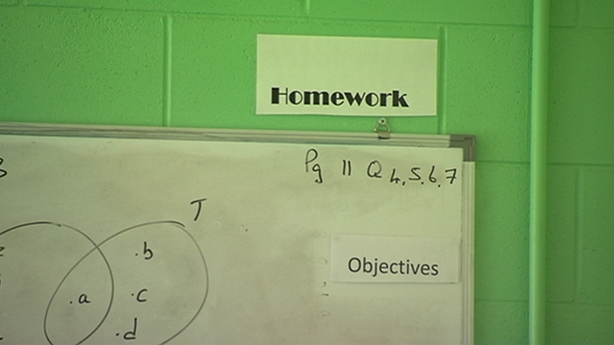
The modern primary school curriculum and the teaching methods it requires bear little resemblance to what parents will remember from their own school days. Gone are the days when ‘teacher’ stood at the board at the top of the classroom.
Schoolwork now is extremely collaborative and it is based on active learning. Children sit together in clusters. They work closely together. They are encouraged to move around the classroom. Teachers and SNAs move around the class too, working closely with groups of children at a time.
"Will we have to go back to the 1977 curriculum?" ponders one principal.
Road map
School managers say schools need a road map if they are to be able to plan for and work towards a September return. They say they need that by the end of this month.
Primary schools are extremely keen for children to return.
Their concerns are far more likely to centre on the mental health and well-being of their pupils rather than any preoccupation with their educational attainment.
School principals, teachers and school managers know it is not good for the mental health of children to be out of school for so long, and in such anxious times.
Experienced school principals say that while children can catch up on their learning, school for many children, is a vitally stabilising and reassuring part of their lives.
At this stage, school principals and managers do not know what a September reopening might look like. What they do know is that it will be a significant challenge, and that they need guidance.
"This is a massive massive undertaking", says one senior source. "It will require very careful planning and communication".
It is very easy to close schools. It looks as if it is going to be much harder to reopen them.