


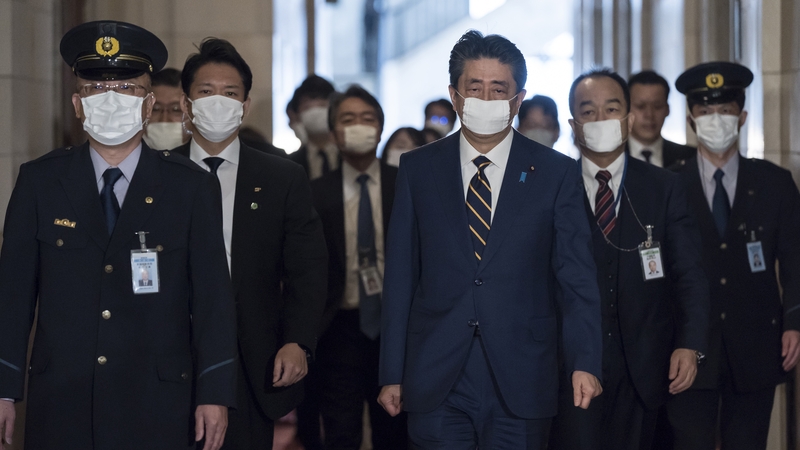
Japan's Prime Minister Shinzo Abe has declared a state of emergency in parts of the country, including Tokyo, over a spike in coronavirus infections.
Mr Abe put in place a month-long state of emergency in Tokyo and six other parts of the country.
"As I decided that a situation feared to gravely affect people's lives and the economy has occurred... I am declaring a state of emergency," Mr Abe said.
The measure falls short of the strict lockdowns seen in other parts of the world but empowers local governors to urge people to stay inside and to call for businesses to close.
He announced the plan a day earlier, citing "rapid increases of new infections, particularly in urban areas like Tokyo and Osaka".
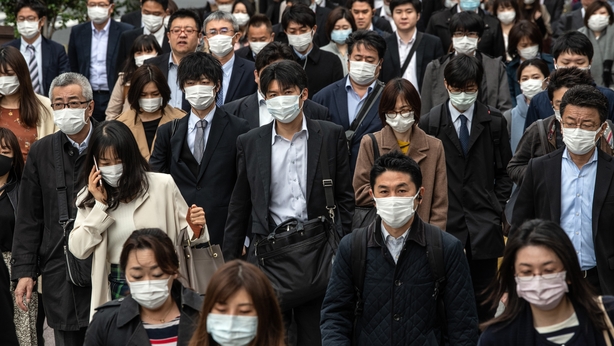
Experts and local leaders have pushed for the declaration, and 80% of people polled by public broadcaster TBS over the weekend said they backed the move.
Seven regions will be affected: Tokyo, neighbouring Chiba, Kanagawa and Saitama, the western hub of Osaka and neighbouring Hyogo, and the southwestern region of Fukuoka.
It comes with pressure growing on the government to take fresh action as medical experts sound the alarm on a spike in infections, with Tokyo reporting a record 143 new cases on Sunday, still far below those seen in many parts of the world.
Doctors in the capital warned this week that the city was already in "critical condition", with hospitals stretched thin.
Tokyo Governor Yuriko Koike, who has pushed for the emergency declaration, urged residents to cooperate with requests to limit movement.
"It may cause inconvenience in daily life, but I call for everyone's cooperation because lives are at stake," she told reporters.
In addition to asking people to stay inside and urging the closure of businesses that attract crowds, the measure allows governors to commandeer property for medical purposes.
Ms Koike is expected to explain how the measure will apply in Tokyo at a news conference later.
Government spokesman Yoshihide Suga said public transport would not be scaled back but "we will take appropriate measures to reduce person-to-person contacts drastically".
"We will mobilise all possible policies to prevent infections from spreading further," he added.
"I'd like residents in designated regions to act calmly."
The economic impacts of the measure have raised concern, and Mr Abe yesterday unveiled plans for a stimulus package worth around $1 trillion, or 20% of gross domestic product.
Japan has so far been spared the sort of virus outbreak seen in parts of Europe and the United States, with close to 4,000 confirmed infections and 80 deaths.
