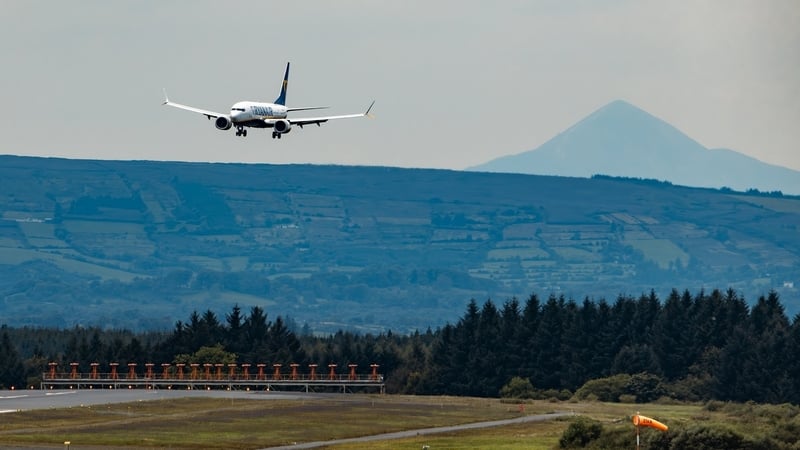

The oft-quoted line "If you build it, they will come" has its origins in the 1989 film 'Field of Dreams'. But the same logic applied in Co Mayo, years before the Kevin Costner movie was made.
"An airport is something like a road. You build a road to give a service to a community. And you build an airport to give service to a community."
Those 1986 remarks by the then Parish Priest of Knock, Monsignor James Horan, encapsulate the vision he, and a small group of associates, had for their own field of dreams.
Five years earlier, he was filmed at the site outside Charlestown in full clerical garb, telling RTÉ's Jim Fahy he was building an airport, although the small matters of permission and finance were yet to be fully resolved.
Against significant odds, the ambitious plans bore fruit.
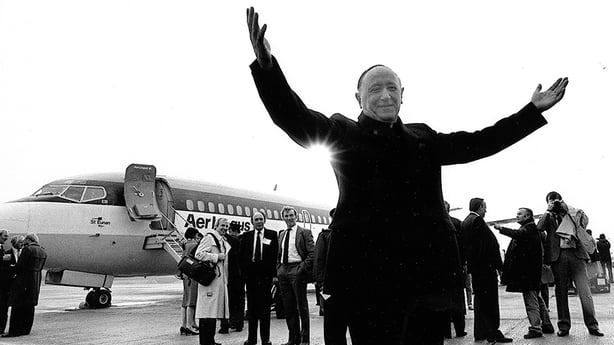
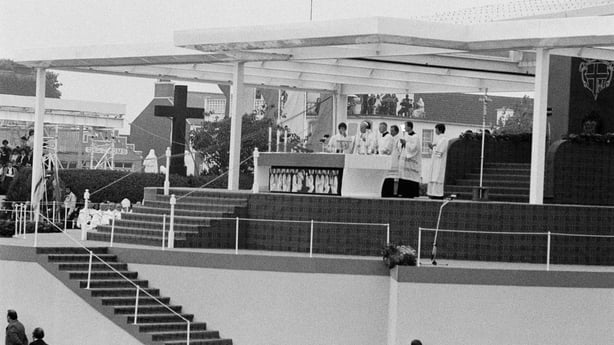
Having overseen the construction of a new basilica, and the visit of Pope John Paul II to Knock in 1979, Monsignor Horan had form as a fundraiser and a man who got things done.
When he turned his attention to building an airport in the midst of the grim 1980s, people paid attention.
Initial projections suggested it would be used by over 250,000 people each year. Figures this month showed 2025 passenger traffic was close to 950,000.
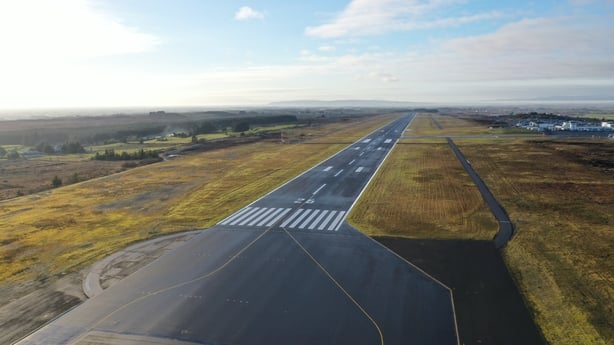
Located on what was famously referred to as a "foggy, boggy hill" near Charlestown, work at the site began in early 1981.
Terry Reilly, a former editor of The Western People, detailed the birth of the airport in his 2006 book "On a Wing and a Prayer".
He describes Monsignor Horan as a "doer", someone who took the bull by the horns and set about improving things, in whatever parish he served in.
"The Basilica was his first big project in Knock, a building the Church was afraid it would never be able to pay for. But he had the entire cost covered before it was even dedicated [as a place of worship]," he said.
"Then he was instrumental in many respects in bringing the Pope to Knock in 1979, realising a long-cherished dream for people in the area.
"His chest was out after that and he said 'let's build an airport and we can bring Pope John Paul II back again!'."
Late Mayo journalist John Healy put Monsignor Horan in contact with then taoiseach Charles Haughey.
Mr Reilly says the Fianna Fáil leader provided permission and some initial funding for the development.
Momentum, fused with burning ambition, combined to see the project through to completion. It would bring connectivity to the region, boost numbers visiting Knock Shrine and help bridge gaps resulting from the generational impact of emigration across the western seaboard.
By late 1985, the first commercial flights operated, when pilgrims departed for Rome.
Months later, Mr Haughey's initial backing was rewarded when, as leader of the opposition, he was called upon to perform the official opening.
"From Barr na Cuige today, we send forth a message which is of significance to the entire nation. It is a message of triumph over adversity, of difficulties overcome, of critics confounded," he told those gathered for the event.
A red and green flag held aloft on the day of the official opening declared: "Mayo for Sam and Horan for Pope".
But Terry Reilly says the years that followed were lean ones.
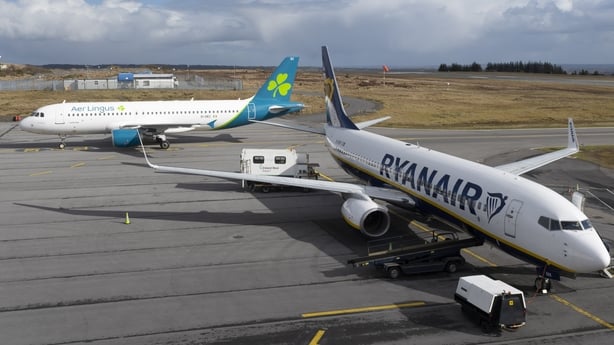
"Aer Lingus wasn't interested in it or developing a hub in the west and played a low-key role," he said.
"It was the advent of Ryanair that saved the airport. They saw the connectivity that was needed between the west of Ireland and people who were working in England. Guys who could fly home for the weekend and fly back over on the Monday.
"That was the lifeline for the airport - it kept it alive and then allowed for expansion," he added.
Now, it has "evolved into a conduit for people from the west of Ireland to fly to destinations all over Europe".
Last week's figures bear out that evolution.
2025 passenger numbers of 946,000 mark Ireland West's busiest year on record. Of these, the vast majority (732,000) were going to, or coming from, Britain.
The remainder were availing of services to Europe, due in large part to Ryanair offering a range of Spanish destinations from Knock.
Its Chairman Arthur French described last year's passenger numbers as "a testament to the continued strong support for the airport".
But that upward trajectory means numbers now hover dangerously near a one million passenger cap for funding under the State's Regional Airports Programme.
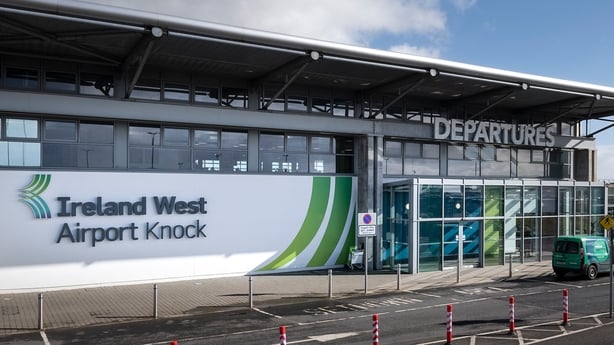
A new iteration of that support structure, running to 2030, will be soon published by the Department of Transport. Ireland West is among several airports outside the capital closely following developments in that regard.
The facility is operated by Connacht Airport Development Company and has benefited in recent years from the involvement of local authorities in the west and northwest who agreed to purchase a share in it around a decade ago.
It has also capitalised on a sense of ownership many in the region feel towards the airport, accentuating the advantages it offers and emphasising the convenience it offers to those in the west, northwest and midlands.
Plans for a Strategic Development Zone (SDZ) on lands around the airport would provide over 95,000 square metres of commercial, business and enterprise space, along with additional facilities for aviation development, conferences and hotel accommodation.
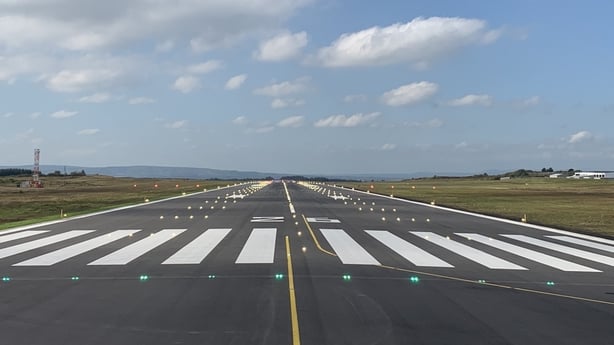
A designation of the land in question as being of "strategic national importance" assists the concept.
The planned expansion has been described as a potential game-changer, in terms of developing new industries and technologies, with ready access to air connectivity. But the pace at which the SDZ idea is advancing has been sluggish.
In its absence, the airport is still forecasting continued growth in passenger numbers and is working to expand the number of international destinations it can serve.
As it approaches the 40th anniversary of that 1986 opening, Mr Reilly says those who carried the torch lit by Monsignor Horan have "seen his dream through".