
A chance discussion between a group of Polish men working in Connemara led to a breakthrough in the effort to identify a man whose body was discovered on the outskirts of Galway over five years ago.
The remains were found in a wooded area close to Rusheen Bay in September 2014.
Gardaí quickly established that he died in tragic circumstances but were at a loss when it came to determining who he was.
The deceased was carrying no identification and there were no reports of any missing people fitting his description.
Clothing he was wearing originated in North America and the man had some sterling and US dollars on his person. But apart from a gold watch and a single key, there was little else to assist with the investigation.
As the inquiry progressed, DNA samples were cross referenced nationally and internationally. Isotopic analysis was carried out on the man's teeth and several appeals were made for information.
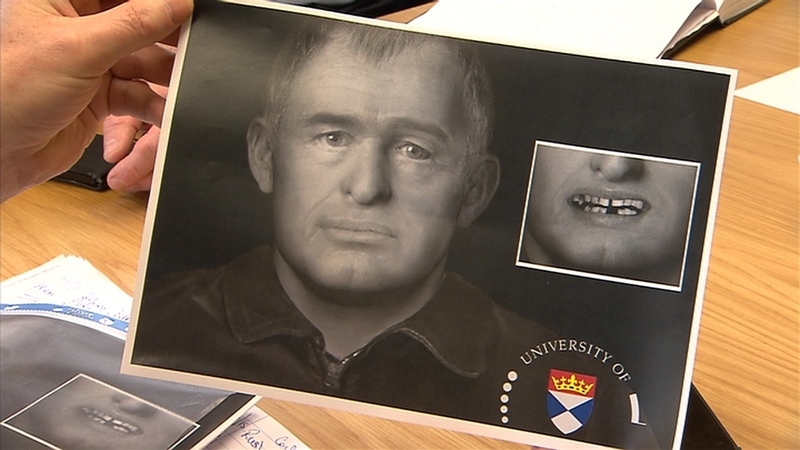
In August 2015, gardaí released a computer generated image of what the man may have looked like.
But with no detail forthcoming as to who he was, or how he came to be in Galway, hopes for a successful resolution faded.
While the case remained open, the man was laid to rest in Bohermore Cemetery in Co Galway.
We need your consent to load this rte-player contentWe use rte-player to manage extra content that can set cookies on your device and collect data about your activity. Please review their details and accept them to load the content.Manage Preferences
It was only when a number of men were discussing missing person cases, during a tea break in Connemara in recent months, that the mystery began to unravel.
The men, who were from Poland, started talking about how a fellow countryman had rented a room in a house they occupied for a brief period in 2014. He left unexpectedly one day, leaving his belongings with a note telling the other tenants to rent out his room and dispose of his possessions, if they did not hear from him again.
When there was no further contact, in due course they moved the man's personal effects into the attic and rented out his room to a new tenant. As a precautionary measure, they changed the lock on the front door of the property.
During this conversation, the case of the unidentified man was raised and the facial reconstruction from some years earlier was found online. When they saw the image, his former housemates agreed that it bore a resemblance to the man who had lived with them.
They contacted gardaí in Salthill and told them of their concerns. While the lock had been changed on their house, they had retained the old lock and when checked, the key found on the deceased fitted it perfectly.


It subsequently turned out that the Polish men had used social media to try and contact the man's family after he left his belongings and did not return. They posted messages to a number of people in Poland with the same surname in 2015. But it was four years before they received a response from someone claiming to be his relation.
Liaising with their Polish counterparts, gardaí then made contact with the family in question and sought a DNA sample to cross reference it with the one taken from the deceased. Tests were carried out on swabs taken from the dead man's elderly parents in recent weeks and they have confirmed the relationship.
It has now emerged that the man who died on the shores of Rusheen Bay was aged 46, left rural Poland in the early 1990s, and travelled to the US. He lived in the Florida area for around two decades and was only in intermittent contact with his family. There is still no indication as to why he travelled to Ireland or why he decided to move to Galway.
Gardaí believe he secured accommodation through a website used by members of the Polish community and would not have employed more widely used rental services.
Efforts are now under way to arrange a visit to the city by the man's relatives, so they can pay tribute to him and remember him at his final resting place in Galway.