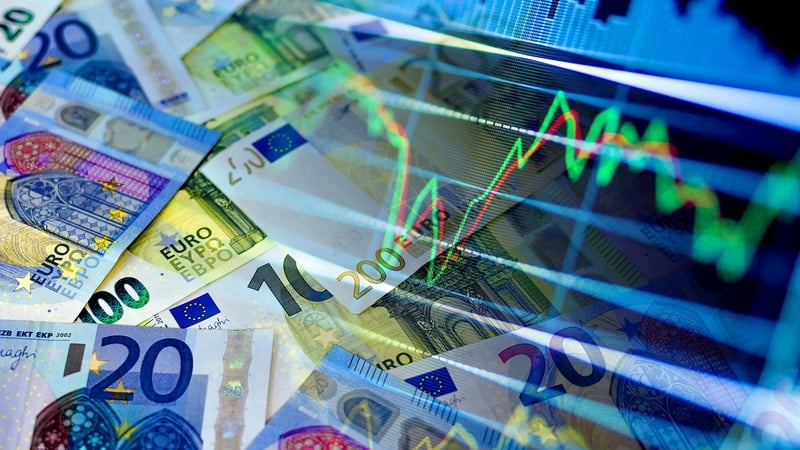

The European Central Bank is expected to keep interest rates steady today, following a similar decision by the US Federal Reserve last night.
However, policymakers are likely to signal a possible rate hike as soon as June to address inflation in the euro zone.
"It's a strange situation central banks face," Davy's chief economist Kevin Timoney told RTÉ's Morning Ireland.
"They would like to be able to say 'we want to get inflation under control and that's our first goal'. But when it's a supply shock, typically central banks will be reluctant to act too quickly," he said.
With the war in Iran now in its third month, the pressure on the ECB to act is likely to increase.
Oil prices have spiked to highest levels since 2022, with Brent crude trading at over $120 a barrel this morning.
This dramatic volatility and the chance of oil prices going down again is likely why the ECB is so reluctant to increase interest rates, Mr Timoney explains.
We need your consent to load this rte-player contentWe use rte-player to manage extra content that can set cookies on your device and collect data about your activity. Please review their details and accept them to load the content.Manage Preferences
"Maybe a couple of weeks ago, when oil prices were considerably lower, rate hike probabilities had fallen quite a lot. So we've seen that these two are moving closely together."
Across the euro zone inflation has soared well above the ECB target of 2%.
In Ireland, energy prices went up by more than 15% in a year, according to the latest CSO figures, while the rate of inflation in the year to April is estimated to have risen by 3.6%.
But the Irish economy has good 'buffers against higher inflation," according to Davy's chief economist.
"Irish consumers generally are going to be affected, but household balance sheets are strong, savings are high, the Government's balance sheet is in great shape too. All this reduces some of the real economic effects," he said.
However, last month Ireland saw much higher energy price increases compared to other EU nations, with the likes of Spain seeing much lower energy inflation due to broader adoption of renewable energy sources.