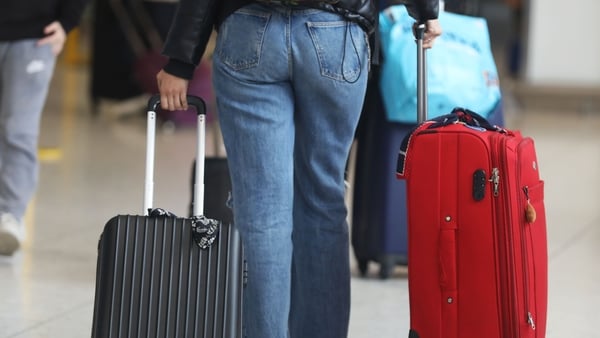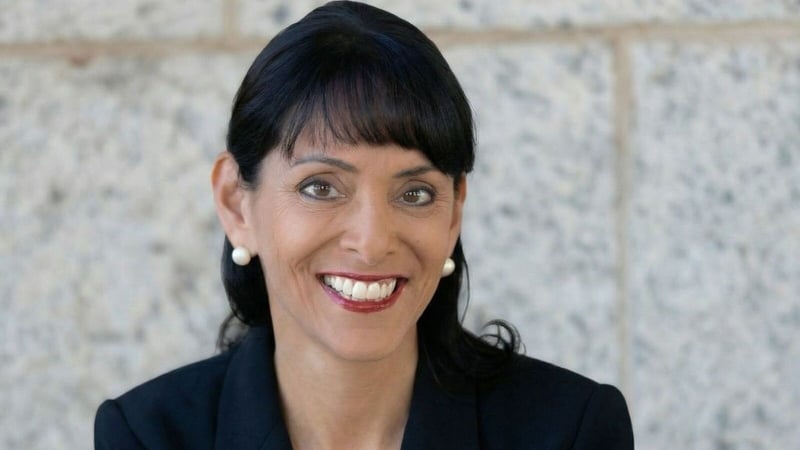

As an island nation, Ireland is "significantly" exposed to jet fuel supply shortages, according to aviation expert Anita Mendiratta.
Speaking on RTÉ's Morning Ireland, she said that with roughly 90% of visitors coming to Ireland by air and 50% of cargo, there is a particular "vulnerability" here, as airlines and aviation sector bodies warn of the looming jet fuel crisis.
The International Energy Agency warned yesterday that European stocks would reach a crucial level in June, at which physical shortages would begin.
In normal times, two thirds of Europe's jet fuel imports come from the Middle East. The disruption in the Strait of Hormuz means Europe's imports of jet fuel from the United States reached record levels.
"Importantly, this isn't just the raw crude coming through the Strait of Hormuz. It's also the refining that the raw crude needs to go through to become jet fuel, which is taking place in the Middle East," she said.
"And sadly, many of the refineries have been hit during the conflicts, and therefore their capacity has dropped dramatically as well," Ms Mendiratta explained.
The expert added that airlines and airports are currently working on measures to mitigate the looming crisis, adding that hedging and "careful management" will allow Europe to manage fuel prices up "until the end of summer into the fall".
We need your consent to load this rte-player contentWe use rte-player to manage extra content that can set cookies on your device and collect data about your activity. Please review their details and accept them to load the content.Manage Preferences
"Airlines are looking at their schedules very carefully to see where can they thin them out a little bit, pull back on capacity, allow the demand to stay there, but shift it around to certain schedule points and certain destinations, but also using certain aircraft that are much more fuel efficient," she said.
The European Union is prepared to coordinate a release of jet fuel stocks if disruption to the Strait of Hormuz persists, a EU spokesperson said today, even as Iran temporarily reopened the key waterway.
"There are no fuel shortages in the EU at present. We are, however, preparing for possible supply shortages of jet fuels," the spokesperson said in a statement, adding the bloc could release reserves if the strait remained disrupted.
Shipping firm Hapag-Lloyd said it would avoid transiting the Strait of Hormuz while it assessed Iran's announcement.
KLM announced yesterday it will be cutting 80 of its European flights to and from Schiphol due to a spike in the price of kerosene.
Germany's Lufthansa yesterday said it will ground 27 planes imminently, the first major carrier to do so, whilst EasyJet warned bookings were lagging compared to last year.
Earlier, the European Commission said there is no evidence of shortages at the moment, but next month it will introduce mapping of refining capacity for oil products across the bloc.
Summer holidays 'not under threat'
The editor of Travel Extra said that while there is some concern regarding jet fuel, summer holidays "are not under threat".
Speaking on RTÉ's Morning Ireland, Eoghan Corry said jet fuel supply is "not as big a crisis" as it is in Asia because Europe gets much of its oil elsewhere.
However, he said flight prices could increase for other reasons, such as the price of fuel and capacity issues.
"We aren't seeing that in the market at present, and the other thing we're not seeing is the trimming back of schedules due to fuel supply," he said.
"Aer Lingus have been trimming back schedules for maintenance reasons, people wouldn't even notice it, but there's no sign of Ryanair doing that."
Ireland's economy very dependent on imported fossil fuels - Minister
Patrick O'Donovan TD, Minister for Tourism, Culture, Arts, Gaeltacht, Sport, Media, said he shares the public's concern with regard to fuel.
He said what is happening in the Middle East has not been seen before and "hopefully" will not be seen again.
Mr O'Donovan said Ireland's economy is "very predicated and very dependent on imported fossil fuels, we know that".
He said that "We have obviously a particular vulnerability," and that it was important that "every possible avenue is explored to make sure that the situation in the Middle East is brought to a successful conclusion."
The minister the EU and the wider global economy is "inextricably linked" to the Strait of Hormuz in which "so much fossil fuel" needs to transit.
On the question of whether a further package of Government supports will be necessary in the coming months, Mr O'Donovan said "we'll take it as we find it," as it was not possible to forecast how the situation will evolve.
He said the ministers for Energy, and Enterprise [Darragh O'Brien, and Peter Burke] will keep everything, including electricity prices, "under review" with the Minister for Public Expenditure and Reform [Jack Chambers].
He said Ireland differed from other European countries in how it was able to respond to the latest energy price shocks with almost three-quarters-of-a billion euro in supports for people.
The minister said it's "really important" to engage with the social partners and the Government is "listening."
"We are accutely aware of the difficulties that businesses, farmers, individuals, householders, parents, everybody has in the country at the moment and we have made a second big response."
He said the Government will begin "in the not too distant future" dialogue with the social partners "around Budget 2027."