
There was always plenty of money to be made in the world of weight loss – whether it was through diet plans, supplements, exercise programmes or surgical intervention.
Nowadays, though, the industry is increasingly dominated by one thing – GLP-1 medicines.
The likes of Ozempic, Wegovy, and Mounjaro – which can also be prescribed for other issues like diabetes - are estimated to have racked up sales of €50-60 billion last year alone.
And there's much more growth forecast – with some estimates suggesting sales will be worth €100 billion a year by the early 2030s.
Remarkable for a market that didn’t exist just a few years ago.
Novo Nordisk’s Ozempic was the pioneer in this area - first authorised for use in the treatment of diabetes in 2018. It wasn’t long before the weight loss potential was noticed, though, and in 2021 Novo got approval for Wegovy – a version of the drug designed specifically with weight loss in mind.
And it’s been incredibly profitable for Novo Nordisk since then.
If you look at their results for 2017, just before Ozempic hit the market, they had sales of 111.7 billion Danish krone, and net profits of just over 38 billion DKK.
Fast forward to last year, and their sales had hit 309 billion DKK, and net profits were more than 102.4 billion DKK.
So that’s close to a tripling of sales and profits in eight years.
Not necessarily all of that is down to Ozempic and Wegovy – the company does make many other drugs - but it’s definitely been by far the biggest driver of growth.
In fact it’s been a significant source of growth for Novo’s native Demark.
By one estimate, Novo last year accounted for around 11% of Danish GDP growth and around a fifth of its employment growth - through direct employment and the expansion of its supply chain.
It has been credited with boosting the country’s exchequer through a surge in corporation tax, it's behind a boom in exports and a healthy equities market there too. So much so that the Danes have increasingly been having conversations that would be familiar to Ireland – around the risks of an over-reliance on one big pharma firm.
And those fears gained some credence in recent months – with the country slashing its GDP growth forecasts late last year, largely because of Novo.
The weight of expectations
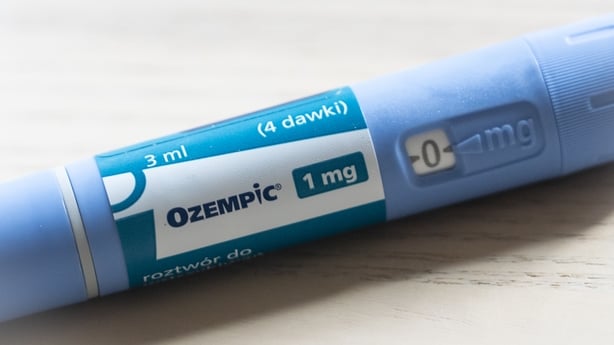
Ozempic may have sparked a weight loss revolution, but you wouldn’t know that from Novo’s share price.
It’s down more than 60% in the past year, and has fallen nearly 40% in the past month alone.
That’s not because demand for the GLP-1 drugs has fallen – it continues to boom.
The problem for Novo is that it’s not been able to capitalise on that in the quite the same way that it did before.
At the start of this month Novo warned that its profits and sales could fall by as much 13% this year – a figure that was far bigger than markets could have expected.
It blamed that on "unprecedented pricing pressure" – reflecting, in part, the Trump Administration’s campaign to bring US drug prices in line with those charged in the likes of Europe.
But that pricing pressure has been aided by the fact that Novo does not have the field to itself any more.
Now going head-to-head with Ozempic and Wegovy is Eli Lilly’s Mounjaro – which got FDA approval in mid-2022 and EU approval in September of the same year.
It’s been very successful at eating into the market that Novo had created – particularly in the US and particularly with cash buyers, rather than those who are going through their health insurance.
In other words, Novo can no longer charge what it would like to in its biggest and most lucrative market.
But there has been another factor in Novo’s recent share decline.
At the start of this week it revealed that a new version of a GLP-1 drug that it was developing – called CagriSema - wasn’t quite as effective as had been hoped.
Tests found that users achieved an average 23% weight loss over the course of 84 weeks – which seems impressive, but it’s less than the 25.5% that users of Mounjaro lost.
So while Novo would have hoped that this drug would set a new standard in the field, it turns out that it’s no better than what’s already available.
Hefty profits
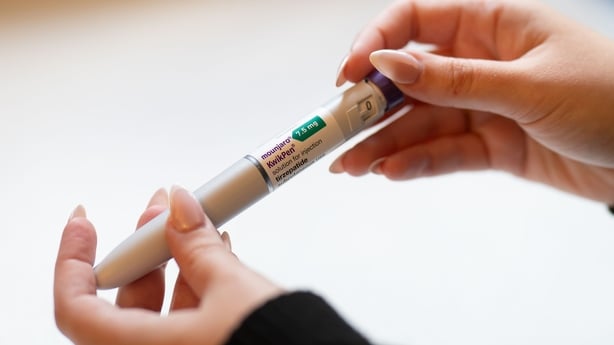
Of course Novo is still making plenty of money from its weight-loss drugs.
So is Eli Lilly.
In 2021, before Mounjaro was approved, Lilly had revenues of $28 billion, and net profits of $5.6 billion.
Last year, its revenues had risen above $65 billion – so more than double in four years. Its net profits had hit $20.6 billion - nearly quadrupling in the period.
And in its 2025 results, Lilly helpfully broke down the value of sales of Mounjaro and Zepbound. Mounjaro brought in $23 billion dollars in sales last year, Zepbound took in $13.5 billion - so together they made up more than half of Lilly’s total sales in 2025.
It’s safe to assume they make up a similar – or perhaps even a greater proportion - of the company’s profits too.
Like Novo, it makes lots of different medicines and yet three years later they’re dominating the company’s sales.
And while Eli Lilly is American, it’s worth noting the Irish element in all of this too.
Because Lilly makes the key ingredient for Mounjaro and Zepbound –tirzepatide - in its facility in Kinsale in Cork. It's also set to open a new facility in Limerick this year to help handle the huge demand for its drugs.
The Irish Fiscal Advisory Council suggested that the surge in Irish exports recorded last year was almost entirely down to Lilly’s ingredient shipments to the US. And that’s boosted the country’s GDP and corporation tax take.
Eli Lilly is also believed to be one of the three multinationals that, together, paid 46% of all corporation tax here last year.
With so much money to be made, you can see why so many other firms are trying to get in on the action – which will be a further headache for Novo Nordisk, and ultimately Eli Lilly.
There are countless GLP1-type drugs in various stages of development at the moment by a number of big pharmaceuticals.
In some cases, big money has been paid by firms in order to springboard them further along the process. AstraZeneca, for example, last month struck a potential €4 billion deal with a Chinese pharma firm to license a monthly injectable, subject to it passing various clinical and regulatory trials.
A lighter load
The hope is that the eventual arrival of more GLP-1 variants will be a good news for consumers, with prices falling as a result.
What you may soon see is a kind of hierarchy of medicines, which are priced accordingly.
So, for example, if a clinical trial shows one variant leads to 20% weight loss over a year or two, that might be priced lower than the ones that give 25% weight loss. But it might cost more than the ones that give you a 10% loss.
You will likely see the most effective ones targeted at those with the most to lose – or those who need to lose the weight quickly – and who are willing to pay a premium for that.
Customer preference will also be a big differential in the coming years.
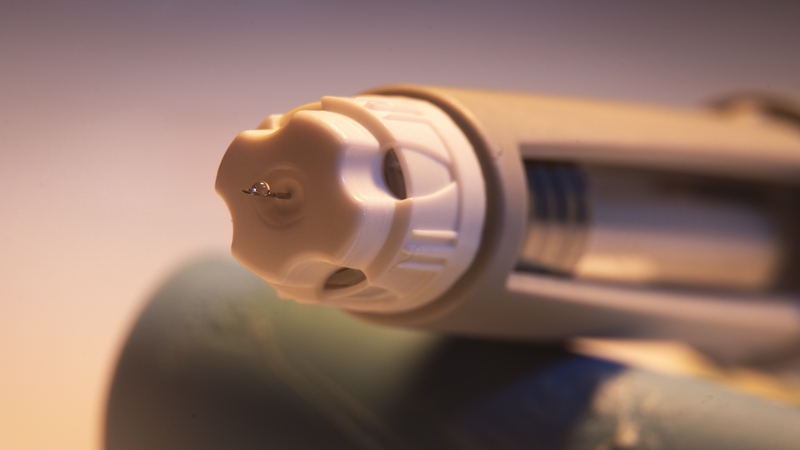
At the moment the likes of Ozempic and Mounjaro are once-weekly injections – but one of the alternatives in development at the moment is a once-monthly injection, which may be more attractive to some.
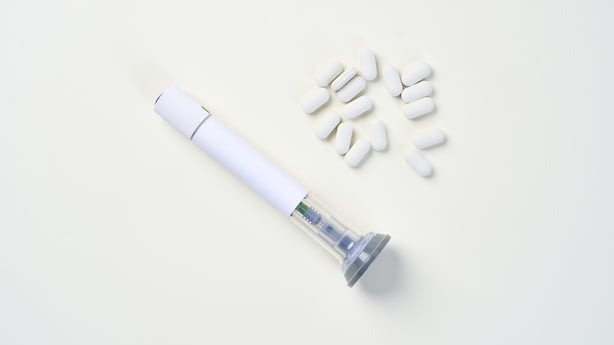
The big game changer in the market, though, is the arrival of pill-based versions of these drugs.
Novo recently got approval for a pill version of Wegovy in the US, which willl probably hit the European market later this year.
That’s a daily pill, and while clinical trials showed to be slightly less effective than the jab it is probably going to be more attractive to some customers who don’t want to use an injectable.
Crucially, the pill version is also cheaper (at least that’s the case in the US at the moment).
That’s because the actual device used in the injectables is relatively complex and bulky, while the drugs also need to be kept in cold storage until they’re used. That all adds to the supply chain costs.
Pills, on the other hand, are cheaper to make, easier to pack into a shipping container, and do not need to be chilled.
That makes them easier to transport and more cost-effective for pharmacies to store.
But aside from all of the new variants and versions that may come to market in the coming years, really the big thing that’s going to drive down price is the arrival of generic versions of these drugs.
Duplicate medicate
Novo’s patent over semaglutide – which is the key ingredient in its drugs – has actually already expired in some countries, like China and Brazil.
It also expired in Canada last month because Novo didn’t pay a small maintenance fee of CA$250 a year, which would have extended the patent protection.
The expectation is that generic versions of Ozempic will start to come to market there at some stage this year.
Ireland faces a longer wait, though, as the European patent doesn’t run out until 2031.
For Eli Lilly and Tirzepatide, it’s a slightly different story.
It holds the patent for that until around 2036 – though that could be changed or even shortened in the near future, as it is now open to so-called patent challenges.
This is essentially where another company can take a legal challenge against the patent that was awarded – perhaps arguing that it shouldn’t have been granted in the first place, or that the scope of the patent is broader than it should be.
But whenever the patents do expire, the assumption is that there will be multiple, cheaper versions of the drug coming to market quite quickly afterwards – which should make it more accessible to more people.
It’s for this reason that the estimated future value of the market is now lower than previously thought - not because analysts think there won’t be more users for these drugs, but because they now expect they’ll each be spending less on them.
The counterbalance to that is the hope within drug companies that they’ll be able to get approval for issues beyond diabetes and weight loss.
Zepbound is already approved for the treatment of sleep apnea, for example, but there’s also some (so-far limited) evidence to suggest it can also help slow kidney disease, Alzheimer's, reduce blood pressure and even help people suffering with addiction.
Weight and see

Investors are also watching closely to see what impact the growth of this market will have on other parts of the economy.
There is already strong evidence to show that people on this medication buy less food – which could have an impact for everything from food and drink brands to supermarkets as their adoption continues to grow.
GLP-1 drugs have been blamed for sugar prices falling to a five year low – as well as a slump in sales at Ben & Jerry’s (though this may well be caused by a number of issues).
There is also hope that these drugs will have a positive impact on national health services like the HSE, as a fall in obesity could reduce instances of many other conditions – including cancer, heart disease, arthritis and diabetes.
There are even suggestions that airlines could benefit from having lighter passengers on board – though that probably won’t be dramatic, and unlikely to be something that will benefit consumers.
But despite their growth, GLP-1 drugs remain relatively niche – especially in Ireland. And the impact of falling obesity levels here may be hard to detect – especially in the short-to-medium term.
Really, it will take some time – possibly even decades – before it is possible to fully appraise their impact.