


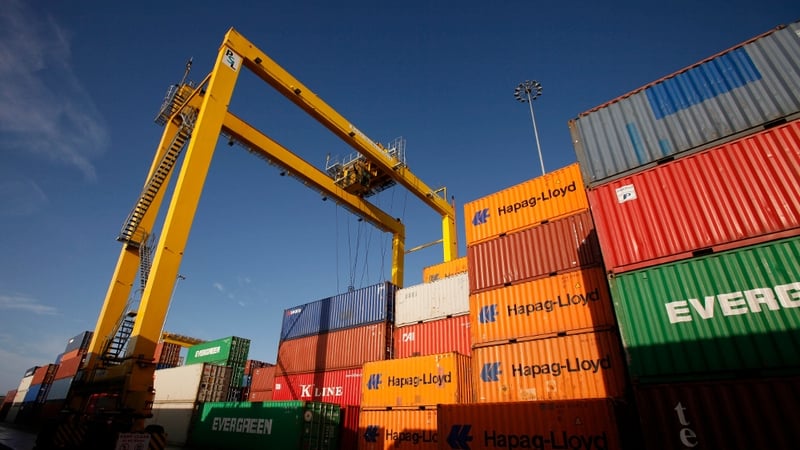
Thousands of businesses won a hard-fought victory when the US Supreme Court ruled to overturn the White House's emergency tariffs, but the process of getting refunds has only just begun.
In a decision that could ripple throughout the global economy for years, the court ruled that US President Donald Trump was not allowed to use the 1977 International Emergency Economic Powers Act to levy broad tariffs on imports.
The corporate world has spent months adjusting to Trump's often-evolving trade policy and his central use of tariffs for his agenda, not just to address trade issues but also as a cudgel against other governments' policies and actions.
They are likely to face further challenges, as Mr Trump, in a furious press conference following the ruling, vowed to use additional powers to impose more tariffs, including a temporary 10% levy on all imports.
Regardless, many businesses and industry associations reacted with guarded hopes for more predictable trade policy.
Thousands of companies - not just those that sued the administration - will now decide whether to pursue refunds, as it means more than $175 billion (€148m) in US tariffs collected could be refunded, Penn-Wharton Budget Model economists said.
"If the country needs revenues, then have a debate in Congress," said CEO of toymaker Learning Resources Rick Woldenberg, one of the first businesses to file suit against the tariffs last April.
"I'm excited. Hopefully this is something everyone feels they won. It's a win for everyone," he said.
Read more: Government monitoring US tariff situation closely - Harris
Uncertainty remains
Stocks of affected companies rallied on the news initially but retreated from those gains due to the uncertainty surrounding trade policy.
Shares of Target and Coach parent Tapestry were up slightly in afternoon trading.
The logistics surrounding refunds is likely to be left to the US Court of International Trade, which means the claims are likely to be administratively complex, said International Chamber of Commerce Secretary General John Denton, adding that the ruling was "worryingly silent" on that issue.
More than 1,800 tariff-related suits have been filed with the US Court of International Trade, which has jurisdiction over tariffs and customs matters, since April, compared with less than two dozen such cases in all of 2024.
Mr Trump's new vow to bring additional tariffs was anticipated by numerous lawyers and business associations interviewed prior to his press conference.
Several said the decision - and Mr Trump's subsequent moves - would introduce more uncertainty in coming months.
"The odds that tariffs reappear in a revised form remain meaningful. Layer on potential tariff refunds, and you introduce a messy operational and legal overhang that amplifies economic uncertainty," said Head of US economics at Fitch Ratings Olu Sonola.

Numerous sectors affected
Companies across consumer goods, automotive, manufacturing and apparel have been hit particularly hard as they depend on low-cost production in China, Vietnam, India and other sourcing hubs.
Mr Trump's duties raise the cost of importing finished goods and components, squeezing margins and disrupting finely tuned global supply chains.
Prominent plaintiffs include subsidiaries of Japan's Toyota Group, US big-box retailer Costco, tire maker Goodyear Tire and Rubber, aluminium company Alcoa, Japanese motorcycle maker Kawasaki Motors and Paris-listed eyewear giant Essilor Luxottica.
The tariffs raised prices on consumers weary from several years of post-Covid-19 inflation, with the Federal Reserve Bank of New York last week estimating that 90% of Mr Trump's tariffs are borne by American consumers and companies.
The White House has argued with little evidence that the levies are paid by foreigners.
As of November, the effective US tariff rate was 11.7%, compared with an average of 2.7% between 2022 and 2024, according to the Yale Budget Lab.
In addition, the automotive sector will continue to face significant tariffs that were not levied under IEEPA.
Import tariffs of 25% on vehicles shipped across the border from either Mexico and Canada, for example, were imposed last year based on national-security grounds.
Still, attorneys say that likely thousands of auto parts shipped into the US from countries subject to Mr Trump's reciprocal tariffs are being hit with the levies, inflating expenses for both parts suppliers and carmakers.
Several lawyers said many more companies around the globe are likely to join the suits, having waited until the ruling to not draw unwanted attention from the White House.
They will join a queue of companies who could be waiting for months to years to recoup the billions of dollars in import duties.
CEO of The Wheel Group, Wade Kawasaki, which is a California-based automotive wheel manufacturer, said his company has faced roughly 20% added costs under the IEEPA tariffs.
He plans to seek refunds, which will involve his team sorting through thousands of transactions to "figure out how much is owed back to us," he said.
Some US companies have opted to sell their rights to collect those refunds to outside investors.
This involves taking a small payment upfront - around 25 to 30 cents on the dollar – while agreeing to forfeit the rest to investors should the tariffs be overturned.
German logistics firm DHL said that it will use its technology to ensure that its customers get refunds "accurately and efficiently" if they are authorised.
Bruce Smith, owner, chairman and CEO of Voltava, a Michigan-based auto supplier, said he supported Mr Trump’s effort to balance trade with other countries, but hopes now that the US president and other elected officials will work toward trade policies that protect national interests and benefit both the US and its trading partners.
"We can be tough and strategic without being unpredictable," he said.
