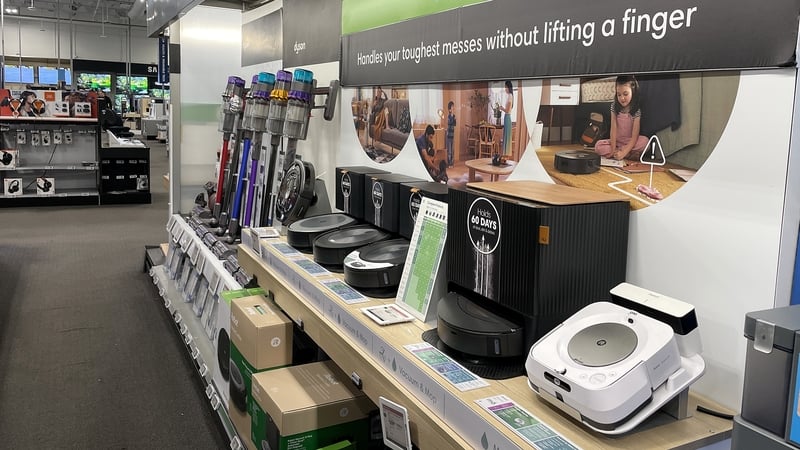

It's one of those classic cases of a company creating a whole new market with their product - only for it to get swallowed up by the competitors and copycats that follow in its wake.
Earlier this month iRobot - the company that made the Roomba robot vacuum cleaner - filed for Chapter 11 bankruptcy protection in the US. It came 23 years after the autonomous vacuum first hit the market, and three years after it agreed to a takeover by Amazon (a deal which fell apart in early 2024).
It should be said that iRobot wasn't the first to create a robot vacuum cleaner.
That honour goes to Electrolux, which debuted its prototype 'Trilobite' vacuum in 1996. It used ultrasonic sensors to detect and avoid objects and the idea was so novel it even featured on BBC's Tomorrow's World in 1997.
The Trilobite eventually came to consumers in 2001 - a full year before the Roomba hit the shelves.
But apparently it was too good at avoiding objects, which meant it would leave edges and corners of rooms un-vacuumed. Ultimately, the Trilobite was discontinued within a few years.
The Roomba, though, was far more successful, with iRobot claiming to have sold one million units within two years of launch. And the mixture of novelty factor and actual practical usage meant it quickly became iconic.
One of the first Roombas is now in the National Museum of American History - and the brand was so successful the name became somewhat of an eponym for robot vacuums - much in the same way that Hoover became a generic name for traditional vacuum cleaners.
In the 20-odd years since it first debuted, more than 50 million Roomba units have been sold worldwide.
But of course while the Roomba was the first to have a commercial success, it didn't take long for competitors to enter the fray.
That includes many traditional vacuum cleaner brands, who have developed their own versions of the product. Some of those, like Dyson, are at the higher end of the market, while there are now a swathe of brands offering far cheaper alternatives, be it online or in supermarket middle aisles.
So that's dented iRobot’s potential for growth.
And there's also the fact that, despite all of that and despite all its promise, robot vacuums are still relatively niche products.
According to iRobot, 20% of all vacuum sales globally are robots, which on the surface sounds impressive … but after 20 years of the technology, with cheap and premium options now available, you would expect more people rushing out to hand this boring chore over to a robot.
That, perhaps, points to the fact that they're not quite as useful as we might hope, for example if you have lots of separate rooms and different surfaces and steps, a robot vacuum is going to struggle.
And that’s what led to iRobot struggling?
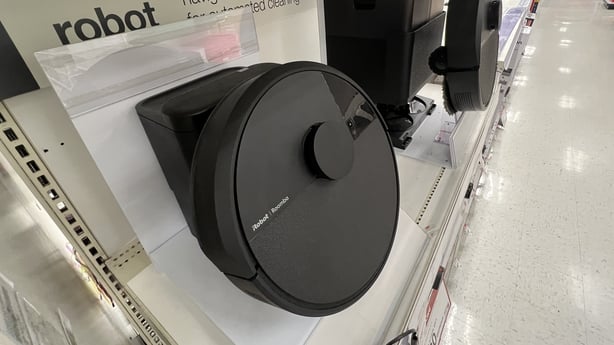
Yes - the first real sign that things weren't going well was back in August of 2022, when it was announced that Amazon was to acquire iRobot for $1.7 billion.
Which is a lot of money, for most, but it wasn’t much of a premium on what its shares were trading at at the time; so clearly it wasn’t like Amazon was swooping in with an offer they couldn't refuse.
But that takeover attempt quickly hit some difficulties, with US and European regulators raising concerns.
At the heart of the problem was a fear that Amazon would use its shopping platform to promote Roomba products, at the expense of rivals, which would allow them to squeeze out the competition.
Eventually, in early 2024, Amazon abandoned the bid, blaming regulatory opposition.
And whatever problems the business had at the start of the takeover approach, they were so much worse at the end of it.
Because a company that is in the process of being acquired is generally quite limited in what it can do. It can't really make any major changes to the business, be it cuts, new investments or changes in direction. That meant iRobot was forced to languish in a kind of purgatory for the year-and-a-half spent waiting for the Amazon deal to go through.
And really it was mortally wounded by the whole thing.
Immediately after the deal collapsed it announced it would lay off close to one third of its staff, its CEO left and a new boss came in to try and turn things around. It did trundle on for close to two years after that, before eventually filing for Chapter 11 bankruptcy protection this month.
So if you own a Roomba, should you be worried?
Nothing is guaranteed at this stage, but there is hope that the company will continue.
Most importantly, there's hope its products will continue to work.
Alongside the bankruptcy process, iRobot announced a pre-arranged takeover bid by a Chinese company called Picea Robotics. It is the company’s main lender and its main manufacturer, so it has a significant interest in keeping it afloat.
And if it's successful it will hopefully mean that it will continue to sell and maintain Roomba products, which should mean that the devices people already have don't turn into very expensive doorstops overnight.
The one little caveat is the fact that Picea is Chinese, and iRobot is a US company.
We know how hostile the Trump administration is to China and how keen he is to grow American manufacturing. But we also know about the legitimate concerns that many have about Chinese companies' use of consumer data.
So there is a chance that the deal gets blocked.
If that happens, all bets are off about what happens to the devices.
Has it happened before that a smart home device just gets deactivated?
There is a cautionary tale here for anyone investing in smart home gadgets because, yes, it does happen. Quite a lot, actually.
In some cases it's because the company that makes it goes bust, in other cases it's because the product is deemed to be too old and the manufacturer just stops supporting it.
The product might still work to some extent but, as people will know when this happens with phones, it quite quickly it starts to lose functionality. Maybe it stops interacting with other, newer devices, or if something breaks or there’s a bug there's little to no chance that it will be fixable.
In other cases, the basic functionality if once offered goes altogether.
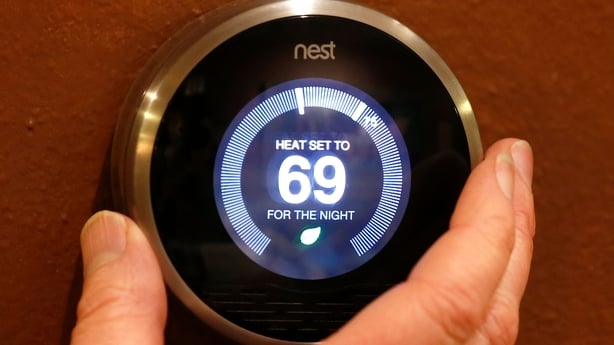
The Nest thermostat is a good example of this. This was one of the first smart thermostats, which let you control your heating from your phone, maybe while on the go.
The company is now owned by Google and earlier this year it announced that the first and second generation of the device would stop getting support. These would have been sold up to around 2015.
That not only meant there'd be no more software updates, but it also meant it wouldn't be able to connect to Google’s servers anymore, which meant you wouldn't be able to control it remotely. That's a big change given that this is one of the device's key selling points.
Sometimes a smart product stops working because the company changes direction.
For example Hive, which also makes thermostats, at one stage tried to carve a niche out in smart security devices like cameras. But more recently it decided to ditch this side of the business, and earlier this year deactivated all such products. That left people with sensors and cameras that were essentially useless.
Amazon also did it with its Echo Look, which was supposed to be a smart camera that offered fashion advice.
But it was a flop, and was discontinued just three years later.
Amazon did offer people who bought one an Echo Show 5 as compensation, but the Echo Look was $200 while the Echo Show 5 was $90 … so not quite a fair swap.
Can consumers protect themselves from this happening to them?
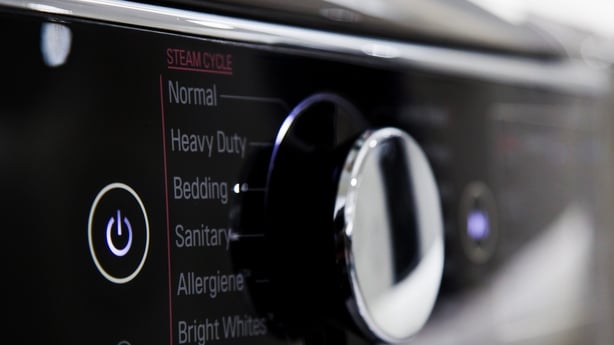
There are ways to minimise the risk.
The first and most effective thing is to ask whether you need to get the smart version of a device or appliance to begin with.
There are smart devices that have really useful functions, like a smart thermostat, for example, but, at the same time, it's worth asking whether an old, dumb thermostat with a few timers would do almost as good of a job.
Then there are the countless other smart home devices that have far more questionable value, and often they are the devices and appliances that cost the most.
So if you are buying something in the near future it is worth asking yourself, do you really need your fridge or your kettle to have an internet connection? Are all of those features actually useful, or are they just a novelty that you'll use once and then forget all about?
And that's one of the key things, if it’s a smart device that involves you connecting it to your WiFi, then there is the risk that the company behind it either goes bust, or decides to switch off the servers.
If that happens, suddenly you could find that those smart features are gone or - even worse - it stops doing the basic functions altogether.
But if you do want a smart product - what should you look out for?
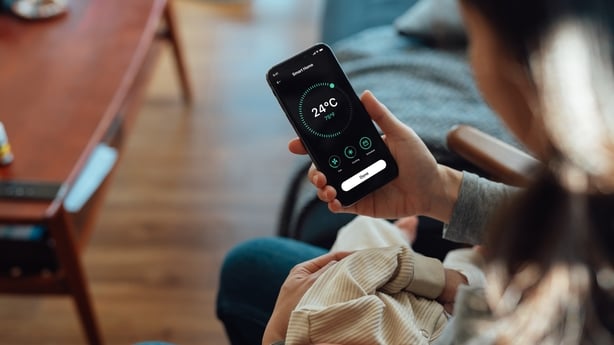
This is a bit trickier because there's no guarantee that a product will be supported well into the future, no matter who's made it.
As we've seen, even products made by big companies like Amazon and Google get disconnected and bricked from time to time.
That being said, it is generally best to err towards buying products from well-known companies that have something of a track record.
That's important for a few reasons, not least because there's a bit more of a chance of them being reasonably well-made.
They're also more likely to have decent support and customer service functions if something goes wrong.
Take the Electrolux Trilobite robot vacuum as an example. They didn’t sell an awful lot of them and discontinued the product line close to 20 years ago - but you can still go onto their website today and buy some replacement parts for it.
If the product-maker is an established brand there’s also more of a chance, though not a guarantee, that the company will continue to exist well into the future, and not get acquired or go bankrupt a year after you spent hundreds of euro on a new device they make.
Compare that to many of the brands you'll see, especially online, that you've probably never heard of before. They can seem the most attractive option, not least because they tend to be the cheapest, but there could be a hidden cost involved.
More often than not, these companies are kind of brass plate brands that are stuck onto generic, white goods, products they didn't design or manufacture.
They probably don't have much of a customer service division, and there's a good chance they'll disappear quite quickly, only to be replaced with another brass plate brand.
These are the ones you want to avoid, because they're far less likely to keep supporting the product into the future.
Aside from the product working for as long as possible, these brands are also worth avoiding for other reasons.
Bear in mind, a smart device in your home - connected to your WiFi - could actually gather a lot of very valuable information about you and your habits.
If it's a proper, established company it's more likely to be paying heed to data security, and the likes of the European Union's GDPR - which provides some degree of protection.
But if it's a generic, often Chinese brand, that only really exists on paper and has little in the way of customer service, support and IT staffing, then that's far less likely to be the case.