


Warner Bros Discovery's board has today rejected Paramount Skydance's $108.4 billion hostile bid, saying it failed to provide adequate financing assurances.
In a letter to shareholders, disclosed in a regulatory filing, the board wrote that Paramount had "consistently misled" Warner Bros shareholders that its $30-per-share cash offer was fully guaranteed, or "backstopped," by the Ellison family, led by billionaire and Oracle CEO Larry Ellison.
"It does not, and never has," the board wrote of the guarantee of Paramount's offer, noting that the offer posed "numerous, significant risks."
Warner Bros' board also said it found Paramount's offer "inferior" to the merger agreement with Netflix.
The streaming giant's $27.75 per share offer for Warner Bros' film and television studios, its library and the HBO Max streaming service is a binding agreement that requires no equity financing and has robust debt commitments, the board wrote.
Paramount last week took its case directly to Warner Bros shareholders, arguing that it has arranged "air-tight financing" to support its bid, with $41 billion in new equity assured by the Ellison family and RedBird Capital, and $54 billion of debt commitments from Bank of America, Citi and Apollo.
The Warner Bros Discovery board countered today that Paramount's most recent offer includes an equity commitment "for which there is no Ellison family commitment of any kind," but rather the backing of "an unknown and opaque" Lawrence J. Ellison Revocable Trust, whose assets and liabilities are not publicly disclosed and are subject to change.
"Despite having been told repeatedly by WBD how important a full and unconditional financing commitment from the Ellison family was...the Ellison family has chosen not to backstop the PSKY offer," the Warner Bros board wrote.
"A revocable trust is no replacement for a secured commitment by a controlling shareholder."
Paramount has submitted a total of six bids to acquire the entire Warner Bros studio, including its television networks, including CNN and TNT Sports.
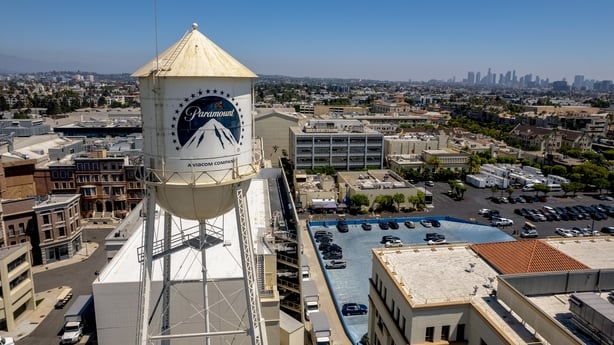
It has previously said the Ellison family trust - which Paramount says contains more than $250 billion in assets including about 1.16 billion shares of Oracle - is more than adequate to cover the equity commitment.
"To suggest that we are not 'good for the money' (or might commit fraud to try to escape our obligations), as certain reports have speculated, is absurd," Paramount wrote in a letter to Warner Bros' shareholders last week. Its debt commitments are not conditioned on Paramount's financial condition, it wrote.
Warner Bros, however, pointed in the filing today to what it described as structural risks in Paramount's proposed financing, and also raised questions about Paramount's financial condition and creditworthiness.
The offer relied on a seven-party, cross-conditional structure, with the Ellison Revocable Trust providing just 32% of the required equity commitment while capping its liability at $2.8 billion, Warner Bros said. It noted that the trust’s assets could be withdrawn at any time.
Netflix's offer is backed by a public company with a market cap in excess of $400 billion with an investment grade balance sheet, the Warner board noted.
The company has told Warner Bros it would keep releasing the studio's films in cinemas in a bid to ease fears that its deal would eliminate another studio and major source of cinema films, according to people familiar with the matter.
Paramount, by contrast, has a $15 billion market capitalisation and a credit rating "a notch above 'junk,' Warner Bros noted today. Should the deal close, Paramount would have a debt ratio of 6.8 times its operating income "with virtually no current free cash flow."
The bidder would also impose what Warner Bros said would be "onerous operating restrictions" on the company, during the potentially lengthy period between signing and closing, including limits on new content licensing deals.
Paramount's plans to achieve $9 billion in "synergies" across the two studios was described as "ambitious" from an operational standpoint, the Warner Bros board noted, and would represent a new round of job losses that "would make Hollywood weaker, not stronger."
Warner Bros Discovery's board dismissed Paramount's charges of unfairness - that had been set forth in a filing by Paramount last week - saying it held "dozens" of calls and meetings with the studio's principals and advisors, including four in-person meetings and meals with CEO David Zaslav and Paramount CEO David Ellison, or his father, Larry Ellison.
"After each bid, we informed PSKY of the material deficiencies and offered potential solutions," the Warner Bros board wrote. "Despite this feedback, PSKY has never submitted a proposal that is superior to the Netflix merger agreement."
Paramount said it has already applied for regulatory approval in the US, and has alerted European regulators, shortening the path to regulatory approval.
Warner Bros Discovery's board wrote that it considered the regulatory risks in evaluating the Netflix and Paramount offers, and believes that either transaction would obtain the necessary US and foreign regulatory approvals.
Netflix also offered a $5.8 billion break-up fee that was higher than Paramount's $5 billion break-up fee.
The Warner Bros Discovery board also described the Paramount offer as "illusory," adding that it could be terminated or amended at any time prior to the deal's completion, which is not the same as a binding merger agreement.
"The PSKY offer provides an untenable degree of risk and potential downside for WBD shareholders," the board wrote.
