
The Government's public consultation to obtain views on how the Right to Request Remote Working Legislation is working closes at 3pm tomorrow.
It received more than 3,400 responses within its first four days of opening mid November and over 6,000 by the end of the month.
The All-Party Oireachtas Group on Remote Work is meeting tomorrow to discuss the future of the legislation.
But will remote workng rules become more favourable to workers following this review?
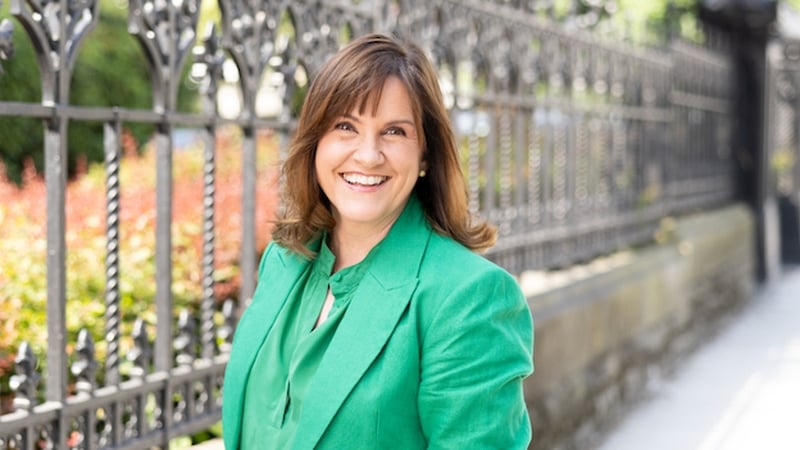
The Market Director Ireland for the Chartered Institute for Personnel and Development (CIPD), Alison Hodgson, describes the review as being more about the process and the mechanics of how to request remote working, rather than the principles of working from home.
Speaking on RTÉ's Morning Ireland, she said it remains to be seen as to how things are going to evolve once the consultation is carried out.
"I think in reality it's about finding a pragmatic way forward because we know that most organisations are suffering from skills shortages," said Ms Hodgson.
"We also know that of the top three reasons for people to change jobs, work-life balance, the cost of living and the commute are in and amongst there, so obviously this is all playing a part," she said.
We need your consent to load this rte-player contentWe use rte-player to manage extra content that can set cookies on your device and collect data about your activity. Please review their details and accept them to load the content.Manage Preferences
Recent media reports have focused on lengthy commuting times for workers, with some motorists regularly spending over three hours a day commuting to and from work on the M50.
It is unclear what changes in legislation this review might lead to but there are calls for a more flexible and hybrid approach to working in a bid to beat traffic congestion.
Ms Hodgson said its important to consider the whole principle of remote working and the two sides of each coin.
"For individuals, it gives them more autonomy over the way in which they do their work and how they keep on top of their lives, but for the organisation we know that it's important that in-person socialisation happens as well, because of learning, because of collaboration, because of creativity and because of those moments that happen only when we are together as human beings," explained Ms Hodgson.
"There are two sides to this coin and really the way through will be the sweet spot," she added.