

After a long, wet January, the St Brigid's bank holiday is a welcome day off work for many people.
Only in its fourth year, it is still relatively new and perhaps a little soon to say if people approach it with the same celebratory enthusiasm as other bank holidays.
Consumer spending tends to be more cautious at this time of year, so soon after Christmas.
Spending over the festive period hit record levels with Irish grocery sales reaching €1.5 billion, according to Worldpanel by Numerator.
But despite St Brigid's traditions being associated with feasting, Worldpanel's data doesn't show any new trends in relation to grocery spending across these bank holiday weekends over the last three years.
The figures reveal "nothing out of the ordinary", according to their Business Development Director Emer Healy.
December's figures from Bank of Ireland showed a 5.7% increase in credit and debit card spending, with spending in many of the main categories higher when compared with December 2024.
It might therefore seem reasonable that many people are still giving their wallet a rest.
But are others celebrating at the start of Spring and a welcome extra day off?
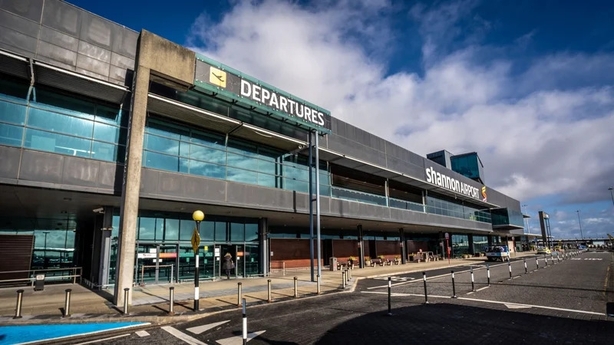
Shannon Airport said the early long weekend is encouraging travellers to swap the January blues for blue skies, with 24,000 passengers set to travel through the airport, a 14% jump in passenger numbers.
Dublin Airport is also reporting a busy weekend with over 380,000 passengers, around 40,000 more than travelled last year.
According to Graeme McQueen, Media Relations Manager at daa, the operator of Dublin Airport, many off those will be winter sun-seekers.
But he said events and festivals are a big driver of inward tourism these days and the addition of the St Brigid's bank holiday weekend is proving to be a popular reason to visit Ireland at what was previously a quiet time of year.
He also attributed the sharp increase to the suspension by the High Court of the seat restrictions that were in place last year due to the airport passenger cap.
But domestically, are Irish businesses seeing the benefit?
The Department of Enterprise, Trade and Employment said an impact analysis in 2024 estimated that the total cost of the new St Brigid's Day bank holiday in its first year was €355m to the economy in terms of reduced national output.
This represents a decline of 0.09% in GDP due to the Irish economy being highly dependent on service and high value manufacturing activities.
However, it said the analysis also points to the wider benefits that arise from a public holiday (which are more difficult to estimate), adding that these benefits include improved societal well-being, and improvements to worker productivity on their return from time off, which can be expected to have an offsetting effect on costs.
A spokesperson for the department confirmed no further analysis has been carried out on the topic.
Many business owners say that the St Brigid's Day bank holiday has yet to translate into a significant boost, according to the Restaurants Association of Ireland (RAI).
While the RAI does not have any specific data related to St Brigid's day, it did say bank holiday weekends can provide an uplift for many hospitality businesses, although the impact can vary across the country and influences trading patterns in the weeks that follow.
RAI CEO Adrian Cummins noted that the level of benefit for businesses depends heavily on location.
"There is a clear difference between rural and urban Ireland, with some rural and tourist areas seeing stronger domestic trade, while many urban businesses report little change in footfall," commented Mr Cummins.

"For many restaurants, the bank holiday Monday itself can be challenging," he said.
"Higher labour costs mean that a number of businesses choose to close on the Monday as it can be a loss-making day, while others that do open face tighter margins," he added.
In Kinsale in Co Cork, the owner of the Jim Edwards' bar and restaurant, said the success of the relatively new bank holiday came as a welcome surprise.
"If you asked me three years ago, I might have had something negative to say but now I think it's perfect timing and a good addition to the calendar on the tailback of a very quiet period for towns in Ireland," explained Liam Edwards.
He said they are finding the winters a lot quieter especially with a drive on dry January and after all the Christmas spending.
However, his business has found the weekends of the first bank holiday of the year to be exceptionally busy.
"It was a real surprise to us, the Sunday before the bank holiday was like a regular Saturday and then our Mondays were weather dependent over the last couple of years and the weather has been good, it's been a huge success," said Mr Edwards.
In addition, the Kinsale Beatles Festival made its debut last St Brigid's Bank Holiday Weekend.
Mr Edwards said it has added "that extra little bit of business."
"There's a great feel-good factor about the weekend. We've done the books on it, and it definitely offsets the extra labour cost over the bank holiday," he added.
Ibec, the Hotels Federation of Ireland and Fáilte Ireland all said it is too early to be looking at any trends or data around the new bank holiday for now.
Anecdotally hotel bookings were strong ahead of the weekend, however it is unclear if bookings translated to stays due to the heavy rain and weather warnings across the country which could have impacted on booking numbers.
New local events and festivals are also popping with, but there is no real data yet to support their impact on local economies.
The St Brigid's bank holiday weekend brings the number of public holidays to 10 a year.
This puts the Republic of Ireland on an equal footing with Northern Ireland but still lagging behind the EU average of 12 a year.
Social policy officer with the Irish Congress of Trade Unions Dr Laura Bambrick agrees it is a little too soon to see the impact of this bank holiday on the economy.
"Before the first weekend in February became a bank holiday in 2023, it was a long eleven-week slog for workers between the New Year's Day and St Patrick's Day bank holidays. The last time we got a new bank holiday was May Day 30 years earlier," she said.
"It will take a few years for St Brigid's Day to bed in, with more of us making plans to maximise the benefits of this long weekend in the same way as we tend to do for the other nine," she added.
She said there are significant societal wellbeing benefits to workers getting additional leisure time which in turn drives up demand in certain sectors, such as hospitality and tourism.
Although she noted that the cost as well as the benefits from increased consumer spending are not evenly spread across the economy.
It would seem the main benefit so far of our newest bank holiday is for all 2,538,000 PAYE employees who get an additional day off.
While they might not be entitled to take the Bank Holiday Monday itself off, they will receive a different day off within the next month, or get an extra day annual leave, or pay them a day's pay in lieu.
Maybe that lieu day could even be taken when the sun is shining and the coffers are more favourable.