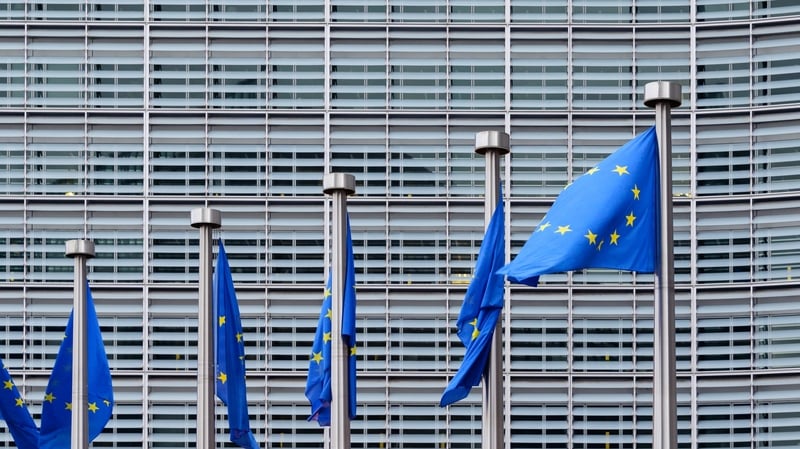

The European Court of Auditors has raised concerns about how the EU's €5 billion Brexit fund will operate, suggesting that some member states may have to pay money back because so much of the fund is being paid out up front, and because of the risk of funding projects which might later turn out to be ineligible.
Ireland is by far the largest recipient of the Brexit Adjustment Reserve (BAR), receiving nearly one quarter of the first tranche, on the basis that it will be worst hit by Brexit.
Compared to how the EU budget normally works, and how the Covid recovery fund will work, the Brexit Adjustment Reserve is being fast tracked to member states, who will not have to justify what the money is being spent on until September 2023.
However, the European Court of Auditors has said national capitals could find that having spent the money quickly, they may find their claims are retrospectively turned down because they are ineligible or do not deliver value for money.
In such a scenario the money would have to be returned to the overall fund.
Normally, only 13% of EU budget funds are released up front as "pre-financing". By contrast 80% of the Brexit Adjustment Reserve (BAR) will be provided up front.
Officials believe that because member states do not have to submit claims until September 2023, the scope for projects being turned down retroactively - and money having to be paid back - is significant.
The Court of Auditors also suggests that national capitals may end up using the fund for projects that are not the best value for money.
Officials accept that because of the nature of Brexit money has to be transferred quickly, and that in many cases member states have already had to spend significant sums to prepare for Brexit.
However, they point out that when it comes to member states spending EU money, such as cohesion funds, there is a long practice of partnership between national capitals and the European Commission, meaning that most projects are more likely to qualify for financial support.
EU leaders gave the go-ahead to a fund to help those member states most affected by Brexit during the negotiations last summer which produced the Covid-19 recovery fund.
On 12 January, the Minister for Foreign Affairs Simon Coveney announced that this year Ireland, according to a draft decision, would receive €1.051 billion of an initial tranche of €4.2 billion.
Initially it was expected that some €600 million would be made available to fishing communities across the EU.
Member states applying for the fund were expected to be assessed on the basis of the extent of trade carried out with the UK and the amount of fish caught in British waters.
According to an opinion issued by the Court today, Ireland would this year benefit from pre-financing to the tune of €991 million, followed by the Netherlands (€714 million), Germany (€429 million), France (€396 million) and Belgium (€305 million).
Ireland's member of the Court Tony Murphy, who has written today's opinion, said: "The BAR is an important funding initiative which aims to help mitigate the negative impact of Brexit on the EU Member States' economies. We consider that the flexibility provided by the BAR should not create uncertainty for Member States."
The auditors warn that the proposed structure and timing would increase the risk of what it called "sub-optimal and ineligible" measures being chosen by member states.
The report said the eligibility period for assessing expenditures under the BAR should run from July 2020 to December 2022, and not to September 2023.
The auditors say that the European Commission did not provide any reasoning for choosing the existing eligibility period or examine its suitability.