


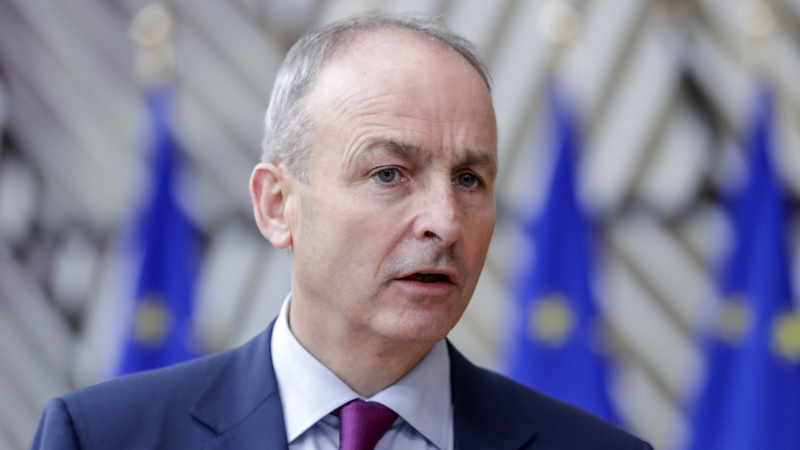
Failure for the UK and European Union to reach an agreement on a post-Brexit trade deal would be "very, very damaging all round", Taoiseach Micheál Martin has said.
Talks between the two parties have been taking place in London this week, but they are not expected to bear fruit despite progress needing to be made soon if a new deal is to be in place when the current arrangements expire.
The EU wants a deal by mid-November in order for it to be ratified by the time the transition arrangements expire at the end of the year, and the UK leaves the customs union and single market.
Without a deal being struck, trade between the UK and EU will be subject to tariffs set out by the World Trade Organisation.
Speaking to the BBC, Mr Martin said failing to secure a deal would be "ruinous" for the UK, and that Ireland would also suffer.
He said: "We've all had a very significant shock to our economic system because of Covid-19, the last thing we need now across all of our respective economies is a second major shock."
Mr Martin also said the UK needed to be "very careful that they do not do anything that could destabilise the politics of Northern Ireland", and that no deal past the transition period could lead to "tensions that are unnecessary".
The Fianna Fáil leader told the Dáil this week any deal would need to "lead to a neutralisation of the offending clauses of the Internal Markets Bill" and lead to "strict adherence to the protocol and the Withdrawal Agreement".
Read more:
FDI warns of 'serious' disruption even if Brexit trade deal reached
Latest Brexit stories
He added that he welcomed the decision taken in the House of Lords on Monday in relation to the bill, which contains controversial measures seeking to tear up parts of the Brexit divorce agreement.
"Efforts have to be made to reassure the EU side that what has happened in terms of the Internal Market Bill is not going to happen in 12 months' time in the event of a deal being agreed between the European Union and the United Kingdom," he said.
The Taoiseach also said US President-elect Joe Biden wanted a Brexit trade deal to be clinched with the EU.
"He is very committed to the Good Friday Agreement," Mr Martin said. "Particularly in relation to Brexit, he would favour obviously a deal between the European Union and Britain.
"And I think that's where, if I could respectfully say it, that's where the British government should head, in that direction, in my view. It should knuckle down and ... get a deal with the European Union."
"It is crucial that we get a deal - in my view: where there is a will there is a way," he added.
The EU chief negotiator posted a picture of himself by the side of soccer pitch in London, poking fun at the ongoing negotiations which are stalled over how to create a 'level playing field' on trade.
Michel Barnier is in London for last-ditch talks with the British government as both sides seek to avoid disruption to trade when the UK's transition period out of the bloc ends on 31 December.
Short break from intense 🇪🇺🇬🇧 negotiations in London.
— Michel Barnier (@MichelBarnier) November 12, 2020
Went looking for level playing fields... pic.twitter.com/2X4jbygorI
Downing Street has defended its negotiating position in EU trade talks.
The prime minister's official spokesman said: "We have been working hard throughout to get a deal but we've always said that it needs to be a deal that fully respects UK sovereignty, and that's what we're continuing to pursue.
"Right from the outset I don't think we've been seeking anything that the EU hasn't agreed to with other sovereign countries and we're working hard and are continuing to work hard, but it is the case that significant gaps remain."
He said that Mr Johnson still intends for the UK to leave the bloc without a trade deal if one is not brokered by the end of the transition period on 31 December.
The main stumbling blocks between the UK and EU are thought to include the "level playing field" measures aimed at preventing unfair competition on issues including state subsidies, the ongoing row over fishing rights and how any UK-EU deal will be governed.
Stefaan de Rynck, an adviser to Mr Barnier, insisted the EU side had been willing to compromise in the negotiations, implying that it was British resistance that had prevented progress.
"The EU has been in compromise mode at all negotiation tables, for months," he tweeted yesterday.
