


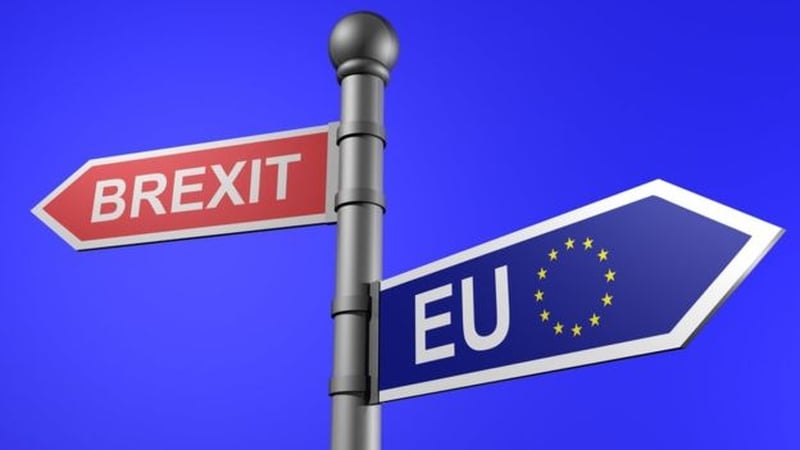
Britain's long goodbye to the European Union often seems to be spoken in unintelligible code.
Most know the process as Brexit - a child of the term Grexit that economists invented when it looked like debt-laden Greece would exit the EU in 2012.
Greece stuck around but Britain is actually leaving thanks to a 2016 referendum, where 51.9% of the electorate voted to leave the bloc.
Here is a look at some of the terms - both real and invented - politicos are using to describe a split that could very well run past its 29 March deadline.
Article 50
The basics begin with the 2007 Lisbon Treaty that updated the bloc's governing rules.
Its Article 50 provides a "withdrawal clause" - a two-year notice that British Prime Minister Theresa May sent to European Council president Donald Tusk in 2017.
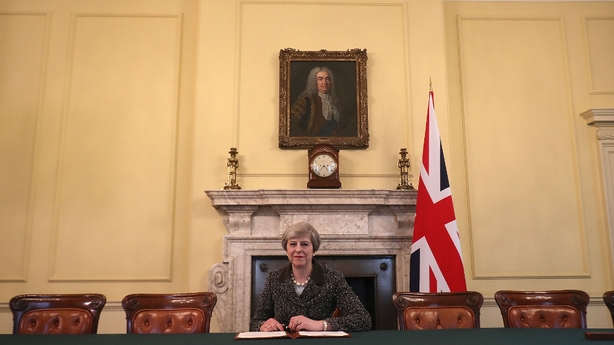
The problem is that most British MPs have serious issues with Mrs May's version of Brexit.
Groups of them are now scheming up ways to draw out the process and put themselves in charge.
Any extension of Article 50 must be unanimously backed by the remaining 27 EU presidents and premiers.
Withdrawal Agreement
Mrs May and the 27 EU member states crowned nearly two years of mind-numbingly complex negotiations by putting their names in December to a 585-page tome spelling out the legal fine print of the divorce.
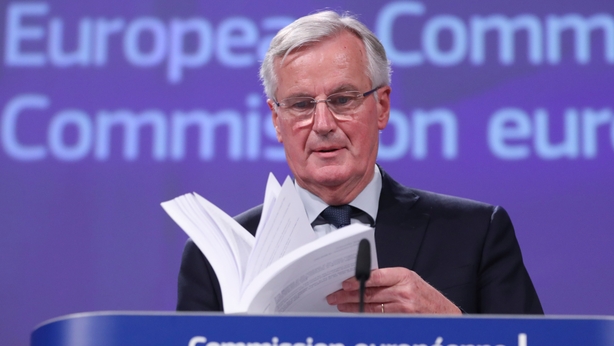
Fuming UK MPs promptly voted against it by a historic margin on 15 January.
European officials insist that the agreement offers the "best deal" London can get. British politicians refuse to believe them and want Mrs May to get better terms.
Single market, customs union
These are the dry economic essentials of how the European Union works.
The existing bloc is part of a "single market" - an even broader area that also includes non-EU members such as Norway and Iceland.
It removes internal borders so that goods and money can move around freely and people can live and work where they please.
One set of consumer safety standards governs everything from chicken wings to washing machines.
The EU also forms a "customs union" - a body that applies a single set of quotas and tariffs on non-members such as China and the United States.
Backstop
Now comes the tricky bit where the customs union and single market come into play.
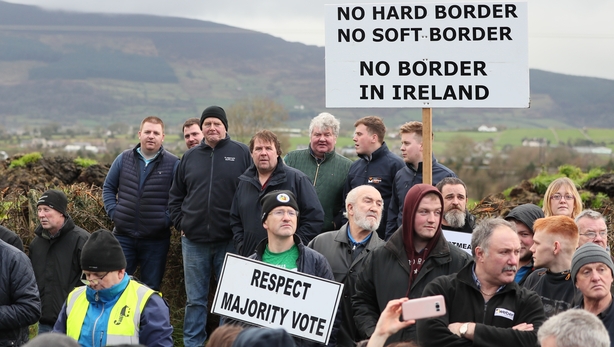
Brexit creates an EU frontier between Ireland and Northern Ireland.
But Northern Ireland is governed by the 1998 Good Friday Agreement that removed a physical border between the region and the Republic of Ireland.
The "backstop" tries to get around this by making all of Britain part of the customs union until a new EU-UK trade deal is reached.
The backstop will have additional measures for Northern Ireland, and is designed to avoid a hard border on the island of Ireland post-Brexit.
Northern Ireland additionally adopts most parts of the single market.
This lets it trade freely with Ireland while remaining part of Britain.
However the DUP, which props up Mrs May's government, are against the backstop because it treats their region differently from the mainland.
Hard and soft Brexit
Exhausted Britons sometimes joke that Brexit comes in every way but scrambled.
A hard version of Brexit is championed by people against the EU - the so-called Brexiteers - who say that fears of a clean break from the bloc are overblown.
This is the "no-deal" scenario many businesses dread.
A soft Brexit would only nudge Britain partially out of Europe.
Some want to copy the arrangement Norway reached with Brussels that keeps it in the single market.
Others want both that and the customs union - a Norway "plus" option that looks a lot like what Britain has now.
BRINO
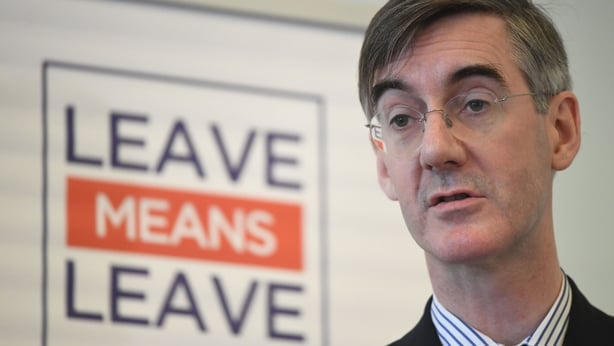
The acronym arch-Brexiteer Jacob Rees-Mogg adopted for Mrs May's strategy in January 2018.
It means simply "Brexit in name only" and implies that the UK leaves the EU on paper only.
BOBs
Britain’s Foreign Secretary Jeremy Hunt admitted to the BBC in November that "many people are bored of Brexit" and want the whole thing to simply go away.
The acronym BOB struck a nerve in a tired nation that has been debating the same points about Brexit for the best part of three years.
BOBs are also prone to use the #brexitshambles hashtag on Twitter.
