


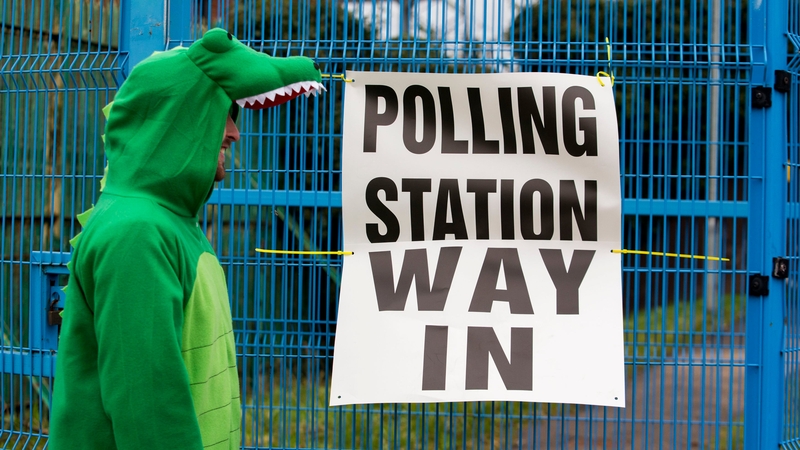
The prosecution of former soldiers for Troubles crimes, an Irish language act and cross-community voting were among the key issues during the Northern Ireland election campaign.
The prosecution of soldiers for conflict killings
The Democratic Unionists are demanding measures to ensure British troops who served in Northern Ireland cannot face probes into their actions if they have already been investigated.
Some MPs have claimed the authorities are pursuing a "witch hunt" against elderly servicemen after recent decisions to prosecute over Troubles crimes.
Nationalists have said there should be no hiding place for any suspect, whether military, police or terrorist.
Prosecutors have pursued five times more cases surrounding individuals suspected of paramilitary crimes than those involving soldiers in the last five years.
Extra money for fresh inquests into controversial killings has been withheld amid discord over a new unit planned to investigate thousands of conflict deaths.
The Renewable Heat Incentive
The botched green energy scheme is predicted to cost taxpayers up to £490 million over the next 20 years.
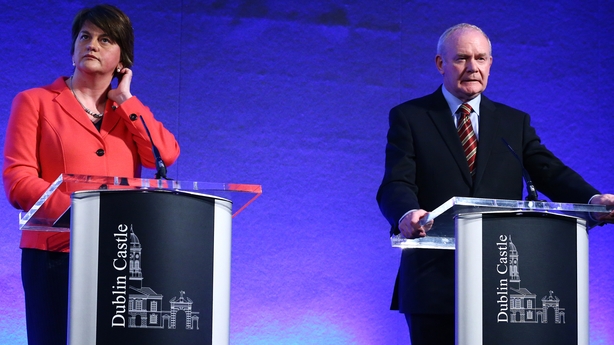
It caused the collapse of power-sharing after former Sinn Féin deputy first minister Martin McGuinness resigned in protest and took DUP first minister Arlene Foster with him.
The scheme is paying out more than it cost to fuel biomass boilers, prompting allegations of empty sheds being heated.
A public inquiry is due to begin hearings after the election.
DUP leader Arlene Foster was the minister in charge when the RHI began. She denied any wrongdoing, refused to step aside as First Minister and branded claims she was arrogant as political "smears".
Sinn Féin has fought an electoral campaign focusing on promises to clean up "corruption". Corruption claims surrounding the RHI have not been proven.
Cross-community voting
Ulster Unionist leader Mike Nesbitt has said that, after his own party, he would vote for the nationalist Social Democratic and Labour Party ahead of other unionist candidates in the proportional representation election.
Mr Nesbitt did not advise other UUP supporters to adopt the same approach.
The comments prompted a backlash from some Ulster Unionists fighting for seats in the next Assembly who depend on transfers from other unionists and ridicule from Democratic Unionists.
The UUP and SDLP have positioned themselves as an alternative partnership government at Stormont to take the place of the long-standing DUP/Sinn Féin-led coalition.
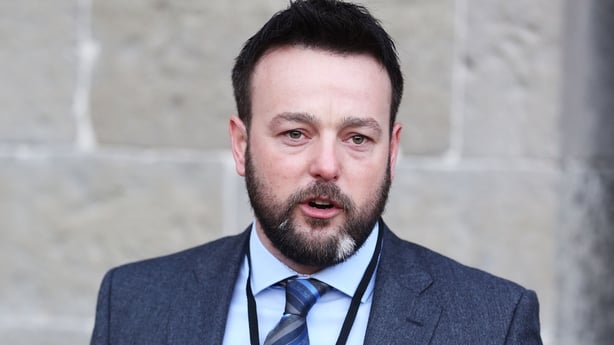
SDLP leader Colum Eastwood has not explicitly said he would recommend a second preference for the UUP but urged supporters to back candidates who wanted change and praised Mr Nesbitt's stance.
An Irish language act
The campaign for a law giving official protection to the Irish language is a touchstone equality issue for Sinn Féin.
Ms Foster has said more people speak Polish in Northern Ireland and the DUP withheld support.
At a press conference, Ms Foster likened Sinn Féin to crocodiles by saying: "If you feed a crocodile they're going to keep coming back and looking for more."
Sinn Féin leader Gerry Adams responded to the jibe at another press conference by saying "See you later alligator."
In 2014, former DUP culture minister Gregory Campbell was barred from addressing the Stormont Assembly for a day for phonetically parodying the language and failing to apologise.
He began a speech with: "Curry my yoghurt can coca coalyer", instead of "go raibh maith agat, Ceann Comhairle".
