


A South Korean court has sentenced former president Yoon Suk Yeol to life in prison after finding him guilty of leading an insurrection when he declared martial law in December 2024.
The 65-year-old did made the announcement in a televised address, saying that drastic measures were needed to root out "anti-state forces" in parliament.
The hardline conservative was later impeached, arrested, and charged with a litany of crimes ranging from insurrection to obstruction of justice.
Presiding Judge Ji Gwi-yeon said that Yoon sent troops to the National Assembly building in an effort to silence political opponents who had frustrated his attempts to govern.
"The court finds that the intention was to paralyse the assembly for a considerable period," the judge told Seoul Central District Court.
"The declaration of martial law resulted in enormous social costs, and it is difficult to find any indication that the defendant has expressed remorse for that.
"We sentence Yoon to life imprisonment."
Former defence minister Kim Yong-hyun was sentenced to 30 years in prison for his role in the crisis.
Prosecutors had sought the harshest penalty for Yoon's insurrection charges, urging the court - during hearings in January - to sentence him to death.
South Korea has an unofficial moratorium on capital punishment, with the last prisoners executed in 1997.
Watch: Bus carrying Yoon arrives at courthouse
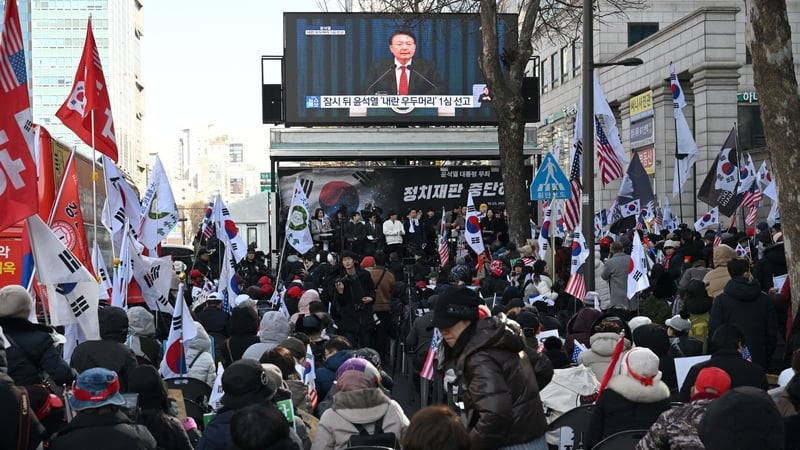
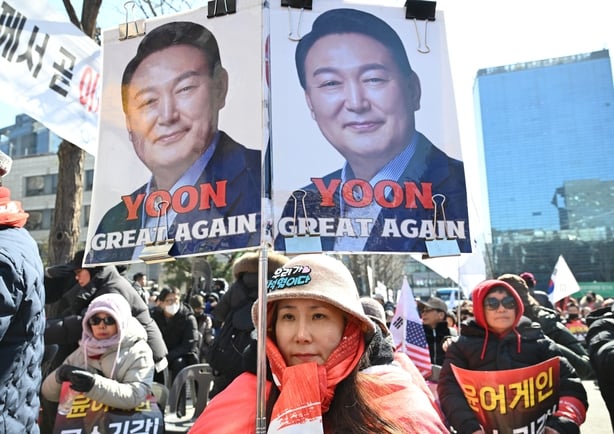
Thousands of supporters gathered outside the court ahead of the verdict, holding placards that read "Yoon Great Again" and "Drop the charge against President Yoon".
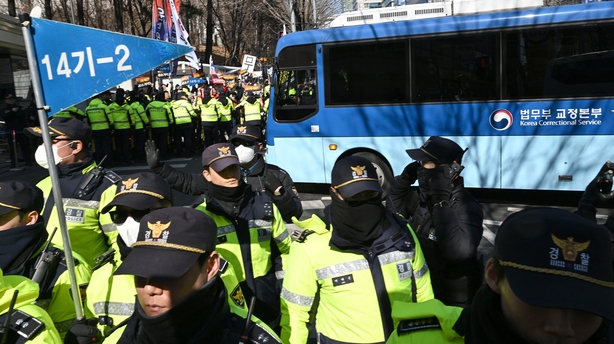
There were loud cries as a blue prison bus, believed to be transporting the former president, made its way into the court complex.
Police wearing neon-coloured jackets gathered in force to quell any unrest triggered by the verdict.
They formed a makeshift barricade with buses parked around the site.
Yoon will be jailed in South Korea's chronically overcrowded prison system.
It is a far cry from the lavish life he enjoyed during his rapid ascent from star prosecutor to president.
It is not clear when he will be eligible for parole, although most inmates serving life terms can typically apply after 20 years.
Yoon's lawyer Yoon Gap-geun argued that the verdict appeared to be a "pre-determined conclusion set by the prosecutors", telling reporters that an appeal may not be worth pursuing.
To be able to appeal, a notice must be submitted within seven days.
South Korea has long been seen as a shining light of stable democracy in Asia, but Yoon's failed bid to seize power stirred unpleasant memories of the military coups that rocked the nation between 1960 and 1980.
He has been held in solitary confinement while fighting multiple criminal trials.
Yoon has consistently denied wrongdoing, arguing he acted to "safeguard freedom" and restore constitutional order against what he called an opposition-led "legislative dictatorship".
Prosecutors accused him of leading an "insurrection" driven by a "lust for power aimed at dictatorship and long-term rule".
Yoon has already been sentenced to five years in prison on lesser charges, while a host of senior officials also face hefty jail terms.
He broke into late-night television, on 3 December 2024, to deliver the shock address to the nation.
Pointing to vague threats of North Korean influence and dangerous "anti-state forces", he declared the suspension of civilian government and the start of military rule.
Martial law was lifted six hours later after politicians held an emergency vote in parliament.
Staff barricaded the doors with office furniture to keep armed troops at bay.
The declaration triggered flash protests, sent the stock market into panic, and caught key military allies such as the United States off guard.
Yoon's wife Kim Keon Hee was sentenced to 20 months' jail last month on unrelated charges stemming from bribes she took while first lady.
In a post on X, President Lee Jae Myung, a liberal who won the top job in a snap election in June after Yoon's removal, commended the actions of the Korean people to thwart the attempt to bring in martial law.
"It was possible because it was the Republic of Korea", Mr Lee said, using South Korea's official name, adding that the population would serve as an example for human history.
His post was attached to a newspaper story about how some academics had recommended that the Korean public be nominated for the Nobel Peace Prize for facing off against troops and police to oppose martial law without violence.
