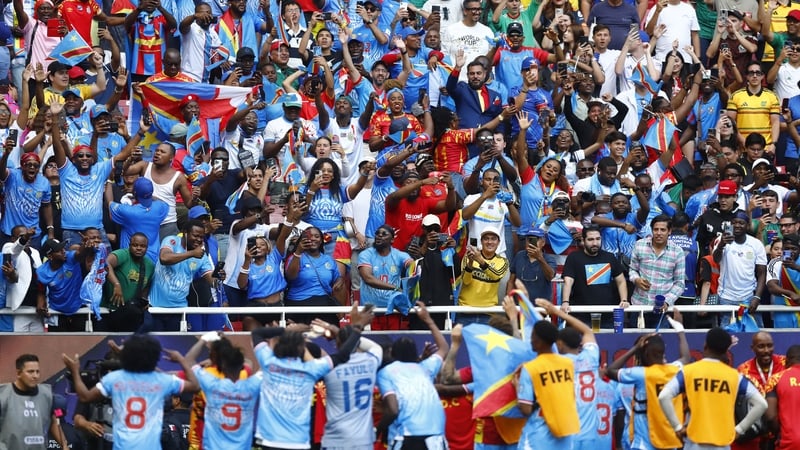
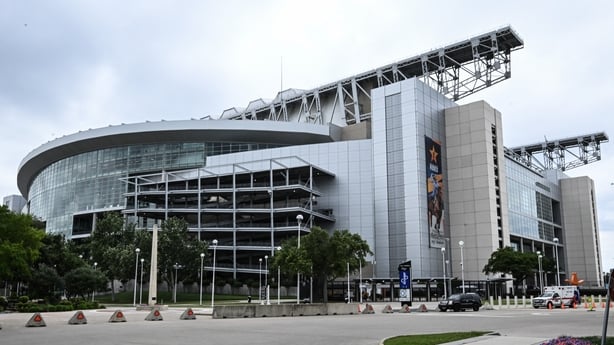
With the FIFA World Cup just weeks away, excitement is building in Houston, Texas, as the city prepares to host seven matches, including one between the Democratic Republic of the Congo and Portugal.
DR Congo qualified for the tournament after coming through a play-off against Jamaica in Mexico in March.
However, preparations to host its national team are happening in the shadow of the World Health Organization (WHO) declaring a "public health emergency of international concern", following an outbreak of Ebola in the central African country.
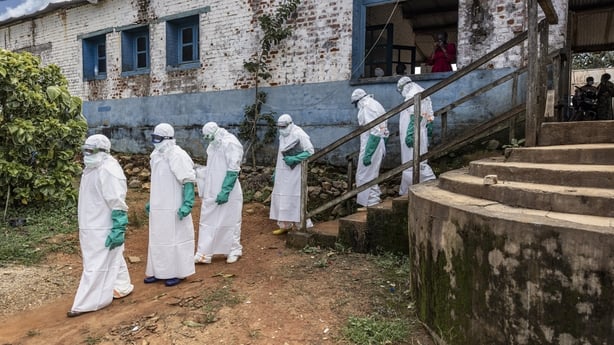
There are growing fears in the DR Congo about the spread of the Bundibugyo strain of the virus.
The outbreak is "extraordinary" as there are no approved Bundibugyo virus-specific therapeutics or vaccines, unlike for Ebola-Zaire strains, the WHO has said.
To date, at least 177 people are suspected to have died as a result of the virus, while there are also nearly 750 suspected cases of Ebola in the east of the country.
"I'm deeply concerned about the scale and speed of the epidemic," said Head of the WHO Tedros Adhanom Ghebreyesus, when addressing the World Health Assembly in Geneva.
'Don't panic, but pay attention’
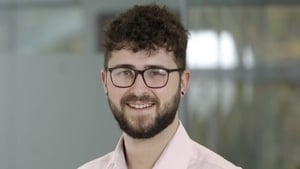
Concerns over the Ebola outbreak in the DR Congo have not dampened spirits in Houston, however, according to local journalist Ethan Bratton.
"I think the word right now is caution really, not quite fear. Ebola is not incredibly contagious."
"Ahead of the World Cup, I think folks are generally pretty excited. Obviously, this is the first time we've had an event like this, and soccer isn't necessarily the biggest sport here," he told RTÉ News.
"We're always excited to have big events in town and this is probably going to end up being the biggest event we've ever had in town. People are generally pretty excited."
Mr Bratton said that people are currently not panicking regarding the spread of the virus.
"I think the word right now is caution really, not quite fear. Ebola is not incredibly contagious. It's very difficult to get the disease," he said.
"I don't think people are necessarily too panicked. There is a lot of preparation going on right now. I know our medical industry here in Houston is definitely keeping both eyes open on this one.
"Thankfully, we have some of the best medical professionals in the world here in the Houston area. Our med centre here is one of the greatest on the planet.
"We've got the experts here on hand that are definitely paying close attention to this. And from what I'm seeing from all of them, the mood is 'don't panic, but definitely pay attention'."
Amidst the non-panicking, it is still unclear what will happen should the virus make its way to the US.
"So far, our Sports Authority has not been too communicative about this, and they handle pretty much everything. It's kind of one of those wait-and-see things," said Mr Bratton.
"I'm sure they're working on something, but whatever their plans are as of right now, they haven't made them public.
"I have to imagine that if worst comes to worst, that game (Portugal vs DR Congo on 17 June) will maybe at most just get delayed, pushed back or moved around. I don't see it getting cancelled right now, but who knows?" he said.
Opportunities to host World Cups do not come around too often, and while Mr Bratton admitted it would be disappointing for Houston to lose a group stage match, safety has to be the priority.
"It would be a disappointment. But obviously, safety first is the biggest thing," he said.
"I don't really see it being cancelled. And I'm sure there's backup plans for that if something major happens.
"But like I said, they (the Sports Authority) haven't really made any announcements yet. We just kind of have to wait and see what they're planning."
The road to Houston
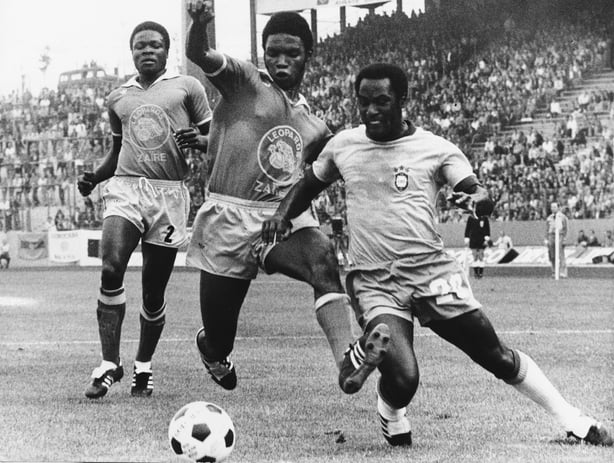
This is due to be DR Congo’s first World Cup appearance since appearing at the 1974 tournament as Zaire.
Headlines were made in that tournament following their questionable defending of a free kick in their final game against the then-champions Brazil.
To qualify for this iteration, former Manchester United defender Axel Tuanzebe scored from a corner as the Leopards saw Jamaica off by a score of 1-0 after extra time in the play-off in March.
Current Premier League stars such as West Ham United defender Aaron Wan-Bissaka and Newcastle United striker Yoane Wissa are among the high-profile names in their squad.
They have been placed in Group K, where they will play Portugal, Colombia and Uzbekistan.
The World Cup begins on 11 June, with DR Congo scheduled to play Portugal in Houston Stadium on 17 June, before taking on Colombia in Guadalajara, Mexico on 24 June. Their final group fixture against Uzbekistan is in Atlanta on 27 June.
The Centers for Disease Control and Protection (CDC) imposed travel restrictions for any non-US passport holders from entering the US if they have been in the Democratic Republic of Congo, South Sudan or Uganda in the previous 21 days.
Those exemptions are in place for 30 days from the date of issuance, which was 18 May.
The current travel restrictions imposed by the CDC are due to be lifted on 17 June.
"We've been very clear to Congo that they should maintain the integrity of their bubble..."
This raises a number of questions - will DR Congo be able to travel for the World Cup?
Will they have to quarantine or isolate and what will happen if they can’t go?
Those fears were quickly put to bed by US officials.
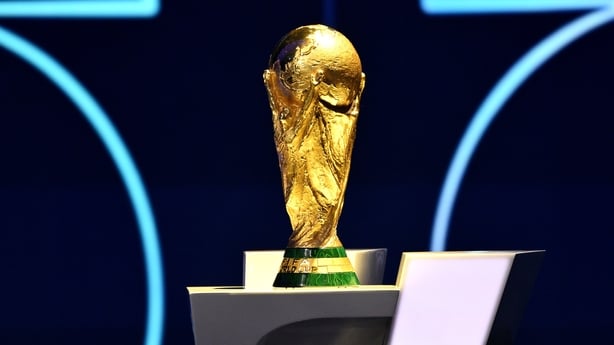
The team will be able to travel to the US and compete in the World Cup - but must isolate for 21 days beforehand.
Executive Director of the White House Task Force for the World Cup Andrew Giuliani confirmed yesterday that the Congolese delegation must maintain a bubble where they currently are training in Belgium and isolate for three weeks, or risk being denied entry.
"We've been very clear to Congo that they should maintain the integrity of their bubble for 21 days before they can then come to Houston on 11 June," Mr Giuliani said.
"We've made it very clear to the Congo government as well, that they need to maintain that bubble or they risk not being able to travel to the United States. We cannot be any clearer."
All of DR Congo's team members, along with French head coach Sébastien Desabre, are based outside of the country.
Mr Giuliani said the US isn't taking any chances when it comes to health and safety issues surrounding the World Cup.
"We want to make sure that there is nothing that's going to come in or near our borders here on this," he said.
DR Congo cancelled its training camp in the capital city of Kinshasa amid the outbreak and relocated to Belgium, where the team has a friendly scheduled against Denmark in Liege on 3 June. There is also a friendly scheduled against Chile in southern Spain on 9 June.
Football’s world governing body said it is "aware of and monitoring the situation" regarding the Ebola outbreak.
"FIFA is aware of and monitoring the situation regarding an Ebola outbreak and is in close communication with the Congo DR Football Association to ensure that the team are made aware of all medical and security guidance," they said in a statement.
"FIFA continues to work with all three FIFA World Cup 2026™ host countries’ governments, including the US Department of State, CDC and Department of Homeland Security, Mexico’s Secretariat of Health and the Public Health Agency of Canada, as well as with the World Health Organization, to ensure a safe and secure tournament, as the health of all individuals involved remains FIFA’s priority," it said.
"My gut feeling is that it won't have any impact. I think if a soccer team is in a training camp and are professional players, they'll be removed from it."
The Houston Host Committee also released a short statement echoing those sentiments.
"The FIFA World Cup 2026 Houston Host Committee is being briefed by FIFA, public health experts, and relevant medical agencies regarding recent virus outbreaks," the statement read.
"The Host Committee will follow the guidance and recommendations of health authorities as preparations for the tournament move forward."
The Congolese Football Federation have also been contacted by RTÉ News for comment.
Calmness in Houston, caution elsewhere
Despite the calm feeling in Houston, the calls for caution have been voiced elsewhere.
Professor Anne Moore of the School of Biochemistry and Cell Biology at University College Cork said that DR Congo’s travel plans will bring their own challenges, but that ultimately, their place at the World Cup may not be in jeopardy.
"I think there will be challenges. I don't know anything about the DR Congo football team, (but) I presume similar to other football teams, they'll be in a different area to a mining region in the Congo," she said.
"It depends how isolated or how exposed they've been to anybody who has been involved in the current outbreak.
"My gut feeling is that it won't have any impact. I think if a soccer team is in a training camp and are professional players, they'll be removed from it."
Prof Moore said that anyone involved with the DR Congo team, including fans, would have to prove that they were not in contact with the virus, which may also cause some problems.
"If these players, and anybody travelling over to the US, have been nowhere near where there's been outbreaks, there is no issue," she said.
"Do they need to prove that they've been nowhere near where there's been cases, perhaps? Do they need to go into isolation before or quarantine themselves to make sure that they aren't coming in contact with a potential outbreak?
"I don't know how many supporters are travelling over, but can you track them and know that they're in a certain place?"
Disease disrupting sport on a major stage
Diseases have impacted major sporting events in the past. The 2020 Olympic Games in Tokyo were postponed for a full year due to the global Covid-19 pandemic, as were the 2020 UEFA European Championships.
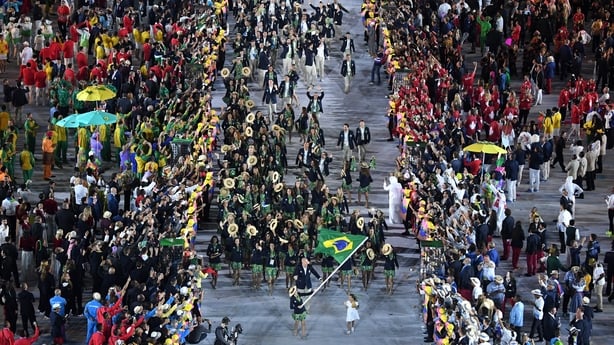
In 2016, there were calls for the Olympic Games in Rio de Janeiro to be postponed following an outbreak of the Zika virus.
The International Olympic Committee and the WHO allowed the games to proceed, despite criticism and the withdrawal of a number of athletes from the Games, including golfers Rory McIlroy and Shane Lowry.
"Emergency responses need to be ready and ready to be stepped up."
Prof Moore said that how the outbreak is managed will dictate whether the same leniency is applied again.
"I think we might need to wait and see, and see how quickly and effectively the current DRC-Uganda outbreak can be managed," she said.
"That comes back to pumping the resources in there quickly, being able to find all of the cases that have been there and all the cases that are going to rise in the next few weeks. I think that needs to be the focus.
"The first priority is the people that are affected and the people who are sick. I don't know how FIFA think, but I think the WHO will definitely be concerned.
"The primary concerns are the people in the region who are already sick or may have been exposed, and putting an end to the current outbreak.
"When you have a lot of people together, disease can spread very quickly. Whether that's Ebola virus or something else, but that should be part of the organisation of a large event like the World Cup, you need to have your health authorities ready.
"Emergency responses need to be ready and ready to be stepped up," Prof Moore added.
The preparation for the 2026 World Cup has been turbulent to date, but for the moment, the outbreak of Ebola may not be another story set to make headlines off the pitch, rather than on it.