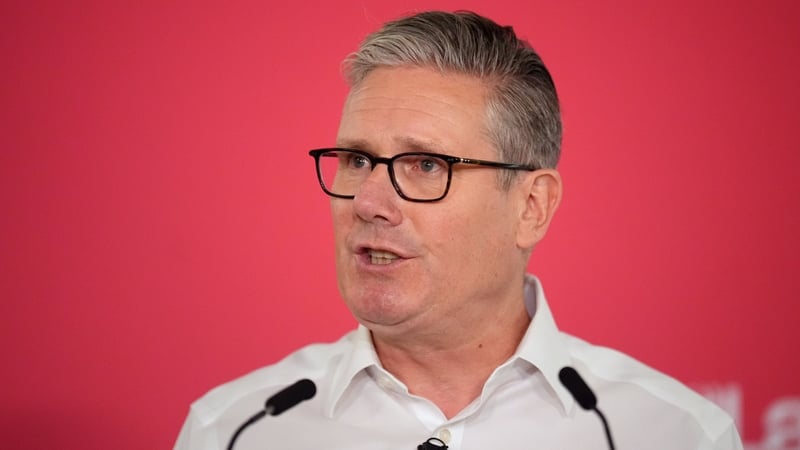

It is tempting to think of Keir Starmer's collapse as the story of a prime minister who squandered a thumping majority.
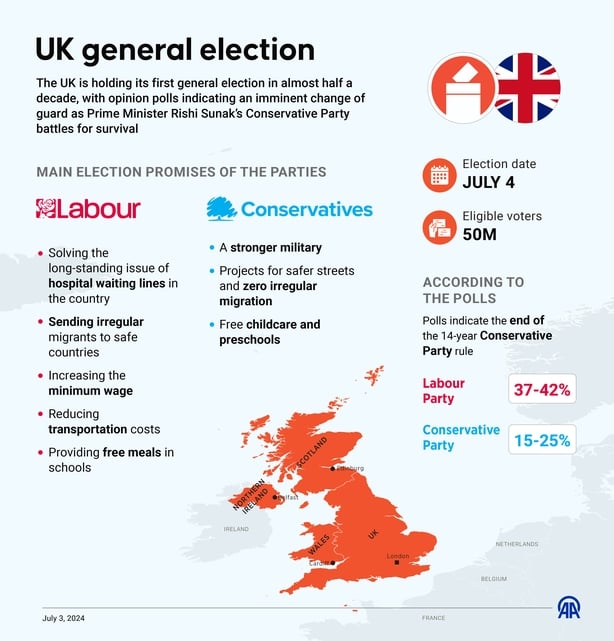
After all, just 22 months ago, Mr Starmer won 411 seats - the third-best showing in Labour’s history, and its best result since Tony Blair’s second landslide in 2001.
On those numbers alone, the squandered-majority reading is hard to dispute.
But Mr Starmer’s majority, however thumping, never reflected a thumping mandate.
Labour’s vote share in the July 2024 general election was 33.7% - the lowest of any party to form a majority government in Britain since 1830.
The party got fewer raw votes than Jeremy Corbyn won in either of his two general elections - in 2017 or in 2019.
What turned this modest performance into a landslide was Britain's first-past-the-post voting system.
The Conservatives had imploded.
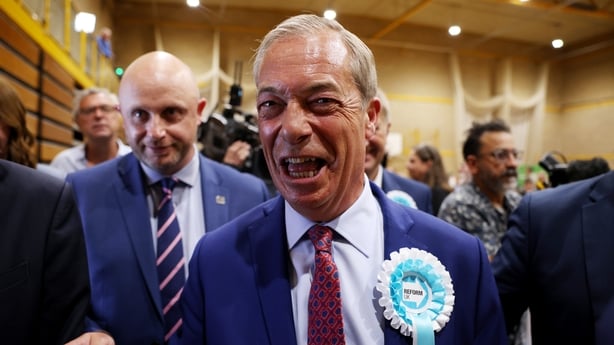
Nigel Farage's Reform UK party was splitting their vote on the right. Tactical voting was breaking against them on the left. And, in seat after seat, Labour squeezed past the line - winning a third of all its seats on margins of less than 10%.
None of which is to diminish what Labour achieved. The party ran a brilliantly disciplined constituency-level campaign, optimised for exactly the kind of fragmented electorate it faced.
However, a clever electoral strategy is not the same thing as a mandate.
And so, in the end, Mr Starmer became prime minister not because the country had warmed to him - but because the Tories had collapsed, and there was nothing else available.
The landslide was always less a story about Mr Starmer than about the system that delivered it.
But his own contribution was to run, in July 2024, explicitly as the anti-Jeremy Corbyn - the lawyer, the technocrat, the cautious leader who would restore "grown-up government" after years of chaos under the Conservative Party.
A man defined, in other words, by what he was not - a negative space where a leader would normally be.
In the nearly two years since, Mr Starmer has governed exactly as he campaigned - cautiously, methodically, with the meticulous restraint of the prosecutor he once was.
Even on Monday, in his "reset" speech designed to save his premiership, the prime minister announced that he was nationalising British Steel - the kind of bold, full-blooded intervention that the Labour base has been clamouring for.
"This," he declared, "is what an activist state looks like".
But then, in the very next sentence, he noted that it would all be "subject to a public interest test" - sucking the air out of his own announcement by reminding everyone that there were rules and procedures to be followed.
Moments like that have defined his premiership.
Aides have spent the best part of two years trying to find a different register for him, but they have not succeeded.
The man in Downing Street today is the same one who walked through its door in July 2024.
And here is the trap. The country did not hand him the keys out of enthusiasm for caution. It did so out of exhaustion with chaos.
Britain was probably willing to put up with a quiet, decent, methodical prime minister - if he could deliver.
But the cost of living crisis has not eased. The National Health Service is still on its knees. Housing remains unaffordable. Public services are still buckling.
And Mr Starmer's response has been incrementalism - small tweaks, careful adjustments, pilot schemes, working groups.
The very meticulousness that was supposed to make him a serious prime minister has, in the end, left him unable to meet a serious moment.
At the same time, there has been no shortage of chaos.
His decision to cut the winter fuel allowance made Labour politically toxic in constituencies it could not afford to lose.
His so-called "island of strangers" speech on immigration, which suggested the country risked losing its identity to migration, infuriated the Labour left.
Most damagingly, his appointment of Peter Mandelson as ambassador to Washington unravelled spectacularly when his correspondence with the convicted sex offender Jeffrey Epstein became public.
The trade was supposed to be caution in exchange for competence. The country has come to feel it got neither.
It is not a feeling confined to Britain. Across the West, voters have spent the past decade losing patience with the cautious, "trust the experts" technocratic centrism that emerged from the 2008 financial crisis.
Keir Starmer just happens to be the late, slightly bedraggled British heir of that tradition.
That is why the cast of characters lining up to replace him is so revealing.

Andy Burnham has spent the past decade as the unapologetic "King of the North" - openly clashing with prime ministers, championing his region in plain language, and arguing that Westminster politics no longer works.
Angela Rayner, raised in poverty, has never once tried to disguise her conviction, politics or instincts.
Even Wes Streeting - the most Tony Blair-like contender - delivered his resignation letter on Thursday - not as a managerial calculation, but as an act of conscience.
None of them are cautious technocrats. None of them are running on stability. None of them are promising to manage the system.
They are, in their very different ways, all running against the politics that Mr Starmer has come to embody.