
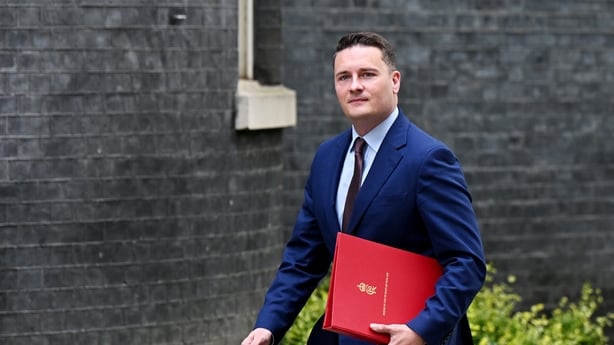
Wes Streeting's allies spent the better part of the past 36 hours briefing that today was the day that the Health Secretary would resign and trigger a leadership contest in the Labour Party.
Those same allies were very much indicating that he was confident he had the 81 signatures needed to do so.
At the same time, sources close to Prime Minister Keir Starmer suggested Mr Streeting hadn’t garnered even half that number.
Had he jumped before he had the numbers?
As lunchtime approached, with still barely a peep from the man himself, the suspicion only grew here in Westminster.
Though the Health Secretary usually faces the cameras to discuss NHS waiting list figures, this morning he kept his head down, issuing only a written statement.
And then, at 12.58pm, the silence ended.
In a lengthy resignation letter posted to social media, Wes Streeting announced he was standing down as Health Secretary and made clear he had lost confidence in Keir Starmer.
He began by setting out his record at the Department of Health, pointing to NHS waiting lists falling by 110,000 in March, the biggest monthly drop outside of Covid since 2008.
These, he wrote, were "all good reasons" for him to remain in post.
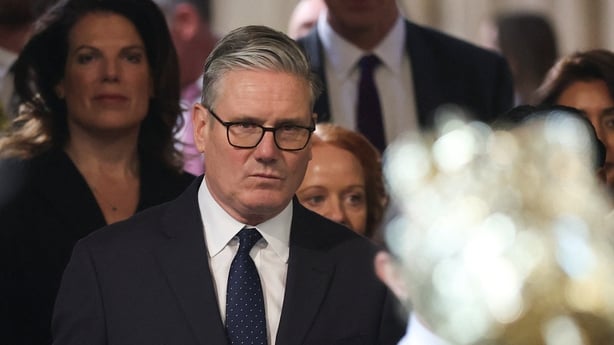
But, he wrote that he had lost confidence in Mr Starmer, and went on to deliver a withering assessment of his leadership.
"Where we need vision, we have a vacuum. Where we need direction, we have drift," he wrote.
He criticised the prime minister’s "heavy-handed approach to dissenting voices" and pointed to specific missteps that had cost Labour at the polls, including the decision to cut the winter fuel allowance.
And he delivered what is likely to be the letter’s most consequential line: "It is now clear that you will not lead the Labour Party into the next general election."
But, for all the drama, there was something missing from the letter: an announcement of a formal leadership challenge.
There was no mention of the 81 signatures, no declaration of intent, no campaign launch.
Mr Streeting has fulfilled the first part of the gambit his allies have been teasing for days.
But the second part - the actual contest - seems to hang in the balance.
Whether that’s because he doesn’t yet have the magic 81, or because of optics, we can’t be sure.
But Mr Streeting's letter is striking for the way it is framed.
He casts his resignation, not as a matter of ambition, but as one of conscience.
"[H]aving lost confidence in your leadership," he wrote, "I have concluded that it would be dishonourable and unprincipled" to remain in post.
It is a phrasing that carries echoes of Geoffrey Howe, whose famous 1990 resignation from Margaret Thatcher’s cabinet paved the way for her downfall just weeks later.
Like most parallels, this one is imperfect.
Mr Howe resigned over policy, not personality.
And while he had once harboured leadership ambitions, by 1990, those days were long behind him.
He did not want the top job.
Mr Streeting, by contrast, almost certainly does.
But there is a cautionary tale in the comparison nonetheless.
It was not Mr Howe who replaced Mrs Thatcher. Nor was it Michael Heseltine, who actually mounted the challenge against her.
It was John Major - the dark horse no one had been talking about.
In Westminster, they have a saying for it: he who wields the knife rarely wears the crown.
And that may explain today’s curious half-measure. As scathing as the letter is, Mr Streeting has only drawn the knife. He has not yet struck.
Read closely, the letter also contains other clues.
In figuring out what comes after Keir Starmer, Mr Streeting calls for "a battle of ideas, not of personalities or petty factionalism".
And pointedly, he calls for "the best possible field of candidates".
That too is curious. Because, in any leadership contest triggered today, that "best possible field" would be incomplete.
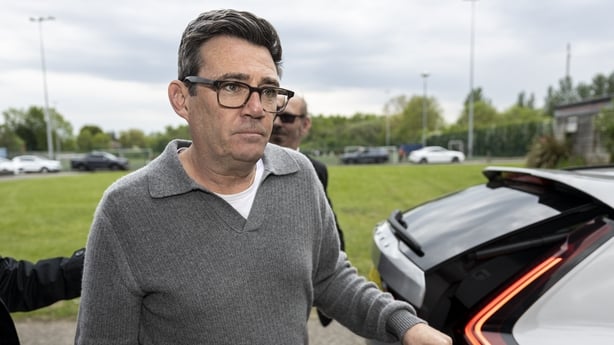
Manchester Mayor Andy Burnham - the man many in Labour see as their best chance of recovery, and consistently the most popular Labour politician in the country - cannot stand. He is not an MP, and Labour’s own rules require him to be one.
For Mr Burnham to enter the race, a serving Labour MP would have to vacate their seat to allow him to fight a by-election.
That process could take months.
A formal contest triggered today, in other words, would shut Mr Burnham out. A "broad" contest, with the "best possible field", would not.
Or has Mr Streeting simply lost his nerve?
Were his allies wrong to suggest a leadership challenge was coming today?
Only time will tell.
Of course, Mr Streeting’s resignation has, in turn, overshadowed what would on any other day have been the top story - the news that former Deputy Prime Minister Angela Rayner has been cleared by Britain’s tax authority of any wrongdoing over her tax affairs.
Ms Rayner was forced to resign last year over an unpaid stamp duty bill.
While she insisted today that she will not trigger a leadership contest, she has not ruled out running in one.
In other words, she is another potential candidate. And that gives Mr Streeting another reason, perhaps, to wait.