The nomination deadline has passed, the posters are up, and the campaigning is set to intensify.
Voters go to the polls in Dublin Central and Galway West on 22 May - but what do previous bye-election campaigns tell us of what could happen between now and then?
Dublin South West 2014
Bye-elections can often turn into referendums on the issue of the day.
In 2014, then minister for the environment Phil Hogan introduced domestic water charges as part of the government's plan to pay back the EU/IMF bailout of 2010.
The move triggered mass protests with more than 120,000 turning out in 100 separate nationwide demonstrations at one point.
In amongst the public anger, voters went to the polls in Dublin South West to fill a Dáil seat vacated by Fine Gael's Brian Hayes.
Sinn Féin's Cathal King went into the contest as the hot favourite - but his party faced questions on what its position was on Irish Water.
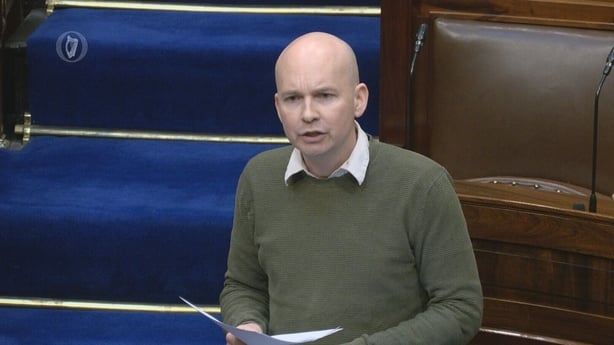
His opponent, Anti-Austerity Alliance candidate Paul Murphy, campaigned almost exclusively on the issue, arguing how Sinn Féin could not be trusted to abolish water charges if they entered government.
"A major turning point for me was when Gerry Adams and other senior Sinn Féin figures said they would pay the water charges. The campaign didn't turn to a referendum on the charges, but rather how to fight them," recalled Mr Murphy in recent days.
In the end, he pulled off a stunning victory few had predicted at the outset, showing the depth of feeling on the austerity measure.
Political parties shifted their position on water charges in the wake of the bye-election. The charges were suspended in 2016 and abolished entirely in 2017.
"The win had a major impact on politics afterwards and highlighted the importance of people power", added Mr Murphy.
He has been a TD since, now sitting in the Dáil under the People Before Profit name.
Cork City and Cork North East 1979
Most of the time, bye-elections do not dramatically alter the Dáil arithmetic.
However, they can sometimes trigger major political developments.
Fianna Fáil went into two contests in Cork in 1979 confident of success in the heartland of party leader and taoiseach Jack Lynch.
The six-time All-Ireland winner across both codes had returned to office two years previously after a resounding general election success.
However, when the votes were counted, Fine Gael's Liam Burke and Myra Barry emerged victorious, and ultimately precipitated the departure of Mr Lynch as taoiseach.
"It was humiliating for him, Lynch had campaigned in the constituencies over four successive weekends and had put a lot into it. He had been revered and the closest thing to God around Cork," recalls Professor of Politics in DCU, Gary Murphy.
Mr Lynch resigned as leader of Fianna Fáil exactly a month after the bye-election defeats.
"The defeats forced him out of office much quicker than he had wanted to go. It spurred George Colley to approach him to stand aside - thinking he would replace him. But as we know, that didn't quite work out with Charlie Haughey winning the subsequent leadership contest instead," said Mr Murphy.
Micheál Martin is Fianna Fáil's first Cork taoiseach since Mr Lynch - could he face a similar end off the back of a double bye-election defeat?
"Granted there've been murmurings about his leadership, I don't think Micheál Martin is in the same danger as Jack Lynch if Fianna Fáil loses both bye-elections.
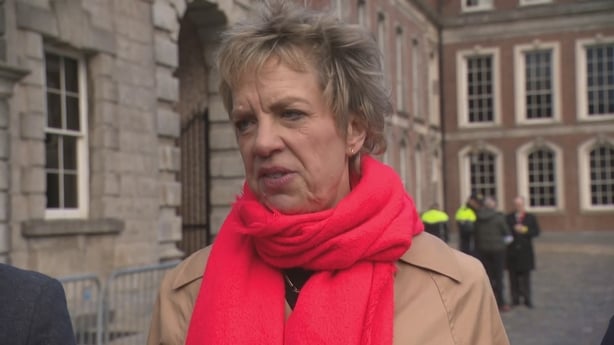
"Look at 2021, when the party's candidate Deirdre Conroy got just 4.6% of the vote in the Dublin Bay South bye-election - and he remained on after that", Mr Murphy added.
Still, the lesson is that while votes may be counted on 23 May, the political ripples might be evident for some weeks after.
Dublin Bay South 2021
Opinion polls are often dismissed by political parties as only a snapshot in time, but in bye-elections they sometimes carry greater significance.
The last Dáil bye-election was held in what now seems like a different world, during the Covid-19 pandemic.
Polling hours were extended with ballot stations featuring hand sanitisers, masks, and perspex screens.
Fine Gael's James Geoghegan went into the contest as the hot favourite to retain the seat for his party, formerly held by Eoghan Murphy.
However, an opinion poll around 10 days out from voting indicated that while Mr Geoghegan was likely to win the vote, the Labour Party's Ivana Bacik was polling stronger than expected.
The Irish Times/IPSOS MRBI poll put Mr Geoghegan on 27% and and Ms Bacik on 22%. When the votes were cast, the standings had flipped with Ms Bacik topping the poll on 30%, and Mr Geoghegan on 26%.
Political strategists from all sides admitted afterwards how the poll had the effect of crystallising the election to a contest between the leading pair - to the detriment of the other candidates.
"I entered the contest as an outsdider. People were writing me off in the early commentary", recalled the now Labour leader this week.
"The lesson we took was that bye-elections are unpredictable. We had begun to see momentum before the poll, and that confirmed it for us," she said.
Remembering the Covid-nature of the campaign, Ms Bacik said: "We were entering canvassing in a cautious way. But people were just very interested in having a conversation - and this perhaps reflected the real weariness of people after a long period of social disengagement."
Opinion polls are expected for Galway West and Dublin Central over the next fortnight and could well help shape the final contests.
Mr Geoghegan went on to become a TD after the 2024 general election - one of 121 unsuccessful bye-election candidates who would later make Dáil Eireann.
Mayo West 1975
Have a good look at the ballot papers for Dublin Central and Galway West as they may contain a household political name of the future.
Some well-known names from across the political spectrum in the 34th Dáil initially entered Leinster House after bye-election success.
Three former taoisigh also had their start in bye-elections, Fianna Fáil's Seán Lemass and Brian Cowen and Fine Gael's Enda Kenny.
Mayo West TD Henry Kenny - a former All-Ireland winner with Mayo - died in 1975, leaving the Fine Gael-Labour coalition with a majority of just one seat.
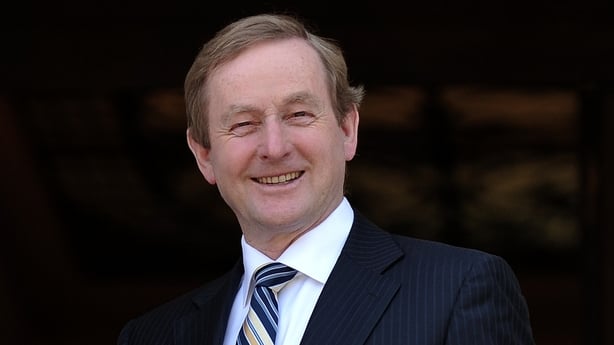
Thrown into the deep end to rescue the seat for the coalition - 24-year-old teacher Enda Kenny.
Mr Kenny, many years later, described the contest as something from "prehistory", as political heavyweights from both sides descended on Mayo to slug it out for the vacant seat in a contest characterised by torch-lit processions and confrontations outside churches.
In the end, the future taoiseach was elected on the first count with 52% of the vote, beating Fianna Fáil's Michael McGreal and Independent Basil Morahan.
So, future office holders could be in our midst over the next three weeks.
Dublin South Central, Mayo West, Cork North Central and Cork South Central 1994
Government parties rarely win bye-elections, scoring just four times from 34 attempts since 1982.
Indeed, four government defeats famously helped change the composition of a coalition.
"Classic bye-elections of the past would have to include 1994 - when the balance of power changed and allowed the formation of the rainbow government," said Professor of Politics at Trinity College, Michael Gallagher.
Two wins each for Fine Gael and Democratic Left in Dublin South Central, Mayo West, Cork North Central and Cork South Central ultimately paved the way for a Fine Gael, Labour, Democratic Left government, with Fianna Fáil jettisoned from power without the need for an election after controversy over the Smyth affair and the Beef Tribunal.
"It's the greatest day of my life," recalls Mayo victor Michael Ring of his bye-election success. "I won against all the odds at a time when Fine Gael was on the ground."
"Everyone thought the Flynns had the seat, but I won it and held it for almost 31 years."
In Dublin South Central, the victory was especially sweet for Democratic Left's Eric Byrne, who had just lost out in the 1992 general election by five votes to Fianna Fáil's Ben Briscoe after a 10-day count.
"It was very important for me personally after losing so many elections, and winning some", said Mr Byrne this week.
"I came out of the 10-day count in 1992 with a lot of the shocks of war. The nation held its breath as the formation of the government hinged on the fight between Briscoe and me.
"I don't envy anyone going into elections now, it's a rough business."
Candidates in Galway West and Dublin Central will certainly hope to avoid a 10-day count.