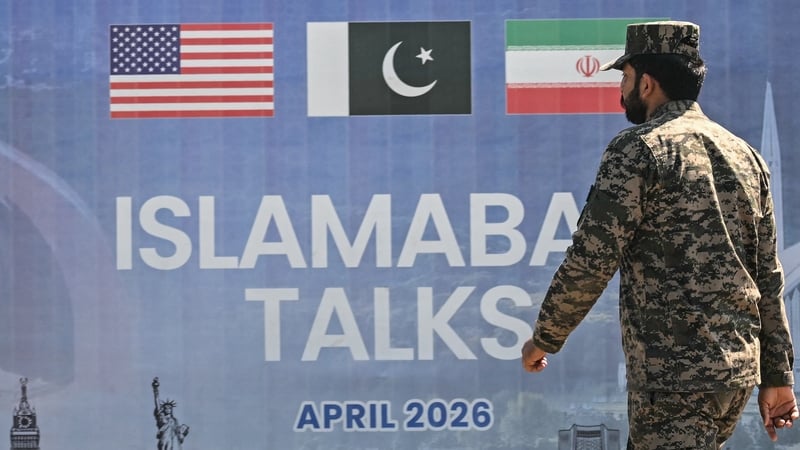

After 21 hours of talks in Islamabad, the US and Iran have managed to avoid the worst-case scenario: a total breakdown in peace negotiations.
But only just about, it seems.
The delegations were so far apart that they emerged from the five-star Serena Hotel without even an agreement to meet again - a baseline that even the most cynical analysts had considered achievable.
Though Iran had essentially threatened not to come, and the start of talks was delayed, there was genuine encouragement when the two sides agreed to meet face-to-face - rather than relying on Pakistani mediators to shuttle messages between rooms.
That the talks stretched well into the night was also read as a potentially positive sign. Perhaps, some suggested, they were edging toward an agreement and simply needed a few more hours to bridge the final gaps.
But, in the end, they couldn't even agree to continue talking.
For all their difficulties, even the recent talks between Russia and Ukraine yielded vague commitments to further negotiations.
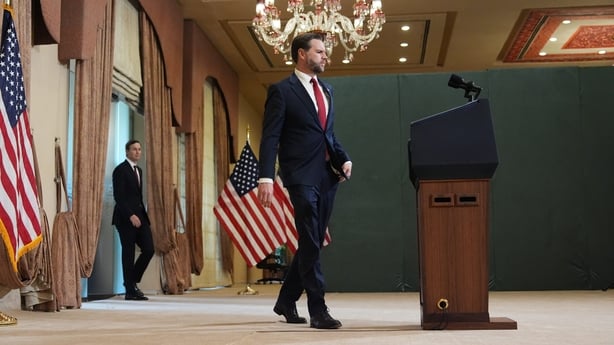
"We have been at it now for 21 hours, and we have had a number of substantive discussions. That's the good news," US Vice President JD Vance said at a press conference in the early hours of this morning.
"The bad news is that we have not reached an agreement."
To make matters worse, the two sides left the same room convinced the ball was in the other’s court.
'Final and best offer'
Mr Vance said he was leaving behind a "final and best offer" for Iran to consider.
The US Vice President has presumably given Tehran a deadline.
But sources close to the Iranian delegation told news agencies the US was looking for an excuse to leave and that, in their view, "the ball is in America’s court".
The key issue, Mr Vance said, was Iran’s unwillingness to commit to not developing nuclear weapons.
"We haven’t seen that yet. We hope that we will," he said.
That, in itself, will surprise nobody who has followed this issue. The JCPOA - the nuclear deal agreed in 2015 under Barack Obama that placed strict limits on Iran’s nuclear ambitions - was the product of 20 months of formal negotiations.
The two sides met 18 times across 11 different cities.
Of course, Donald Trump scrapped the JCPOA in 2018, describing it as the worst deal ever made.
Since then, Iran has dramatically expanded its nuclear stockpile, and now holds more than 400kg of highly enriched uranium, far more than before the deal existed.
Viewed from Islamabad this morning, the JCPOA is looking like a much better deal than Mr Trump let on.
For their part, the Iranians were initially signalling that "excessive demands" sank the possibility of an agreement - lending credence to the idea that it was unrealistic expectations from the Americans, expecting agreement to be reached in just one round of negotiations, that proved the fatal obstacle.
But Mohammad Bagher Ghalibaf, the speaker of Iran's parliament, who led Tehran's delegation alongside Foreign Minister Abbas Araghchi, has offered a different explanation in the hours since. The real problem, he said, was not the substance - but the trust.
"My colleagues in the Iranian delegation proposed forward-looking initiatives," he said, "but the other side ultimately failed to gain the trust of the Iranian delegation in this round of negotiations."
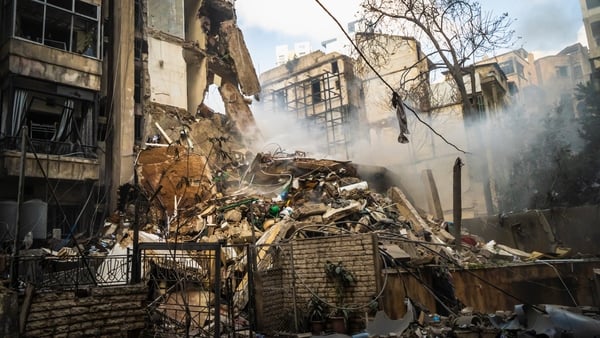
You can’t blame them. Last year, while talks over Iran's nuclear programme were ongoing, the US and Israel struck Iran's nuclear sites. And, barely six weeks ago, Iran was in yet another round of negotiations when the US and Israel launched a war that killed its supreme leader.
Strait of Hormuz remains a sticking point
Iran’s foreign ministry said discussions covered the Strait of Hormuz, the nuclear issue, war reparations, sanctions relief, and a complete end to hostilities.
Of course, the Strait of Hormuz also seems to have been one of the key sticking points.
The US has every right to be frustrated by that - given the Strait of Hormuz was not even supposed to be on the agenda in Islamabad.
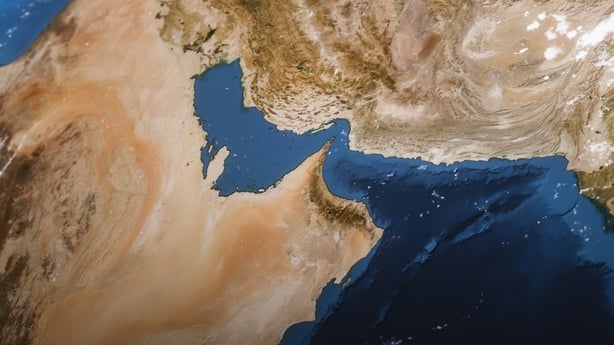
Its reopening was the precondition for these talks - Iran had committed to allowing ships through as part of the ceasefire agreed last Tuesday. That it remains effectively closed suggests Iran arrived in Pakistan with rather more leverage than it was supposed to have.
Iran knows this, of course. And it has no intention of relinquishing control of the strait - having demonstrated that it can hold the global economy hostage through the waterway, Tehran has little incentive to simply hand that leverage back.
In a broader sense, Iran’s leaders believe they have emerged from this war in a stronger position than when it began. They survived nearly six weeks of the most intense US and Israeli bombardment in the region’s modern history.
Their supreme leader was killed - and replaced. Their military was degraded - but not destroyed. And they sat across the table from the US in Islamabad with their own 10-point framework serving as the basis for negotiations.
That this is where things stand is precisely what has led so many analysts to conclude that the war represents one of the most significant strategic miscalculations of Donald Trump’s presidency.
A war launched, in part, to weaken Iran has left it emboldened. It's no wonder they felt so comfortable in rejecting Mr Vance's demands.
But, with no agreement to meet again, nobody knows quite what comes next.
What is worth remembering, amid all of this, is that every move should perhaps be read less as a final position and more as a negotiating tactic - because both sides have an interest in appearing to have the upper hand.