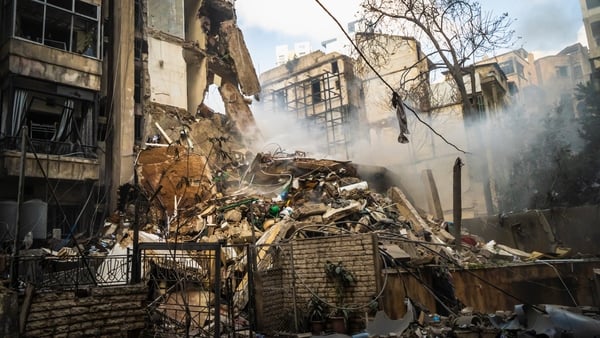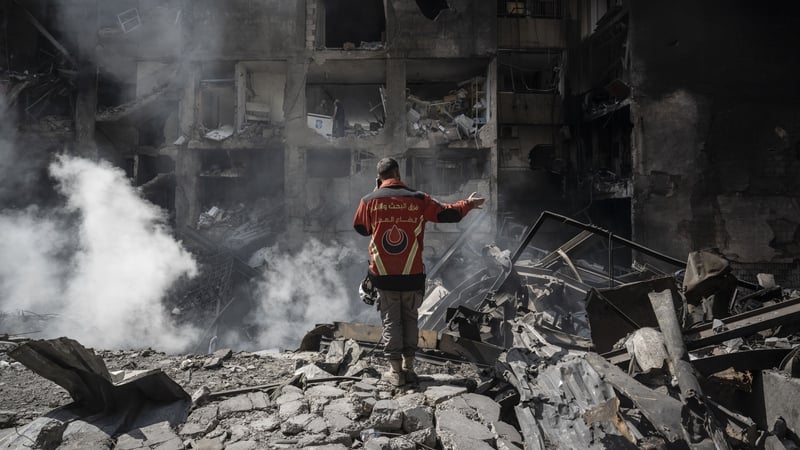

The skies over Beirut have been eerily quiet today. That is despite Israel issuing a raft of evacuation warnings for parts of the city this afternoon.
Those warnings came hours ago. But the strikes, so far, have not.
There is some solace in that. However, only so much, given the scale of the carnage yesterday.
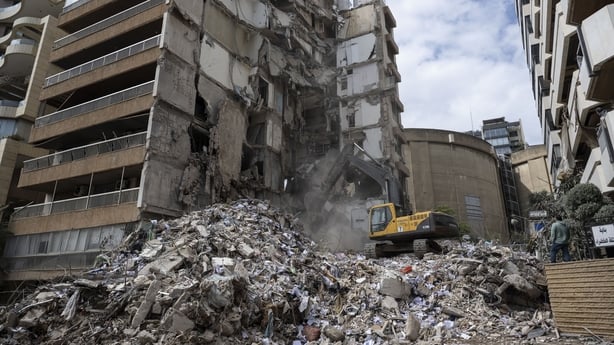
After the bloodiest day in Lebanon so far in this war, today is a national day of mourning, and the city is still reeling.
So many of those killed were simply going about their daily lives when the strikes hit without warning.
But tonight brought some additional solace.
Israeli Prime Minister Benjamin Netanyahu announced that Israel would begin direct ceasefire negotiations with Lebanon, focused on Hezbollah's disarmament and a normalisation of relations between the two countries.
Lebanon’s President Joseph Aoun has responded positively, and there are reports that talks could begin in Washington as early as next week.
That is welcome news for two reasons. A Lebanon ceasefire could, of course, stop the bloodshed here. But it would also remove the single biggest threat to the wider US-Iran process - because Israel’s continued strikes on Lebanon were pushing Iran to the brink of walking away from the negotiations entirely.
However, given yesterday’s relentless assault, tonight’s sudden announcement has left many scratching their heads. Why did Mr Netanyahu suddenly accede to direct talks?
It will come as no surprise that the answer, it appears, is Donald Trump.
According to US media reports, it was Mr Trump himself who called the Israeli Prime Minister yesterday to ask him to scale back Israeli operations in Lebanon and enter into negotiations with Beirut.
The US President told NBC News that he had asked Mr Netanyahu to be, in his words, "a little more low-key" - and that he believed the Israelis were scaling back.
Mr Netanyahu's announcement this evening apparently came directly at the Mr Trump's request.
The ceasefire agreed earlier this week is the centrepiece of what Mr Trump wants to present as a diplomatic triumph and Lebanon was threatening to unravel it.
But the reaction in Israel has been tepid, at best. By yielding to Mr Trump, Mr Netanyahu has been accused of yielding to Iran by extension.
And so, in the hours since his statement agreeing to direct talks, Mr Netanyahu has struck a notably hawkish tone - suggesting that any negotiations will be conducted from a position of continued military pressure, not restraint.
"We will not stop the fighting in Lebanon," he said this evening, "until security is restored to residents of the north, Hezbollah is disarmed, and a peace agreement is reached".
The Chief of Staff of the Israel Defence Forces added that yesterday’s strikes had pushed Hezbollah out of its traditional heartland in Beirut’s southern suburbs and into other parts of the city - and that Lebanon remains their "main battlefield".
Talks between Israel and Lebanon, in other words, will be held under fire.
Watch: US did not agree that ceasefire would cover Lebanon - Vance
And there is little respite so far for Lebanon's south. While the skies over Beirut have been quiet, Israeli strikes in southern Lebanon have continued throughout the day and into this evening - killing at least 17 people.
The grinding campaign there, away from the cameras and the diplomatic communiqués, has not paused.
And that brings us to the fear that will linger here long after tonight's announcement.
Because, while direct negotiations between Israel and Lebanon are undoubtedly a step forward, they also mean that, if Lebanon’s war ends, it will do so on a separate track - in Washington, not Pakistan, away from the main event and all the diplomatic pressure that surrounds it.
Lebanon will not be in the room this weekend when US Vice President JD Vance sits down with Iran.
Its ceasefire, if it comes, will arrive later, in a different city, brokered in a different conversation - and with considerably less of the world watching.
The fear here is that the Lebanon track becomes the one that the world stops paying attention to, that it slows, stalls, and quietly fades while the bigger deal gets done and the cameras move on.
For a country that has spent six weeks feeling like a footnote to someone else’s war, that is a familiar place to find itself.