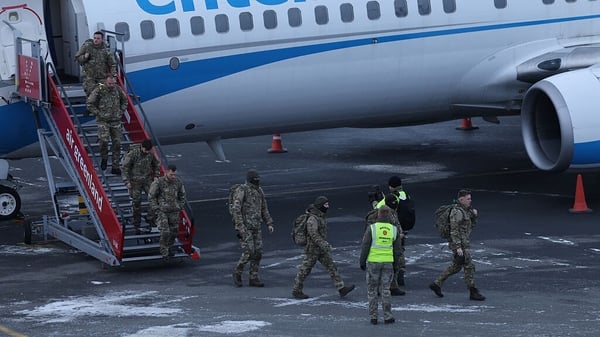
It has been almost half a century since Shah Mohammad Reza Pahlavi boarded his royal jet at Tehran's airport and left Iran, never to return.
His departure, in January 1979, was officially described as a vacation - though few believed it.
After 14 months of protests, the Associated Press described him that day as "a weeping king driven from his kingdom".
Within hours, his statues were torn down, and his portrait removed from banknotes.
By nightfall, almost every visible sign of the Pahlavi dynasty had been erased from Iran’s streets.
It would take another 26 days for the monarchy to collapse, and for the country’s armed forces to abandon the throne to the onrushing revolution.
It was, in every sense, regime change.
Of course, regime change can take many forms - and Iran knows that better than most.
In 1953, it came in the form of a CIA-orchestrated coup.
In 1979, the revolution was fomented by Ayatollah Ruhollah Khomeini, who had been expelled by the Shah to exile in 1964, moving first to Turkey, then to Iraq, where he was later expelled by Saddam Hussein under pressure from Tehran.
It was from a modest village outside Paris that Mr Khomeini directed, by telephone and cassette tape, a revolution thousands of miles away.
But Mr Khomeini was not conjuring revolution from nothing.
The Shah’s modernisation programme - the so-called White Revolution of the 1960s - helped accelerate the growth of a new urban poor, uprooted from the countryside and ill-served by the reforms they had been promised.
They were restless, and they were searching for a language to express it.
Mr Khomeini offered one. At the same time, the country’s so-called intellectuals and secular left hoped they could use Mr Khomeini to remove the Shah - and build something democratic in the aftermath.
The crucial advantage Mr Khomeini possessed was this: as a senior ayatollah - a title denoting the highest rank of Shia Islamic scholarship - he was a leading figure of the ulama, the body of Islamic clerics and legal scholars who had long formed the backbone of Iranian civic life.
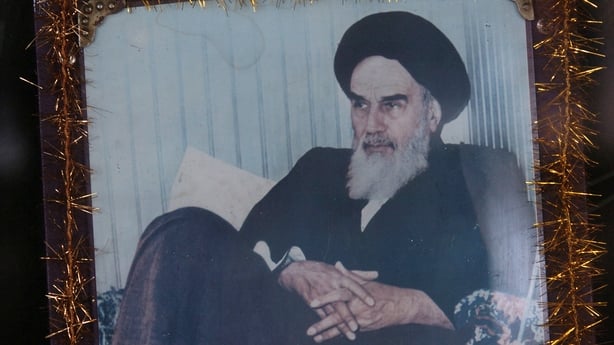
The Shah’s secularisation drive had marginalised them, stripped them of influence over education and land. But it had not dismantled their networks.
In every town and village in Iran, the mosques and seminaries remained - and the clerics who ran them still commanded the loyalty of ordinary Iranians in ways the Shah’s government simply did not.
In other words, when the time came for revolution, there was an opposition in Iran with a ground game, with organisational capacity. It had roots.
Some 47 years after the Shah boarded that plane - taking with him, it is said, a small vessel of Iranian soil - the situation could hardly be more different.
Yes, the United States and Israel have stated plainly that regime change is among their aims - or, at the very least, that they hope the Iranian people will finish what the bombs have started.
On the first day of the war, US President Donald Trump told the Iranian people: "The hour of your freedom is at hand."
Israeli prime minister Benjamin Netanyahu called on Iranians to "cast off the yoke of tyranny", promising that the operation would "create the conditions for the brave Iranian people to take their destiny into their own hands."
It is not that the Iranian people lack the desire.
Lack of a political alternative
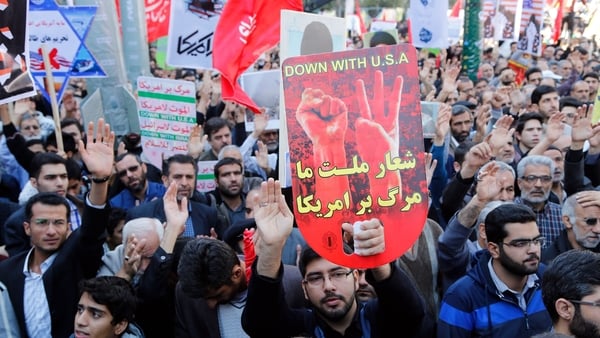
After decades of repression - and the brutal massacre of protesters in recent months - the gulf between the regime and the people it claims to represent has become unbridgeable.
That is not for want of courage - Iranians have taken to the streets repeatedly, at enormous personal cost, and been met each time with bullets and prison cells.
The Iranian people do not need to be told that their government has failed them. They already know.
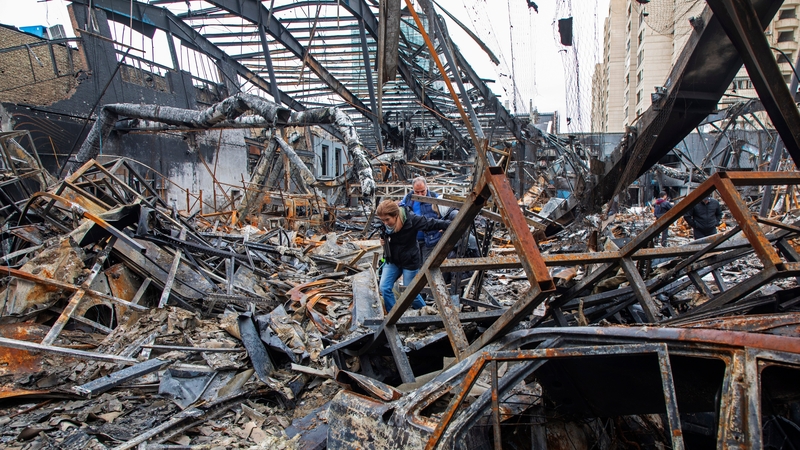
But desire is not the same as capacity. With bombs and missiles, you can kill leaders and destroy infrastructure.
What you cannot do is manufacture a political alternative capable of replacing the regime - and that alternative simply does not exist in Iran today.
The Islamic Republic has spent nearly half a century ensuring that it does not.
Every flicker of organised opposition has been extinguished.
Every reformist movement has been co-opted, imprisoned, or shot.
The infrastructure that Mr Khomeini inherited in 1979 - the mosques, the seminaries, the networks, the coalitions - the regime has spent decades making sure nothing like it could ever exist outside its own control again.
So there is no opposition with a ground game.
There is no leader waiting in a village outside Paris. There is no ulama willing to turn against the state, because the state and the ulama are now, by design, the same thing.
The regime is not simply entrenched - it is embedded. It does not depend on any individual leader for its survival.
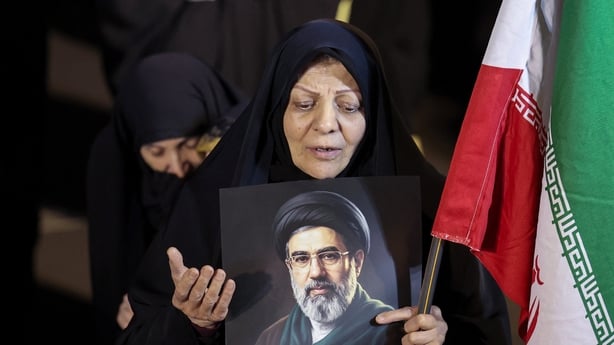
While Mr Trump has suggested in recent days that his country has, in effect, already achieved regime change - pointing to the number of senior Iranian leaders killed since the war began - few serious observers agree.
What remains is the same system, the same structures, the same logic of control - with new faces.
It barely needs pointing out that one of those new faces - that of the Supreme Leader himself - belongs to the son of the man he replaced.
There is another reason this regime will not simply collapse under pressure - and it has nothing to do with ideology. The Islamic Republic’s political elite and security establishment have no exit.
The Shah’s inner circle had their villas on the Côte d’Azur, their accounts in Switzerland, their boltholes in California. When the moment came, they left.
The men who run Iran today have no such options.
They are sanctioned, isolated, and in many cases, wanted.
For them, the survival of the regime is not a political preference - it is a personal necessity. They are not defending a system. They are defending themselves.
In 1979, a king boarded a plane and a system collapsed behind him.
Today, there is no plane waiting, no system ready to replace what might fall.
That is the difference - and the reason why, this time, regime change is far easier to call for than to achieve.