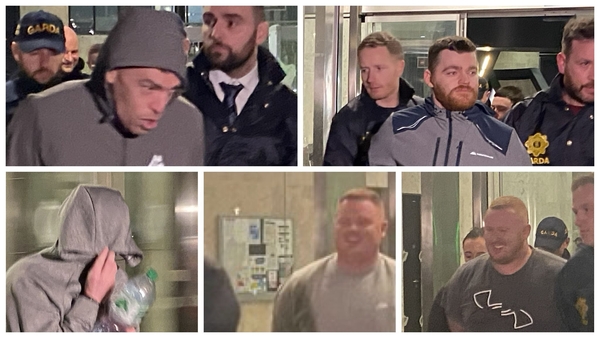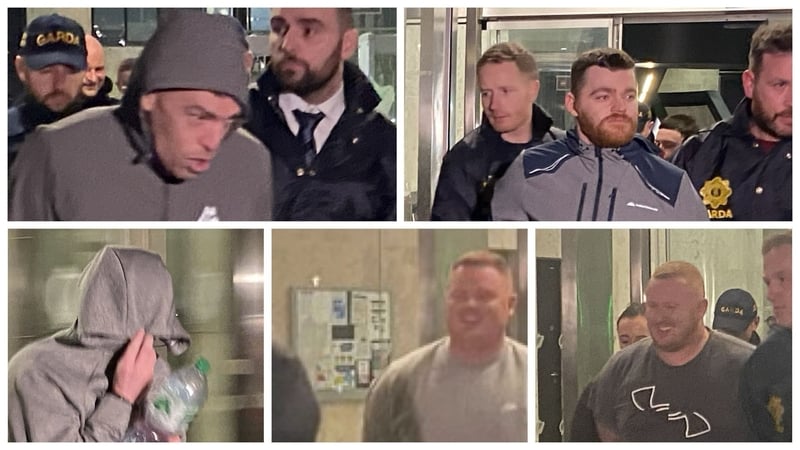

Five members of the Hennessy Organised Crime Group were jailed this week but, as Paul Reynolds reports, the case has raised serious questions about the State's ability to tackle organised crime in the face of witness intimidation.
The torture of Barry Moore
At 6.15pm on 12 February 2025, Barry Moore called in to his friends the Hennessys’ home on Sheephill Avenue, Blanchardstown in Dublin 15.
The 34-year-old walked in the steel side gate and went around to a shed at the back which had also been kitted out as a den.
He had called in to buy a tracksuit and chatted with Brandon Hennessy and Ken Fitzsimons.
Devon Hennessy and Jason Hennessy Jr were also there. Mr Moore showed them a photo on his phone.
It was all very relaxed and convivial until suddenly it wasn’t.
Jason Hennessy smashed the phone out of his hand and punched him in the jaw.
"I was stunned," Mr Moore said. "I asked Jason, 'what did you do that for?'"
Jason’s older brother Devon jumped up and started punching him in the head.
Jason hit him again. "You know what this is about," he shouted, "I want the truth."
Ken Fitzsimons then went to the garden and came back with a 'breaker bar’ - five feet of solid steel - and "walloped" him seven or eight times on the legs before breaking his right arm.
"Tell us the truth about Paddy and Martin," Jason shouted at him, referring to two rivals the Hennessys had been feuding with.
Mr Moore tried to tell them he hadn’t seen them for over a year and begged to be allowed to leave, but to no avail.
Jason Hennessy believed someone had previously set him up to be attacked at a Costa coffee shop and had convinced himself, his brothers and the Fitzsimons that Mr Moore was either behind it or had something to do with it.
An hour of torture had begun.
Brandon Hennessy, Moore said, "came in like a mad man, screaming at me".
The Hennessys suspected there was an informer in the gang and they blamed Barry Moore.
Brandon had set a trap for him by telling him the windows on the top floor of the Hennessys' home were not bullet-proof.
"I told you on purpose because I knew you would go back and tell the lads," Brandon screamed at him, before taking the breaker bar and hitting Moore several times all over his body.
Such was the ferocity of the attack that older brother Devon got worried and told him to ease off, otherwise he would kill him. The younger Brandon had no such pity.
"If you don't like it, go out the back," he told him.
However, it was Jason who left and came back with the items needed for the most brutal and shocking part of the torture, a blue camping stove and a specially made cattle branding iron with letters R, A, T.
He turned on the stove and heated the branding iron.
"He’ll talk after this," Jason Hennessy said.
"I was pleading with all four of them to let me leave, but they wouldn't," Barry Moore said.
As the iron was being heated, Kenneth Fitzsimons’ son Dean Fitzsimons arrived in through the back door of the shed on an e-bike and drove over Barry Moore.
"I've been waiting on you," he told him before he picked up the steel breaker bar and hit him several times.
Dean’s father Ken also joined in. He picked up an axe and struck Mr Moore with the blunt side.
Dean then produced a Stanley knife, a towel and a bucket of water. First, he threatened to cut off Barry Moore’s ears with a Stanley knife before 'waterboarding' him by putting the towel over his face and pouring the water on him.
"I thought I was going to drown. I couldn't breathe. I thought I was going to be murdered," said Mr Moore.
Dean took the towel away and stood over him.
He told him if he didn’t tell the truth, he would "leave in a body bag".
"I kept saying I knew nothing and kept begging them let me go," said Mr Moore.
Dean Fitzsimons then put the Stanley knife to Mr Moore’s ear but Jason Hennessy intervened.
"Not yet," he told Fitzsimons and started beating the terrified and bloodied victim before tying him up with a dog lead.
Jason Hennessy then produced the hot iron and branded the word 'RAT’ on Mr Moore’s stomach.
"I was screaming, I never felt such pain before. I was pleading for mercy," he said.
Devon Hennessy tried again to intervene, but he was ignored.
Jason kept shouting at Mr Moore that he was not getting out of there until he talked.
"I can't talk because I don't know anything," he helplessly pleaded.
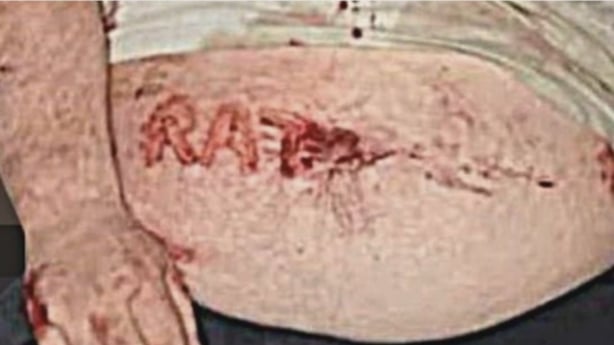
Jason Hennessy picked up the hot iron. Brandon Hennessy and Dean Fitzsimons held his arms. Jason again branded the word 'RAT' on Barry Moore’s face.
He pressed it on to his forehead for about eight seconds before putting it back on the stove.
Each of the letters R, A, T was thick and deep and measured 4cm.
"I was screaming with pain, pleading to let me go," Mr Moore said.
Brandon then said they should pull down his tracksuit and "rape him with a stick".
Dean Fitzsimons stood on his back and "danced" on his neck, choking him.
For the third time, Devon Hennessy asked them to let Barry Moore go.
Jason Hennessy had a different suggestion.
"We should burn his feet," he said.
Barry Moore was branded one more time, on the right side of his head, this time by Dean Fitzsimons before Jason Hennessy told him to get up and go.
He stumbled out to his car and drove off after a struggle to start the engine. He stopped at his father's house nearby and was taken to hospital by ambulance.
"I was kept against my will," he told the gardaí from his hospital bed the next day.
"I did not look for this. My face and body are destroyed. They held me hostage and beat me for over one hour. I thought I would die several times. I hope these markings are not permanent," he said.
The Hennessy Organised Crime Gang
The Hennessy Organised Crime gang is effectively a street-based criminal gang operating in Blanchardstown and west Dublin
Its members live in the communities they operate in, the greater Blanchardstown area in west Dublin.
They are violent and dangerous and have been known and feared for years for their erratic and extreme levels of violence - as is evidenced by this case.
People in Sheephill, Corduff, Blakestown and Castlecurraghare terrified of them.
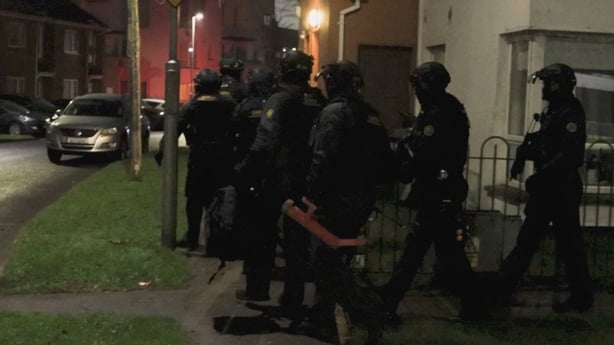
The Hennessy have been operating out of their fortified home in Sheephill. It has steel gates, bullet-proof windows and a shed with living space at the back.
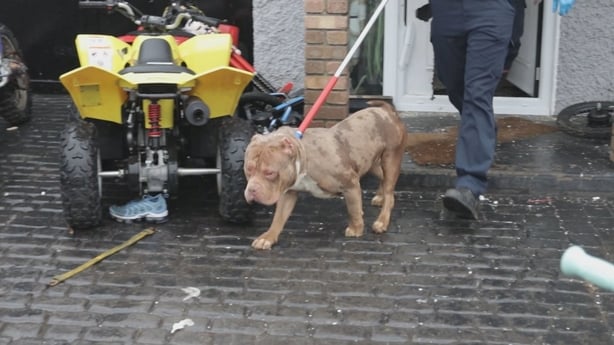
They also kept dangerous dogs there, XL bullies, until legislation was introduced which allowed the gardaí to seize them.
The three Hennessy brothers, Jason, Devon and Brandon are recidivist criminals. All have convictions for a variety of offences, particularly for violent crime .
At 30, Devon is the eldest. He has 37 previous convictions for numerous offences assault causing harm and violent disorder.
Jason, who is a year younger, has 26 previous convictions, also for assault and violent disorder, while 24-year-old Brandon has five convictions.
He is a convicted drug dealer, having been caught last year with € 32,000 worth of cocaine. He also has a conviction for violent disorder.
Dean Fitzsimons, 26, has 42 previous convictions, including for firearms offences, while his father, 46-year-old Kenneth, has 17 previous, which also include gun crime.
The gang was headed up by the Hennessy brothers’ father the late Jason Hennessy Senior.
He was the patriarchal figure who recruited young men into street-level drug dealing and violence, particularly children who were impressionable, vulnerable and who had disassociated themselves from the education system and moved away from their family.
One of them was Michael Andrecut, who saw him as a father figure and called him "my Da, Daddy J".
Andrecut hadn’t seen his own father since he was eight years old.
"He loved me like a son," he said of Hennessy senior.
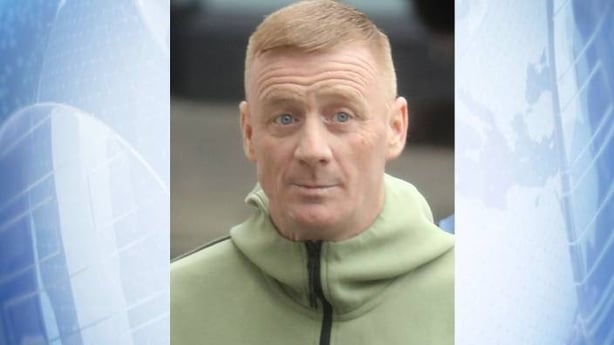
"He was good to me in every way. He took me under his wing and we clicked.
"He did everything. I would be able to bawl my eyes out in front of him and there would be no problem. I would be able to tell him anything," said Andrecut.
Andrecut, along with other young members of the Hennessy gang, was with Jason Hennessy Snr and the family the night he was murdered, at the Steakhouse restaurant in Blanchardstown on Christmas Eve 2023.
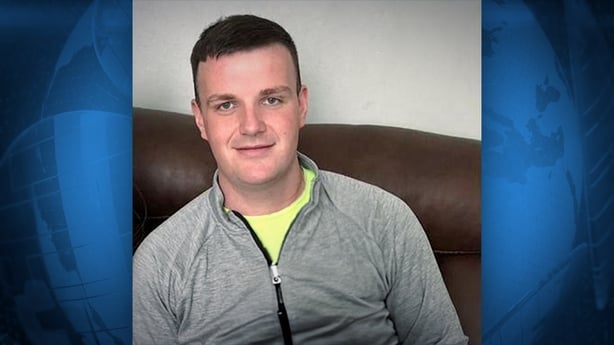
Rival gangster Tristan Sherry walked in and shot Jason Hennessy Snr, who later died in hospital.
However, the gun was taken off Sherry and he was shot and beaten to death.
Seven men, all under the age of 23 and five in their teens, were convicted for their roles in the killing of Tristan Sherry. Three, including Michael Andrecut, were found guilty of the murder.
The 23-year-old said he would rather he had been shot that night, such was the malign influence Hennessy Snr had over the gang.
"If I could, I would have jumped in front of him," said Andrecut.
He was prepared to give his life for the gang boss and arguably he now has. He is currently serving life in prison.

‘Gripped with fear’
Barry Moore’s troubles continued even after his five torturers were arrested and charged with offences that could have put them in prison for life.
He had told the gardaí what had happened but was now required to testify against them in court, and that he was not prepared to do.
Mr Moore disappeared before the trial started. He didn’t turn up for the first two hearings in November last year and the start of the trial had to be postponed.
The gardaí opened lines of communication with Mr Moore but he would not come to court.
He was afraid, his family and children had been threatened and Mr Moore fled to England. A warrant had to be issued for his arrest.
On Thursday, 4 December 2025 Mr Moore was brought to court.
In the words of the Senior Investigating Officer Detective Inspector Liam Donohoe, he was "gripped by fear."
"Criminal elements" were attempting to interfere with the case and issuing threats.
Mr Moore had to be remanded in custody to ensure he would turn up in court.
But even when he was brought before the Special Criminal Court he refused to testify.
The trial began the following day, Friday, but when called Mr Moore replied: "I'm not giving evidence".
"I'm sorry to the three of you," he told the three judges, "but I am not giving any evidence in the trial ever.
"I'm finished with it. I apologise to the three of you."
He remained in his seat, looking at the ground, with his head in his left hand.
The case was adjourned until the following day Saturday when the three judges warned Mr Moore that he could be jailed if he continues to refuse to give evidence.
This time Mr Moore appeared by video link from prison where he was being held in isolation.
He told the judges that he understood the consequences of his decision but repeated he would not give evidence in court or answer any questions.
Lesser charges, less time in prison
The case was adjourned until the following Monday after the court was told the Director of Public Prosecutions (DPP) believed that the evidence in the case would support Mr Moore’s account of what happened to him and that his statements to gardaí should be admitted as evidence into the trial, without him having to take the stand.
The case was adjourned for two days to allow the state review the possibility of putting Mr Moore in protective custody.
When the case was called on Monday, 8 December, the situation had completely changed.
A deal had been done.
Devon Hennessy had already pleaded guilty to the more serious charges of false imprisonment and attacking Mr Moore for the purpose of enhancing a criminal gang.
However, the other four had held out and were smiling in the dock when the case was called.
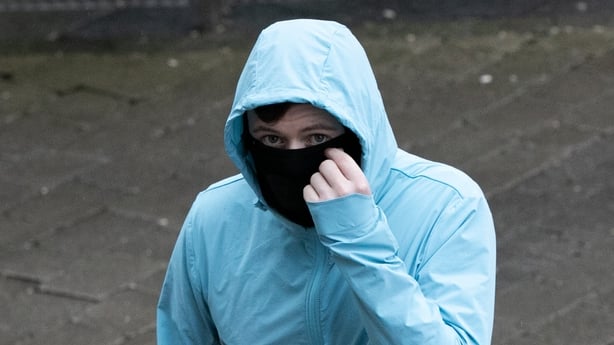
Jason and Brandon Hennessy and Kenneth and Dean Fitzsimons had agreed to plead guilty to the lesser charge of assault causing harm, which carries a maximum of ten years in prison.
Jason Hennessy was sentenced to eight and a half years in prison. He’s already done a year and, with the remission automatically granted to prisoners, he’s due to be out in five years' time.
Brandon Hennessy was sentenced to six years in prison, but because he committed the offence on bail the sentence is consecutive to one he is serving that concludes on 16 February 2028.
Today’s sentence begins then.
Devon Hennessy was sentenced to three years in prison because he tried to intervene and pleaded guilty to the more serious charges at an early stage.
It was clear the court adjudged he could not be penalised more than the other gang members for being the first to admit what he had done.
Dean Fitzsimons was sentenced to eight and a half years in prison while his father Kenneth Fitzsimons was sentenced to eight years in prison.
Both will be out in less than five years.
The murder of Detective Garda Jerry McCabe
A similar situation occurred after Detective Garda Jerry Mc Cabe was shot dead and his colleague Detective Garda Ben O’Sullivan was shot and seriously injured by an IRA gang carrying out an armed robbery in Adare Co Limerick on 7 June 1996.
Four men, Pearse McAuley, Jeremiah Sheehy, Michael O’ Neill and Kevin Walsh, were arrested and charged with capital murder, which on conviction carries a life sentence with a minimum of 40 years.
The IRA gang had used the home of the Tipperary farmer Patrick Harty, but when the case came to trial, he was too afraid to testify and the garda killers all pleaded guilty to the lesser charge of manslaughter and were each sentenced to between 11 and 14 years in prison.
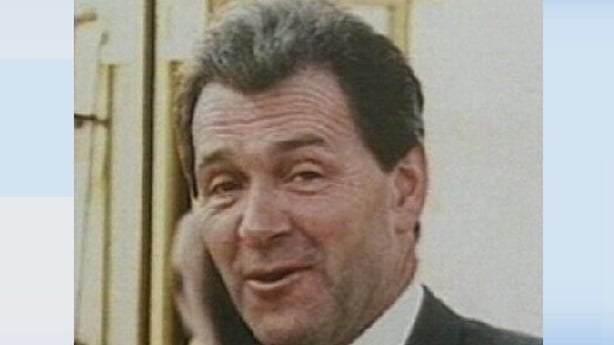
However, the case caused outrage over 20 years ago and legislation was introduced to enable violent and dangerous criminals and terrorists to be prosecuted even if witnesses are too afraid to give evidence.
The fact that it was not used in the Hennessy case raises a number of questions.
Unanswered Questions
Why were the four men allowed to plead guilty to assault causing harm when it was clear from the facts of the case that the crimes they had committed caused serious harm, lifelong injuries, disfigurement and severe mental trauma to Barry Moore?
Why did the state not proceed with the prosecution on the more serious charges, declare Mr Moore a hostile witness, put his statement into evidence without him having to take the stand and corroborate it with the medical, forensic, CCTV and other evidence?
Individual gardaí will not say it publicly, but they are extremely frustrated by the DPP’s decision to allow such violent and dangerous criminals to plead to lesser sentences and get lighter sentences.
Gardaí who investigate organised crime say that with people like the Hennessys "you don’t get too many chances, and this was a chance to put them away for a very long time."
There is also the question of what a decision like this says to the communities who live in fear of organised crime gangs like the Hennessys.
On the one hand, the gardaí appeal for information in cases of serious crime and the State says it will protect people who do come forward.
However, in spite of what happened over 30 years ago following the murder of a garda in the line of duty, once a potential witness is threatened to the extent that they are too frightened to testify, the original case against the accused won’t proceed.
What message does that send to the communities in fear, to people who want to come forward and to the criminals themselves?
There is no doubt that other violent criminals and organised crime groups will take note of this and believe that violence, threats and intimidation work, even where it is not supposed to - in the Special Criminal Court.
RTÉ News put these questions to the Minister for Justice Jim O'Callaghan, the Garda Commissioner Justin Kelly and the DPP, who made the decision to substitute the charges the five Hennessy gang members had faced with a less serious one.
Both the Minister for Justice and the Garda Commissioner said they cannot comment on the Director of Public Prosecutions’ decision and point out that the DPP is totally independent.
Garda Headquarters also said it is also cognisant of the statutory period in which a court outcome may be appealed.
The Office of the DPP said it does not comment on individual cases, either during or after a case has concluded.
"Therefore, the director will not be in a position to participate in an interview or issue any statement in relation to this case," it said.