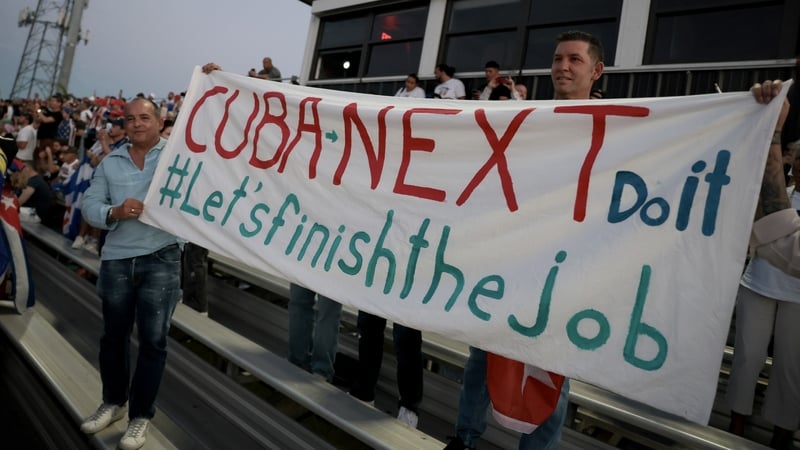

The United States, for now the world's preeminent superpower, is actively pursuing a policy of regime change in other countries.
First Venezuela, then Iran. Now it looks like Cuba could be next.
Listen to the statements coming from the White House.
"All my life I’ve been hearing about the United States and Cuba - when will the United States do it?" US President Donald Trump said on Monday 16 March.
"I do believe I’ll be the honour of — having the honour of taking Cuba," he told reporters.
Asked what he meant by "taking Cuba," he said: "Whether I free it, take it, I think I can do anything I want with it, you want to know the truth.
"They’re a very weakened nation right now," he added.
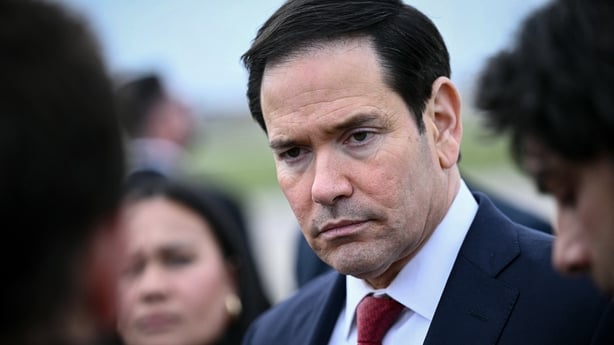
The Secretary of State Marco Rubio, the son of Cuban exiles, has long articulated a desire to end Cuba’s nearly seven decade old Communist regime.
He has called Cuba a "disaster" run by "incompetent, senile men".
And at the end of January, when he appeared before a congressional committee, he refused to rule out US intervention on the island.
"We would love to see the regime there change," he told senators.
Cuba’s deputy foreign minister, Carlos Fernández de Cossío, told US network NBC that his country was preparing for "the possibility of military aggression".
It’s hard to say how likely that is, especially as the US remains preoccupied with its war in the Middle East.
But the US administration appears very willing to use what in previous eras was known as "gunboat diplomacy" to force change.
A US-imposed oil embargo - which may or may not weaken the repressive regime’s grip on power but is certainly causing misery for the population - has been in place since January.
Cuba produces some oil of its own but not enough to sustain its energy needs.
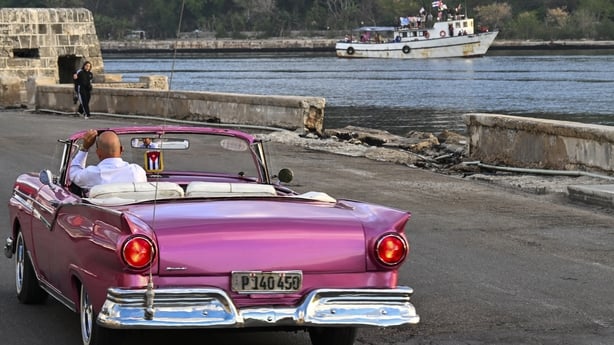
Venezuela, a key ally, kept Cuba in oil until leader Nicolás Maduro’s January capture in a US special forces raid. Underlining the closeness of the two countries, the Venezuelan president had been under the protection of dozens of Cuban security officials at the time - 32 of whom were killed in the US operation.
With the Venezuelan spigot turned off, Mexico stepped up.
But that supply ran dry too following threats from Washington of increased tariffs on anyone who would dare to sell Cuba oil. Mexico said it had been a sovereign decision and vowed to continue aid shipments.
Meanwhile Russia - a long-term friend since Soviet times - sent a tanker called the Anotoly Kolodkin, with 700,000 barrels of crude on board.
Sea Horse, a Hong Kong-flagged ship carrying Russian oil, is also steaming in that direction.
What awaits these vessels as they get closer?
We do know that the US was prepared to intercept oil tankers headed for Venezuela in January.
And while Washington and Moscow are not in the kind of standoff that underpinned some of the tensest moments of the Cold War, the backdrop of "great power rivalry" persists, according to Renata Keller, Associate Professor of History at the University of Nevada - and that could be dangerous.
"It certainly could escalate," she told RTÉ News.
"That was the exact worry during the Cuban Missile Crisis, when there were Russian ships approaching the quarantine line," she said.
In 1962, the world teetered on the brink of nuclear war when the US discovered Soviet plans to install ballistic missiles in Cuba. Then President John F Kennedy issued orders for a quarantine line to stop Russian ships approaching the island.
"I'm seeing a lot of echoes with that time," Ms Keller said, "although one difference is people aren't talking about nuclear warfare – thankfully - these days".
But she said if there were to be a "shootout on the high seas and people die, either Russians or US military, then that requires some sort of retribution".
That could snowball into a larger confrontation.
For decades, Cuba, under US sanctions and a trade embargo, deployed Cuban medical teams overseas to earn money for the state. But under pressure from Washington, several of the 56 host nations agreed to terminate their contracts.
Back home, Cuba’s power grid has already collapsed.
The situation is "very, very tough for ordinary Cubans" according to BBC correspondent Will Grant.
People are living "without the basics," he told RTÉ News from the capital Havana.
Food is scarce and what little they do have cannot be stored, as home fridges are frequently without power.
"They can't access fuel for their generators or cars," he said.
"You have schools shuttered much of the time, businesses and state-run agencies closed, so people aren't working," he said.
"Hospitals are in the dark most of the time - only accepting the most important, emergency cases".
He added that the most vulnerable people were paying the price, particularly the elderly, young children and pregnant women.
But anger among locals was more frequently directed at Havana than Washington, he said.
"Obviously people are well aware that this situation has been exacerbated massively by Washington squeezing the island every which way it can," he said.
But the economy has been in trouble for years.
Blackouts had become a constant feature of life there. Between 2021 and 2024, around a million Cubans emigrated, as the Covid-19 pandemic plunged the island into worsening poverty.
Earlier this month, protesters in Morón, Central Cuba, stormed the local Communist Party headquarters, set furniture on fire and tore down symbols of the regime. Several were arrested.
"The situation is particularly acute at the moment, but it’s not new," Mr Grant said.
There is nowhere - save for perhaps Iran - that is etched onto the American psyche quite like Cuba.
The 1959 Cuban Revolution saw billions of dollars in American assets seized and a strategic ally of its arch enemy - the Soviet Union - set up a taunting 90 miles off the Florida coast.
Almost immediately, the US began making repeated attempts to overthrow the regime there.
In 1961, the CIA under President John F Kennedy famously sent some 1400 Cuban exiles to invade the island. The botched plan became known as the Bay of Pigs - and a source of deep regret for the young president.
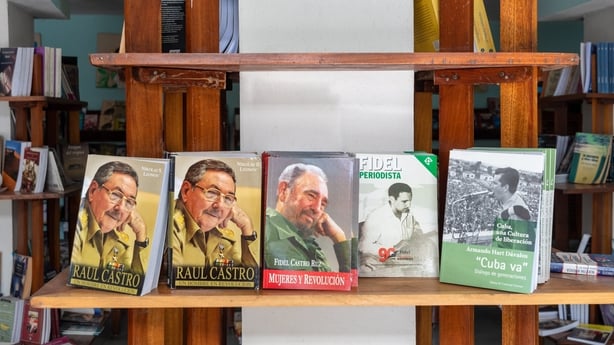
There followed years of CIA-backed assassination attempts on then leader Fidel Castro. Plots involving an exploding cigar, dynamite seashells, poison pills hidden inside a jar of cold cream and a deadly fountain pen, became the stuff of Cold War infamy.
Castro’s second-in-command Ernesto "Che" Guevara was also targeted, with at least one attempt on US soil. As Mr Guevara addressed the UN General Assembly in 1964, a bazooka – a portable rocket launcher - was fired from the other side of New York’s East River. It fell short but the building shook under the force of the blast.
Around the same time, a woman armed with a hunting knife rushed the front steps of the UN, declaring her intention to kill Guevara.
The desperation of Cuban-Americans to sweep away the Castro regime – Fidel’s brother Raúl took power in 2008 - in favour of democracy and capitalism has never gone away.
Marco Rubio comes from this stable. He is widely recognised as a "Cuba hawk".
But while people of his political persuasion may have once "burned [themselves] alive on the White House lawn," in protest over a US policy that would see some remnant of the regime survive, that calculation appears to have changed, according to Benjamin Gedan, Director of the Latin American Program at the Stimson Center in Washington, a think tank.
The long, multi-decade standoff between the United States and Cuba was fundamentally about the "nature of the dictatorship", he told RTÉ News.
But now, with talks underway between US and Cuban officials, a Venezuela-style deal could be on the table – one where the regime stays intact, at least in some form, but becomes compliant with Washington’s demands.
Indeed, in February, Mr Rubio suggested there may be phases to the process.
Everyone agreed Cuba needed to change he said, adding "it doesn’t have to change all at once".
This marks a dramatic shift in US policy on Cuba.
Because while Washington might cast a more US-friendly Havana as a victory for the Trump White House, previous administrations could have done the same, were they willing to set aside their democratic ideals for the island, Mr Gedan told RTÉ News.
It’s a moving of the goalpost.
"What has enabled the flowering of US-Venezuela ties is not really the removal of Nicolás Maduro," he said, "it was the lowering of US demands".
If this is the road the US administration choses to go down, the question is who Cuba’s Delcy Rodriguez might be.
That’s the deposed Venezuelan leader Nicolás Maduro’s deputy, who is working with the US administration and American energy companies.
Raúl Guillermo Rodríguez Castro, Raúl Castro’s grandson, is one name in the mix.
Known as "the Crab" or "El Cangrejo,"- because he was born with six fingers - his reportedly lavish lifestyle has made him a controversial figure at home.
And simply the Castro name may be enough to rule him out for the Cuban exiles – a powerful Washington lobby group.
But even if a Delcy Rodriguez figure is found, it may not work out as the US intends.
"Even though Cubans might welcome, in the short term, an economic opening," said Mr Gedan, "if it doesn't provide basic liberties and the opportunity to have some control over their political system, inevitably they will resent that as well".
Viewed from Latin American countries, Washington’s desire to strike deals with pro-western dictators is a reversion to type.
Throughout much of history, the US propped up right-wing authoritarian governments across the continent - and beyond - which Washington as a bulwark against the global spread of communism.
These days the battle lines are drawn less on ideology and more on commercial interests, but the sentiment remains the same, experts told RTÉ News.
And that, said Mr Gedan, could be summed up by a saying, first attributed to President Franklin D. Roosevelt, but that went on to become a staple of US foreign policy: "He might be a son of a bitch, but he's our son of a bitch".