
This war is just three weeks old and already the reported statistics are startling.
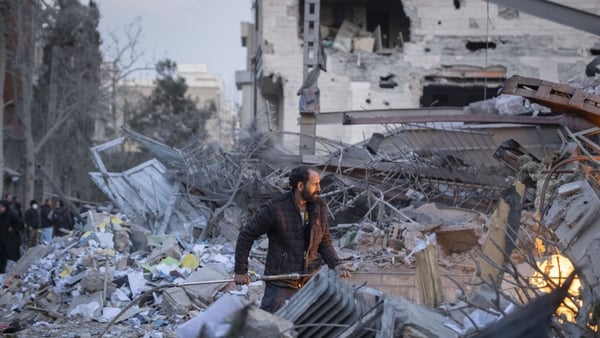
- More than 2,000 people dead, 10,000 injured.
- More than 4 million people displaced in the region, a million of them in Lebanon.
- Oil prices above $100 a barrel.
- 45 million people at risk of acute hunger as food, fuel and shipping costs rise.
- 56 cultural heritage sites damaged or destroyed in Iran. Several more at risk in Lebanon.
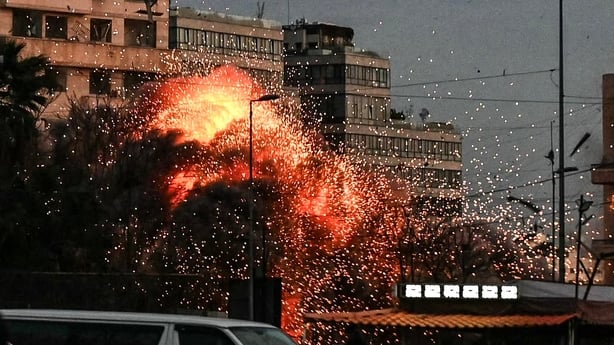
But among the most striking numbers emerging from this war are to do with the scale and speed of the bombing.
The US military was able "to strike a blistering 1,000 targets in the first 24 hours of its attack on Iran", according to the Washington Post.
That's roughly twice the scale of the 'Shock and Awe' assault on Iraq in 2003, according to experts.
Why?
Because this is an AI-enabled war.
Artificial intelligence has been used in conflict before, most recently in the Russia-Ukraine war and by Israel in Gaza and Lebanon.
But this is the first time the US military has deployed its AI warfare capability on such a large scale.

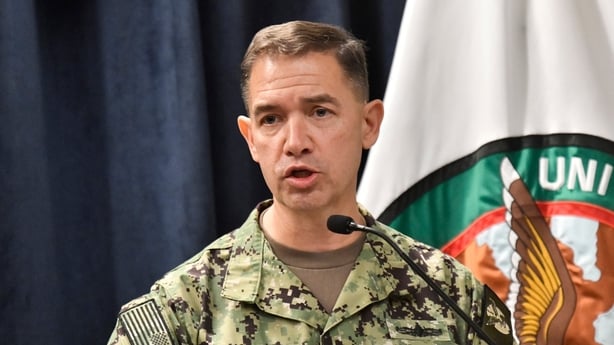
"Our war fighters are leveraging a variety of advanced AI tools," Admiral Brad Cooper, head of US Central Command said in a video message last week.
"These systems help us sift through vast amounts of data in seconds so our leaders can cut through the noise and make smarter decisions faster than the enemy can react," he said.
This is what’s known as the "Kill Chain" - the process of designating, identifying and striking targets, now turbocharged by data processing and machine learning.
He added that humans would always make final decisions on what to shoot, what not to shoot and when to shoot.
But, he said, advanced AI tools "can turn processes that used to take hours, and sometimes even days, into seconds".
Palantir’s Maven Smart System, which integrates Claude, the AI company Anthropic’s large language model (LLM) is being used for US operations in Iran.
But before the US and Israel began strikes on Iran, the Pentagon and Anthropic were already in tense discussions about how the technology could be deployed and within which guardrails.
Anthropic was arguing for terms and conditions that would prevent its AI being used for mass surveillance of US citizens or in autonomous lethal weapons.
US President Donald Trump directed all federal agencies to dump the company.
Defense Secretary Pete Hegseth designated it a "supply chain" risk and ordered a six-month phase out.
"Anthropic staff might sabotage, maliciously introduce unwanted function, or otherwise subvert the design, integrity, or operation of a national security system," he said.
The company has vowed to fight the matter to court and, according to US press reports this week, the decision is facing some internal opposition inside the Pentagon.
It's not the first time the military application of AI has run into fraught questions of morality and ethics.
In 2018, thousands of Google employees protested a collaboration with Project Maven - then a Pentagon pilot scheme - to use its AI in drone surveillance footage analysis.
The project had originated the year before, under the then US Deputy Secretary of Defense Robert Orton Work, who feared the US was in danger of falling behind China in AI development.
In an internal letter, Google staff members wrote: "We believe that Google should not be in the business of war."
"Therefore we ask that Project Maven be cancelled, and that Google draft, publicise and enforce a clear policy stating that neither Google nor its contractors will ever build warfare technology," the letter stated.
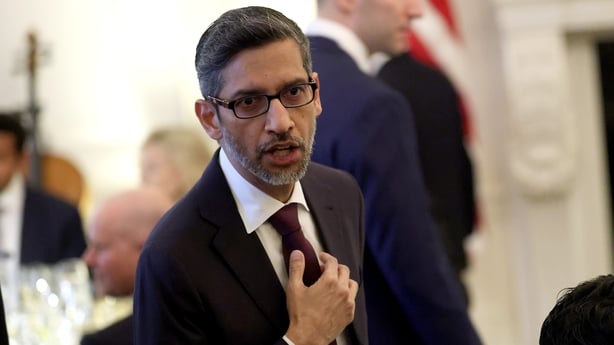
Google did not renew that contract, but CEO Sundar Pichai made it clear the company would not cease all cooperation with the Pentagon.
"While we are not developing AI for use in weapons," he wrote, "we will continue our work with governments and the military in many other areas."
Since then, the use of AI on the battlefield has shifted from theory to reality.
Before this latest military campaign in Iran, Maven was credited with providing targeting information for US airstrikes in Iraq and Syria in 2024.
The US also experimented with technology in Ukraine, to put autonomous weapons on jet skis and flying drones.
For Noah Sylvia, an expert in emerging technology in military sciences at the Royal United Services Institute, a UK-based thinktank, the big question is about legal and moral accountability.
In other words, when AI makes a mistake in war, who will be held responsible?
And it’s not just an academic one.
On the first day of this war, a girls' school in Minab in Southern Iran was struck, killing more than 170 people, most of them children.
Independent analysis subsequently identified the missile as a Tomahawk, as used by the US military.
The Pentagon is investigating how the targeting error occurred, whether outdated intelligence was used and if AI played any role.
The outcome of that investigation, experts said, would provide a strong indication of the US military’s commitment to accountability in modern warfare.
Proponents of AI integration say the technology will provide a greater level of accuracy - and therefore accountability - because these systems contain large amounts of data, which can be recorded and potentially audited.
'Tech bros are going to war'
But this should be the subject of greater scrutiny Mr Sylvia said, as the Silicon Valley apparatus embeds itself further into the US Defense Department.

"Tech bros are going to war," he told RTÉ News.
"Open AI is already used by the military, same thing with Grok," he said.
"Google, Microsoft and AWS (Amazon Web Services), all provide cloud hosting capabilities and other types of systems to the military," he said.
"The defence tech angle is huge".
Open AI CEO Sam Altman said their agreement with the Pentagon builds in technical safeguards, human responsibility for the use of force and prohibitions on domestic mass surveillance.
Writing on X, he said he was calling on the Department of Defense, also known as the Department of War, to offer the same terms to all AI companies.
"We remain committed to serve all of humanity as best we can," he wrote, adding, "the world is a complicated, messy and sometimes dangerous place".
According to Katrina Manson, author of the book entitled 'Project Maven, a Marine Colonel, his Team and the Dawn of AI warfare', the relationship between the Pentagon and Big Tech has steadily deepened over the past decade.
But even smaller start-ups were courted by the US military.
In her book, she recounts the tale of a New York-based company that specialised in image recognition algorithms, which they were using at the time to detect bridal veils, groom's suits and wedding cake tiers.
Following a visit from the Pentagon, they were encouraged to shifted to identifying images of weapons of war.
"The whole point of Project Maven was to find non traditional tech companies to work with the Pentagon," Ms Manson told RTÉ News.
"Not only was it trying to bring AI into warfare, it was also trying to bring cutting-edge tech partners into warfare - rather than the traditional so-called defence primes like Lockheed Martin," she said.
"They wanted to go to the best brains and to where America finds its innovative power," she said, "and that was the West Coast (of the United States) at the time".
Currently the Pentagon is offering a $100 million prize challenge for companies to produce voice-controlled autonomous drone swarming tech within six months, she said.
"The pursuit of autonomous weapon systems is already here," she said.
"The question becomes whether the US wants to use them or not."
It's this kind of technology - often referred to as "killer robots" - that UN Secretary General Antonio Guterres labelled "politically unacceptable and morally repugnant" and called for a ban.
Modern tech, ancient treasures
As the "blistering" strike rate continues, Iran’s ancient monuments are proving no match, according to experts.

Last week Iranian authorities reported that 56 cultural sites across the country had been damaged.
Photographs of the Golestan Palace in Tehran showed windows blown-out, arches damaged and its mirrored ceiling shattered, prompting UNESCO, the UN’s cultural body to issue a statement of concern.
In the city of Isfahan, the 17th Century Chehel Sotoun Palace, the 1,000-year-old Masjed-e Jame Mosque and another UNESCO world heritage site Naqsh-e Jahan Square, were all damaged, local authorities said.
US and Israeli officials say they are targeting military and nuclear sites only.
According to Nader Tehrani, an Iranian-American designer and professor of architecture, the vibrations of a bomb of a certain size half a mile away "has a far more radical impact on a structure of the 1400s," than it would on modern buildings.
Reflecting on AI-enabled warfare he said: "We used to talk about the military industrial complex, now we can talk about the military technology complex".
It's a concept that is changing the future of war.