
Europe has spent the past two years grappling with how to boost its economy following the shock end to cheap Russian oil and gas, and the steady decline of competitiveness relative to the United States and China.
Every time it looked like answers were in sight, President Donald Trump changed the question, be it with his Liberation Day tariffs or now the Iran War.
Yet, paradoxically, those policy advances which have for years languished as a result of member state resistance are being accelerated, in part thanks to the kind of chaos Mr Trump creates.
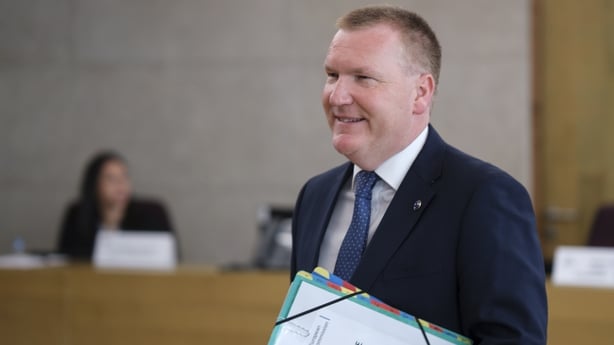
One is the EU Inc proposal, launched this week by Ireland's EU Commissioner Michael McGrath, which promises a radical breakthrough in the ability of innovative start-ups to scale their businesses across the EU.
"If we don't seize this moment now, then I'm not sure when another opportunity will arise for a groundbreaking initiative like this to take off," he told reporters.
Likewise, its companion piece, the Savings and Investments Union (SIU) - which aims to liberate European savings so they can be invested in the kind of start-ups that will benefit from EU Inc - was blocked for years but is now gathering momentum.
There are others: the Industrial Accelerator Act, the updated Cyber Security Act, legislation on AI and cloud computing, the so-called e-declaration (a proposed single digital portal designed to streamline the posting of workers across the EU) are all in the pipeline, and now being steered by a roadmap and action plan for completion by 2028, under the slogan "One Europe - One Market".
Irish diplomats have noted that this week’s EU summit communiqué references ten pieces of legislation that could fall due for completion during Ireland’s EU presidency.
"There's a chance now and a momentum that things which were stuck could become unstuck," says Georg Riekeles, associate director of the European Policy Centre (EPC).
"As so often, the EU is forged in crisis, and now there’s a sense of dire urgency, be it in security, defence, economic security.
"It’s very much a matter of finding the collective capacity to mobilise energies behind those turnarounds - and some will require much energy and a capacity for compromise. But there’s a sense of heightened crisis which, if it wasn't here three or six months or two years ago, it's certainly here now," said Mr Riekeles.
That sense of crisis was evidently not acute enough to spur a swifter embrace of the twin reports by former Italian prime ministers Mario Draghi and Enrico Letta which, two years ago, had exposed deep-rooted failings in Europe's competitiveness and the functioning of the Single Market.
One year of Donald Trump changed all that.
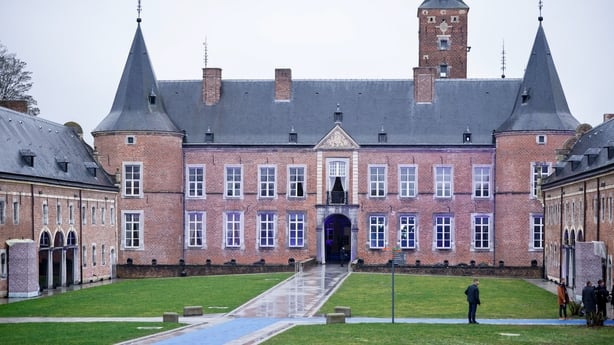
A mid-February informal summit of leaders in Alden Biesen, a castle in Belgium’s Limburg province, crystalised that new urgency. The sense of a physical threat from Russia to the east was now compounded by an economic threat from the west.
Not only was Europe falling behind in growth and competitiveness, it had become dangerously dependent on both trade and critical raw materials from allies and trading partners (the US and China) that could no longer be trusted.
Europe needed a complete revamp in its trade outlook, to figure out how to lower energy costs (which are two to three times that of the US), how to boost and protect the single market, and how EU companies might enjoy preferential treatment in public procurement without downright protectionism.
"Alden Biesen focused on this," says a senior EU official, "the need to map those dependencies so we can structure the best way to tackle them. We're talking about not only dependencies in strategic sectors, [but also about] the need to implement a European preference that is targeted and proportional".
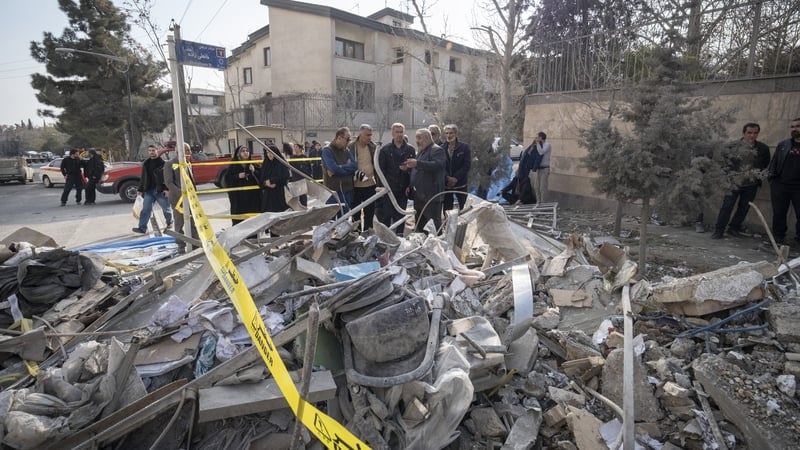
The informal consensus reached at that meeting was supposed to be given formal endorsement at this week's summit, but then the US-Israel attack on Iran happened.
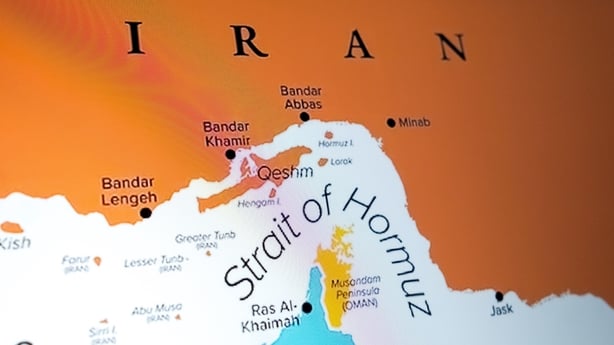
Since the outbreak, Europe has struggled to maintain a coherent message on either the legality of the attack or whether to help Donald Trump out of a jam on the Strait of Hormuz.
On Thursday, Spain’s Pedro Sanchez was adamant: "This is a defining moment for the European Union. We need to send a clear message to our citizens and the rest of the world, that Europe is [for] multilateralism and international law, and we are against this war. We are against this war because it is illegal."
However, by the time leaders arrived for the summit on Thursday, and with the overnight news about the attack on Qatar's Ras Laffan LNG complex, which sent European gas prices soaring, a more nuanced debate seemed likely.
"European countries did not start this war," said a senior EU official ahead of the summit. "They were not even consulted about the beginning of this war. But what we have to deal with first are the consequences of the war."
"The new consensus which has begun to emerge," says Peter Ludlow of Eurocomment, "is, however, firm and meaningful: Iran’s new rulers have no friends around the [European Council] table, it should be said, and 'Iran must never be allowed to acquire a nuclear weapon'.
"The United States' and Israel’s war is not 'our' war, however. And 'the protection of civilians and civilian infrastructure and full respect of international law by all parties, including the principles of the United Nations Charter and international humanitarian law', - which … apply in Gaza and Lebanon too - are not optional but fundamental."
Leaders spent most of Thursday afternoon debating the Middle East.
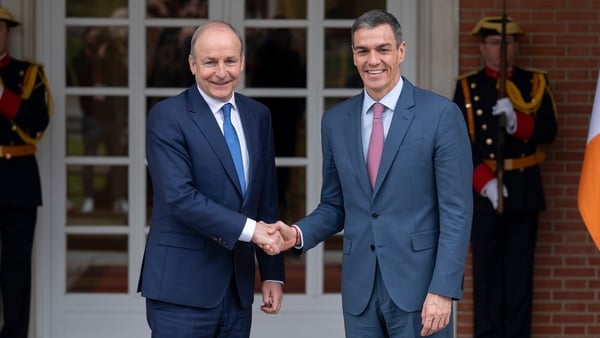
While other EU leaders did not ask him to elaborate on his Oval Office encounter with the US President, it's understood Micheál Martin indicated that, on the Iran War, Mr Trump wanted an off-ramp, given the impact on US energy prices ahead of November's mid-term elections.
French President Emmanuel Macron sought language, inserted in the final communiqué, calling for a moratorium by both sides on hitting critical energy and water infrastructure.
However, the final text included only vague references to member states helping to reopen the Strait of Hormuz in coordination with regional partners "once conditions are met", i.e., only after some kind of cessation is in place.
Mr Macron also raised the idea of working with Japan and South Korea, given that most of the oil exports being held up are destined for Asia.
This idea was taken up by UN Secretary General Antonio Guterres, who joined leaders for lunch. It's understood he argued that in a multipolar world, countries could collaborate not because they were necessarily allies but because they had shared interests - in this case the flow of oil and gas - and would be willing to defend the multilateralism that Mr Trump has been battering.
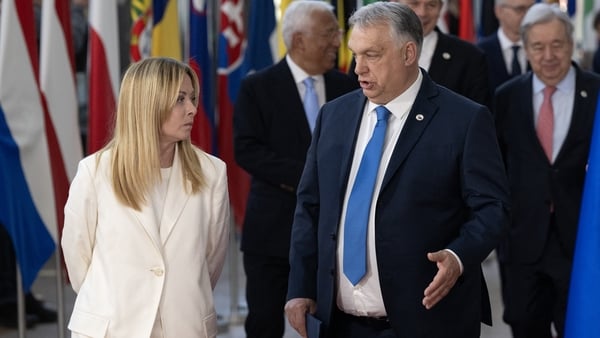
Likewise, Italian Prime Minister Giorgia Meloni suggested that a framework for freedom of navigation could be developed through the UN Security Council, which contains Bahrain as a non-permanent member.
The other salient outcome on the Middle East was an agreed text - pushed hard again by Ms Meloni and Denmark's Prime Minister Mette Frederiksen - on ensuring that the Iran War did not trigger a repeat of the massive wave of migration into Europe prompted by the Syrian Civil War in 2015.
Overall, no EU leaders expressed explicit support for Donald Trump’s war. Whatever about the cruelty of the Tehran regime, the consensus was that the US-Israel attack was having a hugely negative impact on energy prices and regional stability.
However, senior EU sources are of the view that the "this is not our war" mantra is not sustainable if the conflict becomes protracted.
Despite the anger at a US president - who had only recently threatened to invade Greenland and had treated many of his European allies with contempt - trying to browbeat them into joining the fray, EU capitals would have to respond if the situation became more drastic.
In particular, said one source, Europe had under-appreciated the sheer volume of drone and ballistic missiles that Iran had rained down on small Gulf economies, who would be looking hard at where their security guarantees would be found in the long run.
In other words, if Europe mishandled the outcome, those Gulf states might reposition themselves towards Moscow or Beijing.
Furthermore, it was the collapse in Russian fertiliser exports after the 2022 invasion which had turned many in the Global South against support for Ukraine. The EU has warned that a collapse in fertiliser exports from the Gulf will lead to food shortages in Asia and Africa next year.
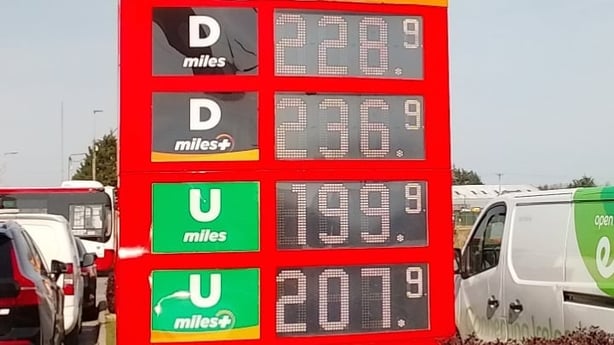
On those energy costs, leaders ultimately avoided sweeping pan-European proposals not least because of the wide diversity of how member states manage and tax electricity generation.
European Commission President Ursula von der Leyen presented leaders with a series of slides to illustrate that taxes and levies on electricity across capitals ranged from 0%-20% and the cost of producing energy using carbon - via the Emissions Trading System (ETS) - varied from 2% to 24%, depending on the member state.
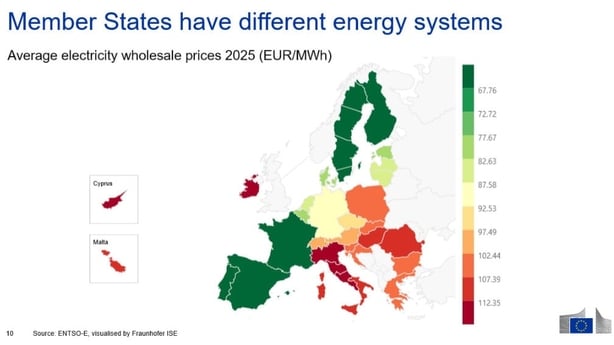
Indeed, the ETS took up a major part of the debate, with Giorgia Meloni complaining at length that the cost of producing carbon in Italy meant it faced a much higher burden (under the ETS) in producing electricity than other countries because of its reliance on increasingly expensive gas.
Despite that, sources say there was a consensus that the ETS has helped Europe diversify away from imported fossil fuels and on to renewables, although it appears that a review of the system will be brought forward from July to June.
In the meantime, leaders agreed that in the short and medium term, member states should reduce taxes and levies where possible, with EU rules providing flexibility in using government subsidies to help energy-intensive industries.
There was, indeed, some frustration among leaders that both the Middle East and energy debates were compressed because of the time spent on Viktor Orban’s continued veto on the disbursement of €90 billion in emergency loans for Ukraine which he had agreed to in December but has since reneged on.
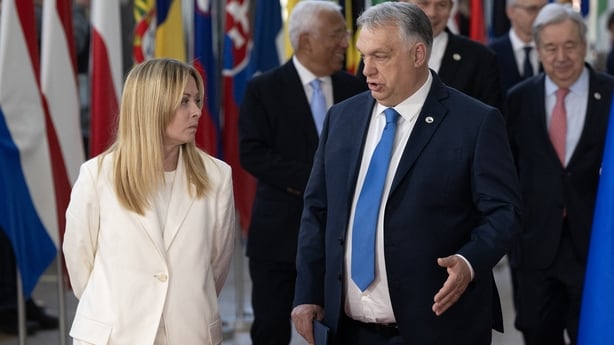
European Council President António Costa had spoken to Mr Orban two days before the summit and it was clear then, say sources, that the Hungarian prime minister was not for turning.
"This is a decision that [President Costa] believes the leaders have already committed to and now needs to be implemented," said a senior EU official ahead of the summit. "And this message has also been conveyed very clearly by the President of the European Council to Prime Minister Orban."
Mr Orban’s veto is ostensibly due to the failure by Kyiv to reopen the Druzhba pipeline transiting Russian oil across Ukraine to Hungary and Slovakia, which is provided for under EU rules until 2027.
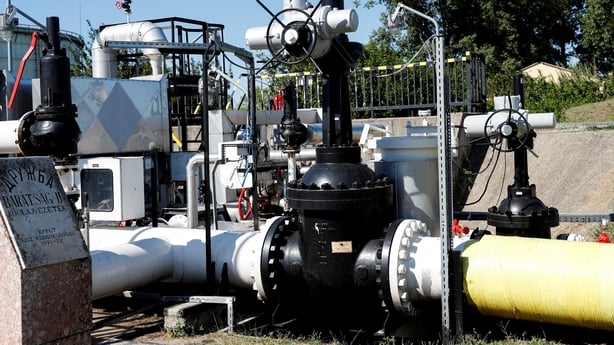
A pumping station on the pipeline was bombed by Russia on 20 January and Mr Orban has accused President Volodymyr Zelensky of deliberately taking his time to repair it (Ukrainians argue that their own crippled energy infrastructure is a more critical priority).
In an effort to broker a compromise, the European Commission has sent a delegation of experts to Kyiv to assess the damage to the pumping station - some four hours outside the capital - to provide some reassurance to Hungary that there will be a timeline to getting the Russian oil flowing again.
Mr Orban, who most member states believe is weaponising the issue because he is behind in the polls in Hungary’s upcoming election, has refused to budge, telling reporters on Thursday morning that there would be no money for Ukraine while there was no oil for Hungary, and describing the issue as "existential" for his country.
It's understood that, while it was clear Mr Orban would not shift, President Costa believed there was a fundamental principle at stake which required a sharp and official rebuke around the council table: That when leaders make a decision during a summit it must be respected, otherwise trust, which forms the basis of how the European Council operates, would evaporate.
After the encounter, Mr Costa, who has been seen as a canny operator in trying to keep Mr Orban on board, described the Hungary prime minister's position as "totally unacceptable".
"Nobody can blackmail the European Union," he said.
Officials believe there will be no breakthrough until the Hungarian election on 12 April. If Mr Orban wins it is not clear if he will soften his position. Meanwhile, Ukraine will run out of cash by early May, and its ability to protect its cities from Russian ballistic missiles and drones will be significantly degraded.
In the meantime, as the Irish presidency of the EU inches closer, the EU is pressing ahead with what it believes are the essential tools to forge greater economic and security autonomy in an increasingly hostile and unpredictable world.
Yet, the toolbox for stopping President Trump’s war in the Gulf remains decidedly empty.