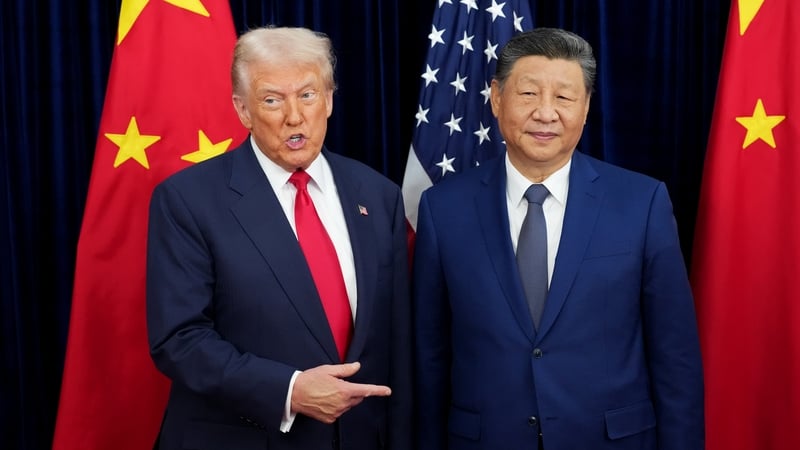

When considering China's view of any war, observers will often turn to the wisdom of the Chinese military strategist Sun Tzu, who lived during a previous period of political instability and military conflict.
'The Art of War,' - a famous text attributed to Sun - teems with epithets, many of which often find their way, with varying degrees of accuracy, into discourse about modern day China.
One doing the rounds this week, as the United States intensified its attack on China’s ally Iran, goes as follows: "If you wait by the river long enough, the bodies of your enemies will float by."
Beijing appeared to be waiting by the river, some analysts thought, as its only superpower rival risked embroiling itself in yet another Middle Eastern quagmire.
"They're not wasting energy on wars," said Theresa Fallon director of the Centre for Russia, Europe and Asia Studies in Brussels.
They are building up their economy, she said, and have shown they will use that economic leverage - such as the export restrictions on rare earths, imposed in response to US tariffs last year.
"Economic coercion is easier to control than war," she added, "because when you have war, you have all sorts of unintended consequences and collateral damage".
And as rising food and energy prices bring pain the developing world, already suffering from US aid cuts, China is likely to be viewed as the responsible player, she said.
"It's going to be hard for the US to look like we're the good guys," Ms Fallon said.
Of course, China and the US are not exactly enemies.
With the world’s two largest economies so heavily intertwined, the relationship bears little resemblance to the Cold War standoff between the Soviet Union and the United States.
But strategic rivals they are. And increasingly so.
Washington and Beijing are locked in a race to develop the most advanced technology, like artificial intelligence.
The winner, analysts largely agree, will likely emerge as this century’s preeminent power.
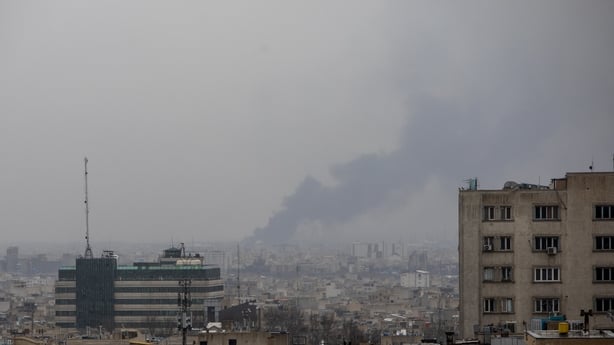
And so, it’s worth noting that while Operation Epic Fury dominated headlines, China quietly unveiled its latest five-year-plan - a strategic and economic blueprint to strengthen its foothold in key global industries like AI, aerospace, defence, green energy, quantum computing, critical minerals and robotics.
China, according to some analysts, is ploughing ahead with its domestic industrial strategy while the US pursues foreign military campaigns.
And that could have long term consequences for American strategic dominance as well as the dependence of smaller powers on a single authoritarian superpower for advanced tech.
Already, there are plenty of policymakers in Washington who look at the datasets on critical technologies and don’t like what they see.
A technology tracker produced annually by the Australian Strategic Policy Institute, for example, shows China now leads in 66 of the 74 critical technologies, the US in eight. Twenty years ago, by comparison, the US led in 60 of 64, China in just three.
This doesn’t mean that Beijing isn’t rattled by the war.
The Chinese leadership doesn’t like political instability or economic disruption if it affects their global reach or internal security.
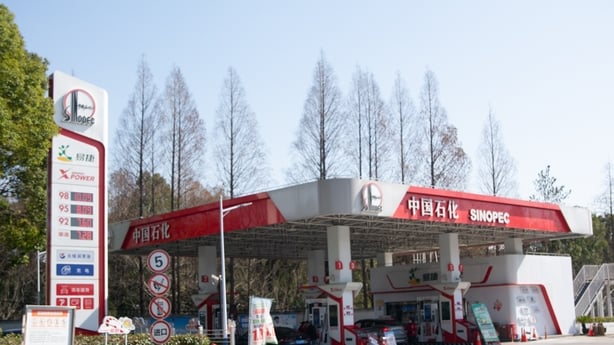
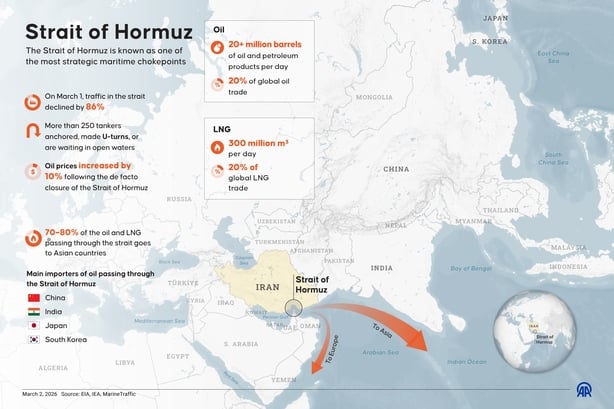
And it could certainly do without its oil supply from Iran being stuck in the Strait of Hormuz, despite having built up a stockpile of oil before the war broke out.
Before that, 90% of Iran’s oil went to China, at steeply discounted prices.
In return, heavily-sanctioned Tehran got Chinese investment, foreign currency and surveillance technology tried and tested in its own authoritarian system and, crucially, a place at the table with the only counterweight to Iran’s arch nemesis, the United States.
"This is a war than never should have happened," Foreign Minister Wang Yi said on Sunday.
"A strong fist does not mean strong reason," he went on, "the world cannot return to the law of the jungle".
But China was not about to rush to its ally’s aid.
It stood by, just as it had when US special forces swept in to capture another of Beijing’s friends - Venezuelan leader Nicolás Maduro - in January.
"It's very obvious that China doesn't care about what happens to Khamenei or the regime inside Iran," Ahmed Aboudouh, associate fellow with the Chatham House Middle East and North Africa Programme in London told RTÉ News, "they care more about the regional stability and their interests".
In fact, he said, China’s interests in the region may dovetail with the stated goals of Israel and the US when it comes to preventing the regime from acquiring a nuclear weapon. That was always a red line for China, even though it was comfortable for Iran develop a civilian nuclear programme.
"I would say that China would be very happy to see the Iranian nuclear program degraded by a limited military operation led by the United States and Israel doing the dirty job on behalf of the whole world," he said.
But what they would not like to see is protracted instability in the Middle East, particularly if the US eventually pulls out, leaving China to pick up the pieces.
"This will be the worst-case scenario from a Chinese point of view, because it will bring their political influence, which I think is still limited, back to square one," he said, "and will make the region very precarious and volatile when it comes to their investments and trade".
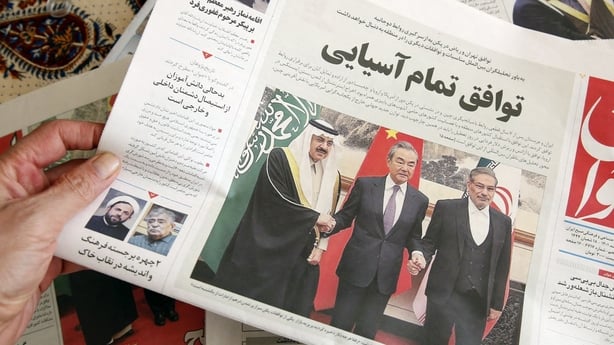
China invested substantial political capital brokering a revival of diplomatic relations between Iran and Saudi Arabia in 2023.
President Xi Jinping’s flagship Belt and Road infrastructure investment scheme, meanwhile, poured billions into the Gulf states, financing ports, oil refineries, desalination plants and green energy projects.
Gulf states also buy a lot of Chinese goods. The UAE, for example, is now the third largest importer of Chinese electric vehicles.
All in, from 2019 to 2024, China invested $89 billion (€76 billion) into the Middle East.
Beijing does not want to see that money go up in smoke.
This week China’s special envoy on the Middle East Zhai Jun was dispatched to the region. His intervention likely played a role in Iran’s decision to apologise to Gulf states for striking their territory.
Beijing wants calm heads to prevail ahead of the second China-Arab States summit in June where, among other things, a long-negotiated free trade agreement is on the table.
Of course, big Gulf players such as Saudi Arabia and UAE will likely continue to resist, over fears of China’s industrial overcapacity and the prospect of cheap Chinese good overwhelming domestic markets.
And while this seems unlikely right now as it pounds Iran, Beijing expects the United States to eventually disengage from the region, analysts told RTÉ News, and shift its focus to China and the Indo-Pacific.
"We understand from [President Trump] and the goals of the military campaign, this is certainly not nation building, this is not going to be endless," Elbridge Colby, the undersecretary of defence for policy, told the Senate Armed Services Committee in a hearing on Tuesday.
And if you read Washington’s National Security Strategy and National Defence Strategy - which one can bet the Chinese leadership has, cover to cover - it’s clear that securing the Western hemisphere is paramount. Deterring China is second.
According to Ahmed Aboudouh of Chatham House, the United States is trying "to tidy up the region in a way that allows it to extract itself from it, to focus on China and the strategic periphery of the United States and leave it for Israel as a policeman to sort it out".
What is perhaps most alarming for the Chinese leadership’s point of view, according to analysts, is the US ability to deploy hard power - something which China, despite its vast economic influence as well as soft power, cannot compete with.
"With the caveat that we really don’t know what the top of the Chinese Communist Party thinks, Beijing seems to view this war as a clear sign both of US strength and US willingness to push for regime change globally," said Isaac Stone Fish, CEO of Strategy Risks, a New York-based geopolitical risk firm.
"We have to be careful to distinguish Beijing’s hopes - that the US gets embroiled in an expensive and complicated war - with what it likely thinks, which is, this is a US government that will act and intervene globally," he said.
Trade will likely take priority at summit
The last thing Beijing wants is for the US to intervene in what it deems its own backyard, say over Taiwan - the democratically-ruled island that China claims as its own territory and has not ruled out seizing by force.
And so, when US President Donald Trump travels to Beijing at the end of this month, for a much-anticipated summit with China’s leader Xi Jinping, Taiwan will top the agenda, at least on the Chinese side.
They might want to extract some assurance from Mr Trump that he won’t interfere with the Communist Party’s designs on Taiwan.
Taiwan as well as regional powers Japan and South Korea, who depend on the US security umbrella, will want to make sure Mr Trump doesn’t give it.
Indeed, for the rest of the world, the risk remains that China and the United States could decide to strike a grand bargain, potentially carving up the world into spheres of influence.
President Trump has, in the past, endorsed the concept of a G2 - a grouping of just China and the United States, the world’s two most powerful nations.
That parity of esteem would certainly appeal to Beijing - but China would not want to be seen to be relinquishing its self-appointed position as champion of the developing economies of the Global South just yet.
Either way, Beijing wants to see the bi-lateral relationship stabilised with the current détente, after last year’s tariff-induced volatility, preserved.
That means careful handing of the Iran question when the Americans come to town.
For the United States though, trade will likely take priority at this summit.
The United States upped the ante on Thursday by launching a sweeping probe into "unfair trade practices" targeting China, India, the EU and others.
On the other hand, Mr Trump appeared to extend what could be seen as a pre-summit olive branch, offering to hit Iranian targets "twenty times harder" should they block oil shipments.
"This is a gift from the United States of America to China, and all of those Nations that heavily use the Hormuz Strait," he wrote on Truth Social.
Despite that, it seems the White House doesn’t appear to have given this fast-approaching summit much thought.
According to the South China Morning Post, Chinese officials have grown frustrated with the lack of planning on the US side.
This week the US administration had not yet invited business executives to travel with Mr Trump, for example - usually a key part of any high-level visit.
This could be a reflection of Mr Trump’s style.
His book entitled the "Art of the Deal" revealed a high-risk approach to negotiations, keep his interlocutors on their toes right up to the last minute.
"I like making deals, preferably big deals," he wrote.
"That is how I get my kicks."
But his Chinese counterparts might be leaning more on the "Art of War," when they welcome the American delegation.
"Appear weak when you are strong," Sun Tzu wrote, "and strong when you are weak".