
It had all the ingredients of a thriller.
In August 1953, the Shah of Iran issued a royal decree - known as a firman - ordering the removal of his own prime minister.
He had not wanted to. The idea was not his. It took weeks of pressure, and considerable persuasion, before he finally put his name to it.
His signature was the centrepiece of a plot orchestrated by a man who went by the name of James Lockridge.
But that was only his alias.
Lockridge was, in truth, the station chief of the Central Intelligence Agency - a man named Kermit Roosevelt, and the grandson of an American president.
And what he was about to do would shape Iran and the Middle East for the next 70 years.
He had spent months constructing the illusion of a popular uprising.
CIA money flowed to newspaper editors, who filled their pages with fabricated stories - accusing prime minister Mohammad Mosaddegh of communist sympathies, of secret loyalty to the British.
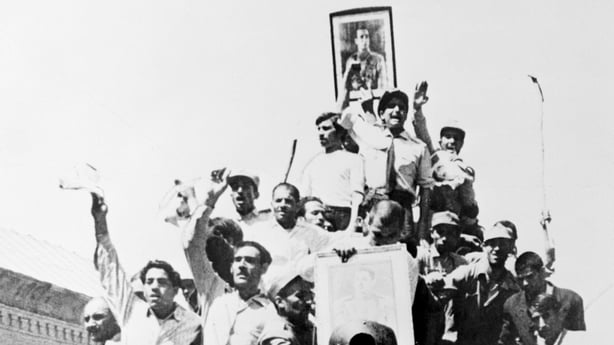
Clerics were paid to denounce Mossadegh from the pulpit. Army officers were bribed. The mobs that eventually poured through the bazaars of Tehran - carrying portraits of the Shah, chanting royalist slogans - were not a spontaneous expression of popular will.
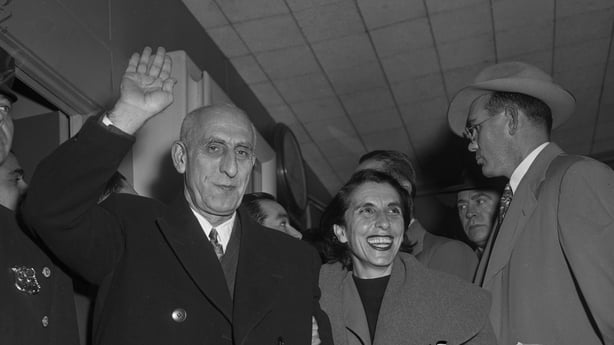
They were a production - though not entirely. Mossadegh was beloved by many Iranians - but not all.
He had sidelined the Shah, alienated conservative clerics who had once supported him, and presided over an economy strangled by a British-led boycott of Iranian oil - punishment for his nationalisation of the country's oil industry.
And so the CIA did not invent opposition to him from nothing. It identified real fractures in Iranian society - and paid to widen them.
But most historians agree on one point: without US and British intervention, Mossadegh would not have fallen when he did, or how he did. The coup was not simply an expression of Iranian politics. It was, in decisive measure, an imposition upon them.
What followed was 26 years of autocratic rule under the Shah - backed by American money, American weapons, and a CIA-trained secret police force, SAVAK, whose methods of repression became notorious across the world.
US and British involvement in the coup was suspected from the outset.
Mossadegh said as much at his own trial. The suspicion never went away. Rather, it deepened with each passing decade, becoming part of the bedrock of Iranian political consciousness, passed down through families and embedded in the national memory.
When revolution finally came in 1979, it came in part as a verdict on 1953.
The students who stormed the US embassy in Tehran did not do so randomly. They did so because they believed - based on lived experience - that it would be used again for exactly the same purpose.
Could you blame them?
The Islamic Republic that emerged from that revolution was not what most Iranians had wanted or imagined. It brought its own brutality - its own secret police, its own political prisoners, its own manufactured enemies.
The revolution that was made in the name of the Iranian people was, in many ways, made against them.
And yet, the deep suspicion of American intentions that 1953 planted in Iranian political consciousness did not die with the Shah.
It survived the revolution and has shaped every Iranian calculation about the United States in the 70 years since.
Or, as the CIA's own historian later put it, Operation Ajax "transformed a turbulent constitutional monarchy into an absolutist kingship and induced a succession of unintended consequences".
Which brings us to today.
In 1953, the US pursued regime change in Iran through subterfuge and secrecy - false names, fabricated newspapers, hired mobs.
The entire operation depended on concealment. Kermit Roosevelt, after all, did not use his real name.
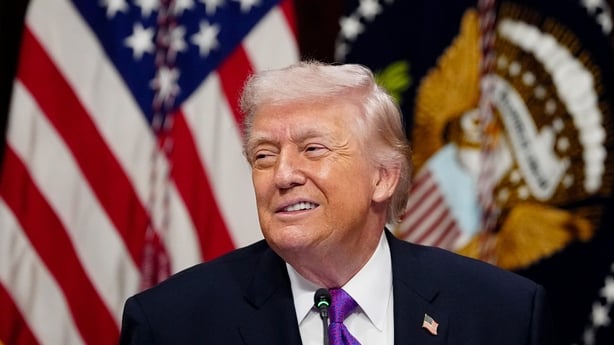
But, 73 years later, the US is not bothering with any of that. The strikes that killed Ayatollah Ali Khamenei were announced in a video message on Donald Trump's Truth Social platform.
The goal of regime decapitation was briefed openly to journalists. And, when asked who should lead Iran next, President Trump did not demur.
"I have to be involved in the appointment," he told Axios on Thursday.
He has already ruled out the frontrunner, Khamenei's son Mojtaba, calling him "a lightweight". On Friday, he said that he would accept nothing but "UNCONDITIONAL SURRENDER" from Iran.
Israel, for its part, bombed the building in Qom where Iran's Assembly of Experts was in the middle of voting for a new supreme leader.
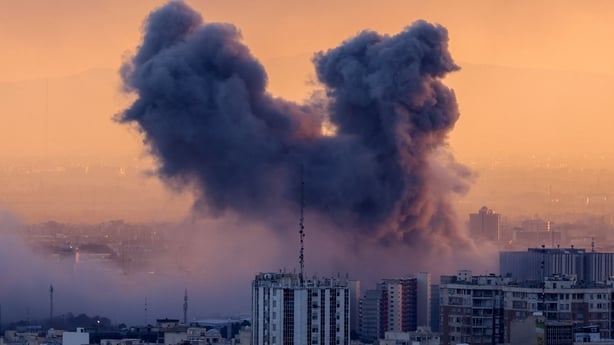
There is a school of thought - and Mr Trump has given voice to it - that the events of recent weeks have exposed something simple: that removing hostile leaders is, in the end, not that hard.
Venezuela’s Nicolas Maduro was captured in January.
Iran's Supreme Leader was killed in February - and much of Iran's senior military leadership went with him.
On the surface, the logic is almost seductive. The US has the most powerful military in human history. If it can do this, why has it not always done this?
The answer is Iraq. It is Afghanistan. It is, above all, Iran itself - because the removal of Mossadegh in 1953 looked, at the time, like an unqualified success.
The CIA got its man. The Shah signed over the oil. The communist threat - never particularly real to begin with - was extinguished. Washington congratulated itself.
The bill arrived 26 years later and it is still being paid.
Read more:
How prepared are the US, Israel and allies for a long war in Iran?
Iranians tell of fears and hopes as war nears one week
This, perhaps, is what everyone most misunderstands about Iran - and what the history of 1953 most clearly illuminates.
Iran is not simply a hostile state to be managed or a regime to be replaced. It is a country whose modern political identity was forged, in decisive measure, by what the US did to it.
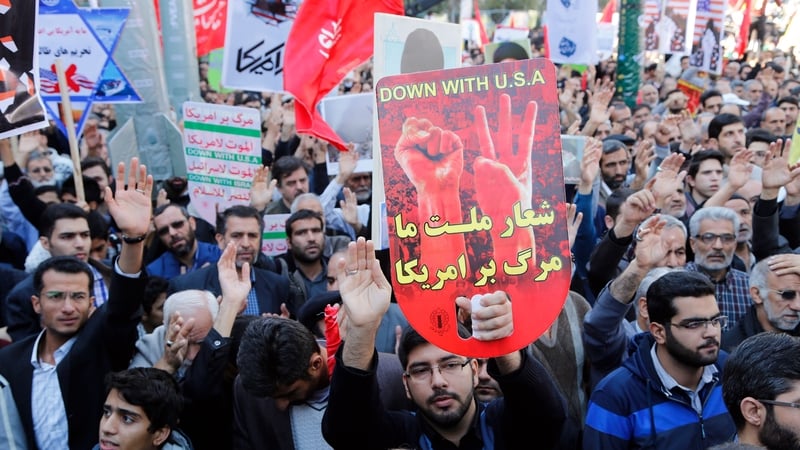
The Iranian revolutionary chant that is still heard on the streets of Tehran, "Death to America", did not come from nowhere. It came from a CIA villa in Tehran, from a man called James Lockridge, from a firman signed by a reluctant Shah.
The US could, in theory, install whoever it likes in Tehran. The harder question - the one history keeps asking and Washington keeps failing to answer - is what happens next.