
Which is more important to the US President: national security or tackling domestic economic pain?
For a president who has repeatedly run on the nationalist, non-interventionist slogan of 'America First', you would immediately think the latter.
His campaigns told us that he wanted to see the US look more inward, while economic growth and affordability issues were the focus.
This week, White House deputy chief of staff Stephen Miller offered a different interpretation of what ‘America First’ means.
He said that the Trump administration’s foreign policy is focused on what’s best for the US and the Trump doctrine does not mean isolationism.
"‘America First’ means America will be the greatest, most unquestioned, unmatched power in the world, and it means we will defend American lives, and yes, we will avenge American blood," he told Fox News’ Sean Hannity on Wednesday.
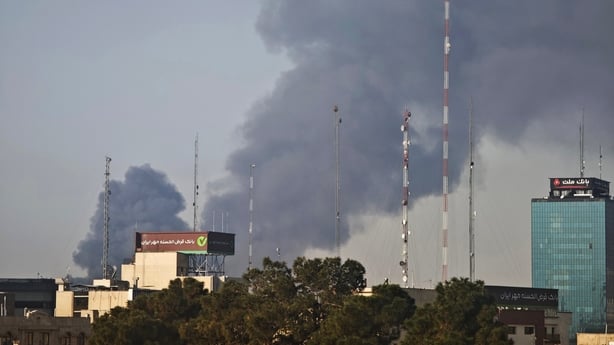
However, Operation Epic Fury is becoming a high-stakes political gamble for the Trump administration, as it begins to have a knock-on effect on Americans’ wallets during a highly-charged political year.
The price of gasoline in the US had its largest one-day increase this week since 2005, when Hurricane Katrina hit.
In part, this is because the conflict has severely disrupted transit through one of the world’s most important shipping lanes, making passage through the Strait of Hormuz too dangerous for vessels.
Around a fifth of the world’s oil and gas is carried through this area. According to MarineTraffic, maritime activity has dropped around 90% compared to last week.
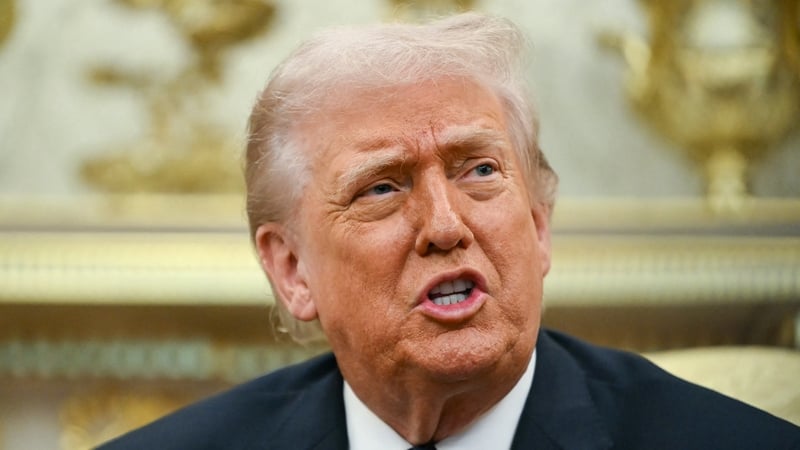
When asked about higher prices at the pump due to his operation in Iran, Donald Trump said: "If they rise, they rise, but this is far more important than having gasoline prices go up a little bit."
Despite these comments, the Trump administration knows this could lead to Americans further souring on the economy.
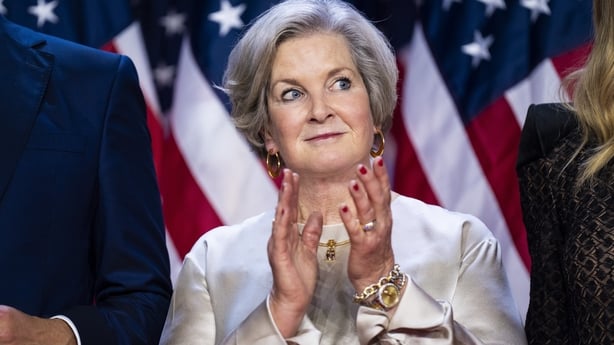
His chief of staff, Susie Wiles, has reportedly told advisers to bring ideas to the Oval Office to lower gasoline prices.
The president has also floated the idea of the US Navy escorting ships through the area.
Scott Bessent, the US Treasury secretary, also said that the United States has temporarily allowed India to buy Russian oil to keep global supplies flowing and temper further price increases.
Last year, President Trump argued that buying Russian oil was undermining US sanctions and helping Moscow bankroll the war in Ukraine.
While most congressional Republicans said they are convinced that the president should continue with this operation and "finish the job" (according to Senator Lindsey Graham), these measures to combat the spike may not be enough.
Lawmakers could begin to feel the heat from voters.
All members of the House of Representatives and some senators are up for re-election this year.
The economy and inflation continue to be major talking points, with a new Reuters/Ipsos poll suggesting that nearly four in five Americans say inflation is a "very big" concern for them personally and that few describe the US economy as "booming".
Conducted days before President Donald Trump’s 2026 State of the Union address, the poll also found that Americans have negative views of Donald Trump’s handling of inflation and the cost of living, with his approval rating in these two areas lagging behind his ratings on crime and immigration.
Much has changed since last week’s State of the Union address, where Donald Trump celebrated falling gas prices due to the policies of his second administration.
War is also expensive.
A study from the Centre for Strategic and International Studies said that the first 100 hours of Operation Epic Fury is estimated to cost $3.7 billion.
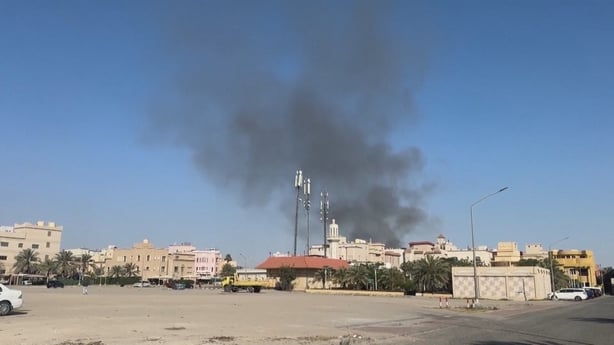
Three F-15 jets shot down by friendly fire in Kuwait were estimated to cost $100 million.
The United States is also burning through its stock of precision weapons, meaning it may need to prioritise which targets it intercepts.
Donald Trump met with US defence executives yesterday to discuss accelerating weapons production.
As Congress controls the purse strings, lawmakers are anticipating a knock on the door from the White House asking for more money to fund the conflict.
This growing price tag and frustrations over rising bills for American consumers could become a problem for the GOP, as both houses of Congress this week effectively gave the Trump administration the green light to carry out the strikes on Iran.
Democrats are heading into campaign season energised by recent electoral victories with messages surrounding the high cost of living under President Trump and could be adding these worries to their portfolio.
Writing in the Wall Street Journal, Republican strategist Karl Rove warned that inconsistent messaging from the White House risks undermining public support.
While he praised the operation’s momentum and military strength, describing it as a "historic act", he cautioned that the American public has not rallied behind the effort in the way administrations often hope during wartime.
Polling released by CNN suggests that approval among Americans for the US military operation in Iran remains low.
As a result, the Trump administration appears to be attempting to persuade voters that national security concerns should outweigh the domestic economic costs of the conflict.
Energy Secretary Chris Wright said increases at the pump were a "small price to pay" to achieve the objectives in Tehran.
"Look, Iran’s been an escalator of energy prices for 47 years, the whole history of their regime," Mr Wright said yesterday morning on ‘Fox and Friends’.
Operation Epic Fury is not just going to be judged on the battlespace but also at the gas pump.
The question is whether the public has been convinced that this military operation in Iran is worth the financial strain and if not, whether they will take it out at the ballot box.