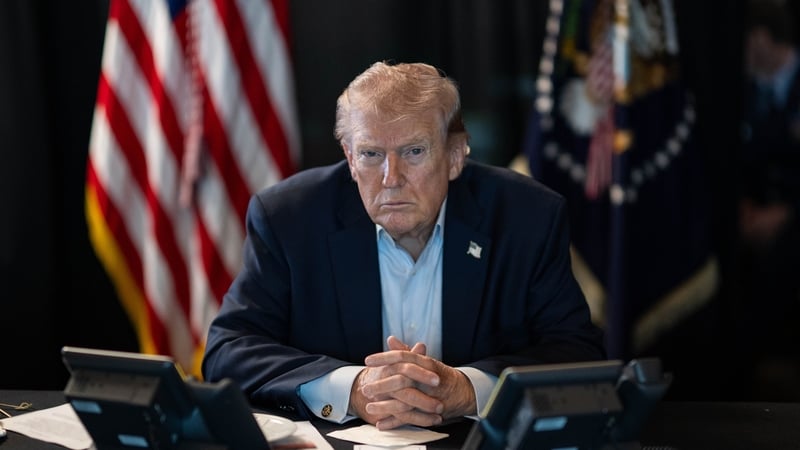

US President Donald Trump was ready to take the lead on trying to justify Operation Epic Fury from early yesterday morning.
After a weekend on the phone to US news outlets from his Florida home, Mr Trump was back in the White House and had appeared on heavyweights CNN and Fox News before many had even digested their breakfast.
The aim was to try to give some rationale when it came to the attacks on Iran following inconsistent messaging from the administration.
He told one news website that the assault could end in two or three days with a deal.
On Sunday, that changed to four or five weeks "if necessary" when he spoke to the New York Times.
By the time yesterday morning rolled around, he told CNN's Jake Tapper that the US was "ahead of schedule" as it was "knocking the crap" out of Iran.
Lunchtime hit and the timeline changed again.
"We projected four to five weeks, but we have the capability to go far longer than that," he said at the White House.
A day to provide clarity had spiralled into more questions than answers.
The comments came as a new CNN poll showed that a majority of Americans disapprove of the action in Iran and most believe that Mr Trump does not have a clear plan.
The president later dismissed the survey saying he does not care about polling.
Other administration officials were dispatched across Washington and neighbouring Virginia following relative silence over the weekend.
Defence Secretary Pete Hegseth was the first out of the traps, passionately defending the president.
He said Mr Trump had all the "latitude in the world" to talk about how long it may or may not take.
In the first press briefing since the assault, Pete Hegseth outlined what he described as a "clear" three-part mission against Iran while he insisted that this was not going to be another messy, endless war for the United States in the Middle East.
In a forceful speech from the Pentagon podium, occasionally snapping at reporters, he said Operation Epic Fury aimed to destroy Iran’s offensive missile capabilities, cripple its navy and stop Tehran from obtaining a nuclear weapon.
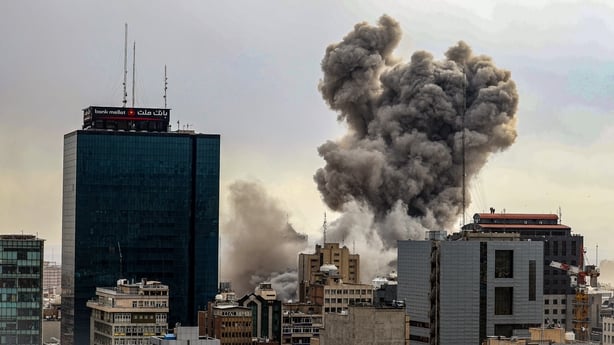
Meanwhile, the Secretary of Defence was on Capitol Hill with other intelligence and defence leaders to give top Congressional leaders, known as the 'Gang of Eight’, a classified briefing.
Speaking to reporters ahead of the meeting, he implied that the United States was drawn into this action and ordered pre-emptive strikes out of concern about Iranian retaliation after an Israeli attack.
"We knew that there was going to be an Israeli action," he said.
"We knew that that would precipitate an attack against American forces, and we knew that if we didn’t pre-emptively go after them before they launched those attacks, we would suffer higher casualties."
It was a new element to a growing list of reasons and motivations behind the administration’s reasons to launch this joint military attack on Iran with Israel. Democrats soon criticised the administration for repeatedly changing the operation’s goals.
The final and most crucial piece to the messaging puzzle was one of the administration’s most polished media performers, the US vice president.
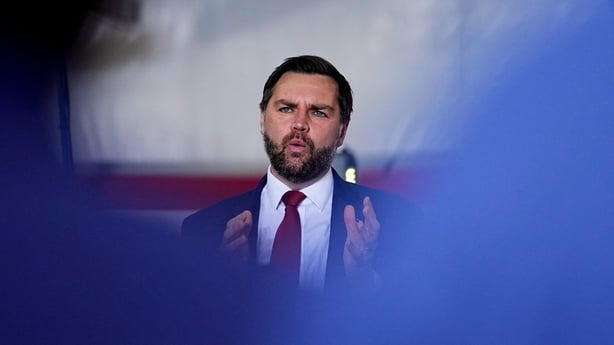
JD Vance, a vocal America First politician and sceptic of war with Iran, argued in October 2024 that "our interest, I think very much is not going to war with Iran".
Pictures were released by the White House of JD Vance seated at the head of the table in the White House Situation Room monitoring the progress of Operation Epic Fury.
However, the vice president has built his political identity on resisting foreign entanglements and his silence all weekend got tongues wagging.
There was no public support since the president decided to take action. No commiserations about the US service members who have been killed. No congratulations on the killing of the supreme leader.
That silence was broken on Jesse Watters Primetime on Fox News late last night.
He said the US was not going to get into a conflict that will drag on for years and added that the president had one clear objective: to make sure Iran could never have a nuclear weapon.
Even as the White House insists that the mission is clear, the question lingers as to whether its shifting and multi-layered rationale is convincing the country, or even JD Vance, that this was the right thing to do.