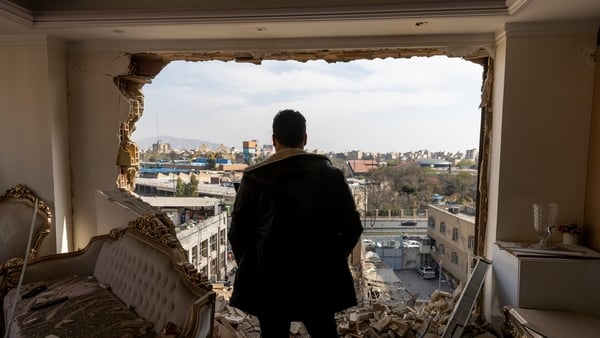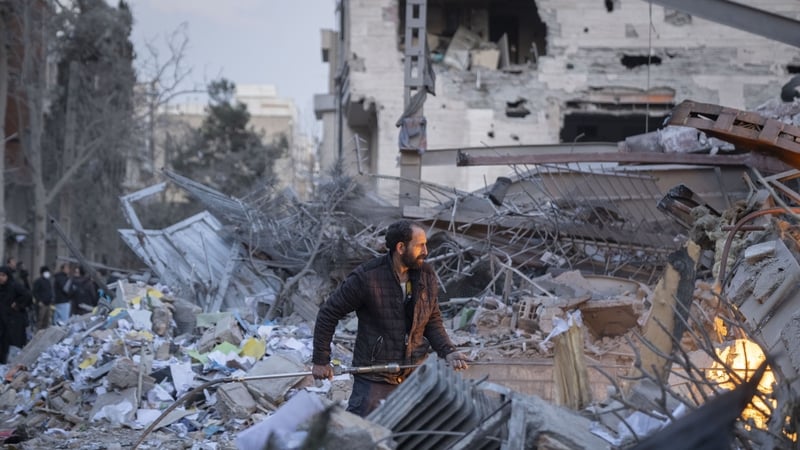

This war has entered its fourth day, and has already spread across the Middle East and to European territory in Cyprus.
As energy prices spike, financial markets wobble, and international flights stay on the ground, everybody is wondering what is likely to happen next.
I spent a day calling around experts in the United States, the Middle East and Europe to canvass their expertise.
A lawyer with the Israel Law Center in Tel Aviv, Nitsana Darshan-Leitner, told me Israel and the United States are unlikely to commit to boots on the ground.
Their preference, she said, would be to work with someone from the Ayatollah's regime, citing Venezuela as a model.
"There will be someone - probably from the military, maybe someone from the Revolutionary Guard, someone from Al Quds Force - someone that will understand that they have no choice, no other option, to survive and reach an agreement with President Trump," she said.
In the meantime, she added, the escalation of the conflict provides a chance for Israel to pursue some of its own regional objectives.
"Not only is Israel going full force in Lebanon, destroying all the Hezbollah bases, launchers, missiles in south Lebanon," she said, "they're also going after the leaders".
"This is an opportunity of a lifetime," she said, "to destroy Hezbollah."
Other experts said the Venezuela template was unlikely to work in Iran - a far larger and more complex state.
"You have an Iranian government that feels that its back is against the wall and we can't rule out the possibility that someone within the system will reach out to the US and try to find an off ramp," said Senior Iran analyst with the International Crisis Group, Naysan Rafati.
"But between where the Iranians are and what the US has stated as its end game, we are some way away from anything like that," he said.
In the meantime, analysts anticipate an aerial bombing campaign lasting several weeks if not months, with high civilian casualties - citing Gaza, rather than Venezuela, as a more realistic comparison.
That could lead to the regime consolidating, rather than relinquishing its control over the population.
"These type of air wars tend to create a rallying around the flag phenomenon," said Trita Parsi, from the Quincy Institute for Responsible Statecraft, noting that 100 school children had been killed on the very first day of the war.
"Now, in the case of Iran, the starting point is very bad for the theocracy, mindful of how unpopular it is," he added, "but nevertheless, the more innocent people are being killed, the more likely it is that we're going to see that rallying around the flag."
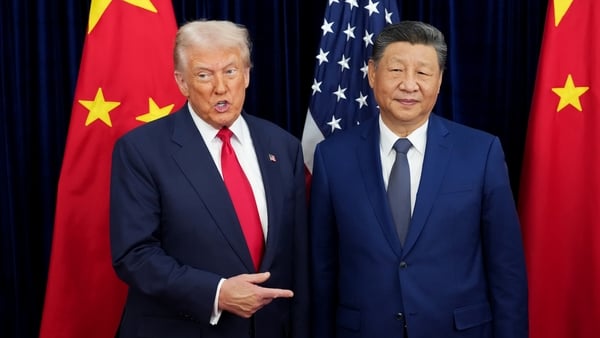
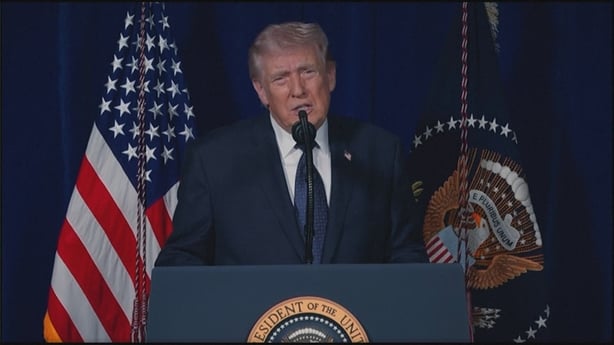
US President Donald Trump has called on the Iranian people to rise up and take control of the country. But without serious and sustained support from external actors, dissent is likely to be crushed with brute force, according to Judith Jacob, director of geopolitical risk at Forward Global risk management firm in Paris.
"Groups have managed to take to the streets multiple times before, and have been sufficiently suppressed by the regime very, very quickly," she said.
"Even a battered regime may still be able to win that fight, simply because the opposition does not seem to be particularly well organised as a militia and does not seem to have access to the level of weaponry that would be required to launch an overthrow.
"Anybody taking to the streets to protest or overthrow the Iranian regime is unlikely to be met with anything other than a very violent reaction, and therefore lots of bloodshed on the streets," she added.
The regime appeared to be conserving its firepower, analysts said, in order to continue a sustained campaign against Gulf states, to draw them into the conflict and maximise pain.
One immediate effect of that was the shattering of the Gulf’s image of a safe place to do business, Ms Jacob said.
"Our clients are starting to have to think quite deeply about how they're going to subsequently structure their presence in the region," she said, "particularly if a rump and very hostile Iran continues to persist, because you will see sporadic attacks in the years ahead or months ahead."
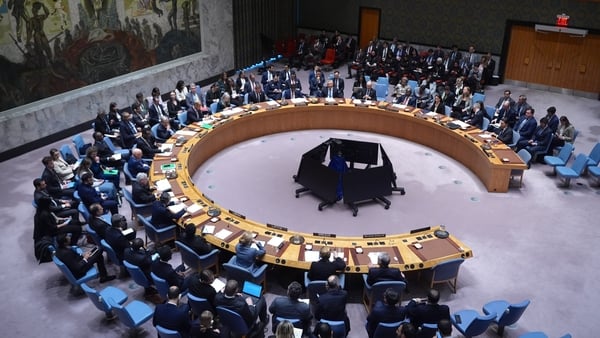
Beyond the region, this war will have a deleterious effect on the global order, according to Mr Parsi.
"Much of Europe - not Ireland, not Spain, not Norway - but much of Europe has completely abandoned international law," he said, "and this will backfire ultimately on Europe itself."
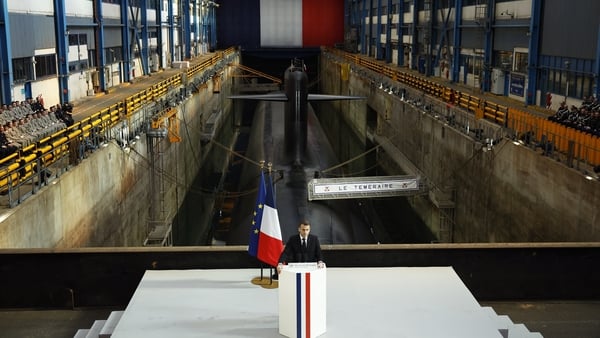
"We're already seeing that this war - that several European states expressed support for - is now creating an acute gas and energy shortage in Europe," he added, "which will probably force Europe to increase imports from Russia."
"And you just have to wrap your head around the strategic genius of such a move."