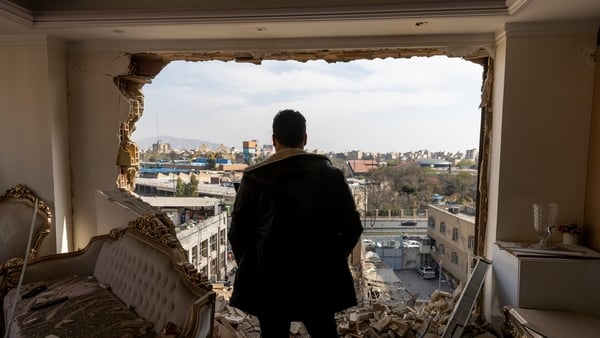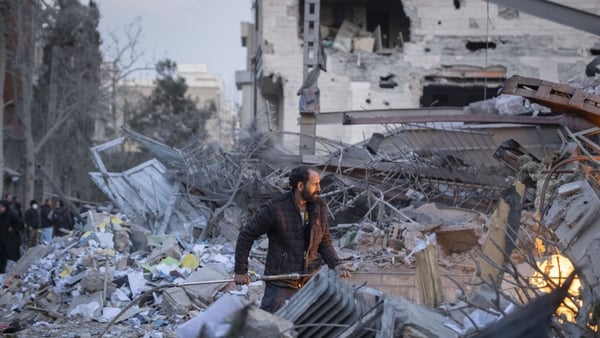

Operation Epic Fury may have been some time in the planning, but many Americans were taken by surprise when it was carried out in their name this weekend.
One New Yorker told RTÉ News that waking up to the news that his country had launched war on Iran had left him perplexed.
"No one in my circle ever talks about Iran," he said, shaking his head. It also made him feel less safe.
"I'm not sure about gathering in public spaces right now," he said.
Another local asked whether President Donald Trump was going to address the nation on what was, by any standards, a momentous day.
He did not.
In fact, his video post on social media as the strikes began was directed more at the Iranian people than his own.
"To the proud great people of Iran, I say tonight that the hour of your freedom is at hand," he said.
It was a written post that later broke the news of the killing of Iran’s supreme leader.
"Khamenei, one of the most evil people in history, is dead," he wrote.
This is different to the run up to the Iraq war in 2003.
Back then, there was a concerted effort to bring the American public, and indeed the international community, onside.
The case for war, however flawed, was clearly laid out.
Who can forget then Secretary of State Colin Powell’s speech to the UN Security Council, during which he held up a tiny vial of what he said could hold biological weapons of mass destruction?
And while there were echoes of that this week - when Donald Trump said Iran could already hit US bases overseas and eventually develop the capability to strike the US mainland - it was very far from the centre of US political debate.
Until yesterday, the dominant story in the United States was the Epstein Files.
On Tuesday, US Democratic Senate majority leader Chuck Schumer, following a war briefing from Secretary of State Marco Rubio, said the US administration needed to make its case to the American people.
That appeared to have gone unheeded, leaving many Americans wondering what this is all about.
From those Republicans, who remained wedded to Mr Trump’s election promise to end "forever wars" in the Middle East and put "America First," there was condemnation.
Right-wing commentator Tucker Carlson called the attack "absolutely disgusting and evil".
He added it would have a significant effect on Mr Trump's political movement.
"This is going to shuffle the deck in a profound way," he said.
Marjorie Taylor Greene, former Republican congresswoman and bastion of the MAGA wing, lashed out on social media.
"Thousands and thousands of Americans from my generation have been killed and injured in never ending pointless foreign wars and we said no more," she wrote, "but we are freeing the Iranian people, please".
She did not stop there.
"There are 93 million people in Iran, let them liberate themselves," she wrote. "But Iran is on the verge of having nuclear weapons. Yeah sure."
"It's always a lie and it’s always America Last," she continued. "But it feels like the worst betrayal this time because it comes from the very man and the admin who we all believed was different and said no more."
However, other Republicans applauded the attacks.
Senator Lindsey Graham said it was the most consequential decision any US president had made for decades.
"Because of President Trump's understanding of the evil nature of this regime, he has set in motion its demise," he said.
Congressman Rick Scott put it more bluntly.
"If you threaten the United States, if you threaten our allies, you lose," he said.
"The red, white and blue wins."
US and Iran envoys clash at United Nations
Iran and the United States have no direct diplomatic relations (the Iranian regime called the United States "the Great Satan," and Israel "Little Satan").
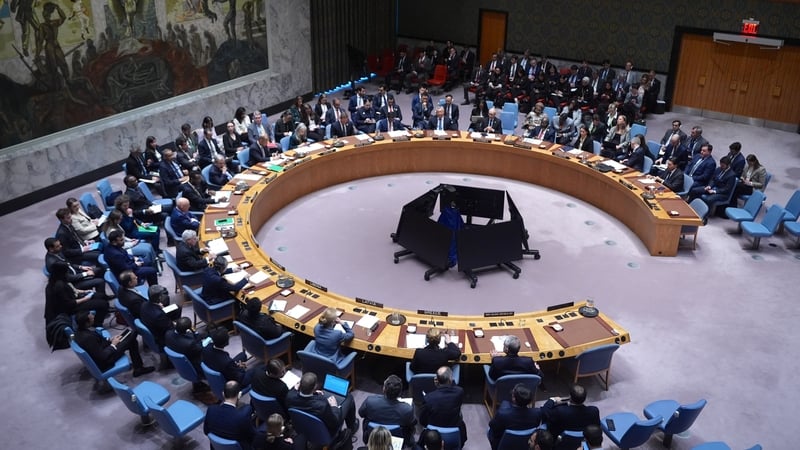
One of the only places the two countries come face to face is in New York at the UN Security Council.
In a hastily convened emergency session yesterday afternoon, US Ambassador Mike Waltz laid out the casus belli, albeit after the fact.
Operation Epic Fury was aimed at "specific and strategic" objectives, he said, to dismantle missile capabilities that threaten allies, degrade naval assets used to destabilise international waters and disrupt the machinery that arms proxy militias.
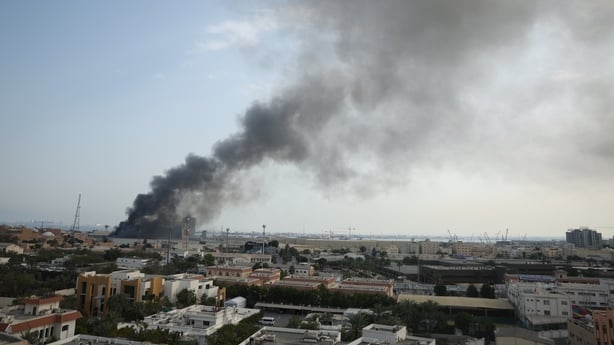
Iran's support for violent proxies - including the Houthis, Hezbollah and Hamas - had brought bloodshed and disorder across the Middle East, he told the council, "for far too long".
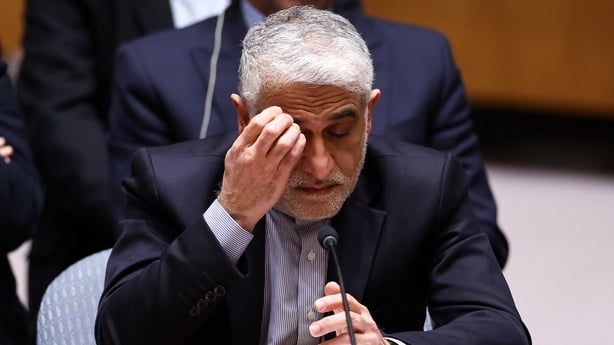
When he took the floor, Iran's Ambassador Amir Saeid Iravani accused Israel and the United States of deliberately attacking civilian populated urban areas.
"This is not only an act of aggression, it is a war crime and a crime against humanity," he said, adding the strikes were a violation of international law.
In a rare, tense exchange, the US envoy asked to respond to the Iranian's remarks.
Mr Waltz called it a "farcical assertion that US actions are inconsistent with international law".
"I advise to the representative of the United States to be polite, it will be better for yourself and the country you represent," Mr Iravani responded.
"This representative sits here, in this body, representing a regime that has killed tens of thousands of its own people," Mr Waltz retorted, "and imprisoned many more, simply for wanting freedom from your entire tyranny."
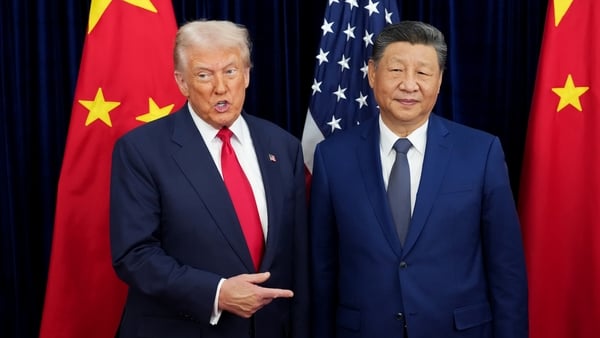
Iran's allies Russia and China expressed their condemnation of US and Israeli strikes.
The US had opened a "Pandora's box," Russian Ambassador to the UN Vassily Nebenzia told the council.
But the other permanent, veto-wielding members of the body - UK and France - trod a much more cautious path.
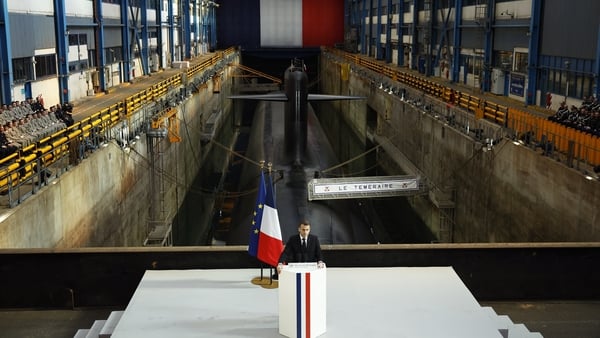
While also urging de-escalation and restraint, condemnation was reserved for Iran's retaliatory strikes on other countries in the region, which the French ambassador said France was ready to deploy the means to protect, should they request it.
Bahrain's Ambassador Jamal Fares Alrowaiei weighed in against Iran's strikes, saying his country never expected to be targeted by such "wanton aggressions without any justification".
It fell to UN Secretary-General Antonio Guterres to condemn both sides.
He urged the United States and Iran to return to the negotiating table "to pull the region, and our world, back from the brink".
"The alternative," he said, "is a potential wider conflict with grave consequences for civilians and regional stability."