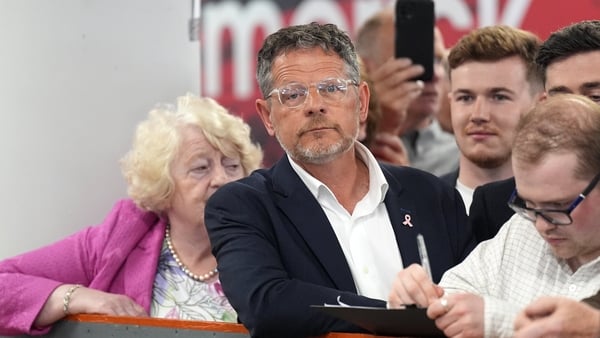

Mayor of Limerick John Moran wants council meetings recorded and available to view online.
The monthly proceedings are live-streamed but those who wish to view them must request a login from Limerick City and County Council to gain access.
The mayor wants the local authority's affairs to be fully transparent and is putting forward a motion at next month’s meeting proposing that "all live-streamed full Council meetings be recorded in full, and that those records be published on the Council’s website within two working days".
Proceedings are unlikely to attract a large audience online, but a recent seven-hour meeting to discuss the corporate plan for Limerick would have made for interesting viewing.
An extraordinary 2,200-word blog about the meeting by Mr Moran, published on his personal website, accusing councillors of a deliberate strategy to undermine him, was widely read online and attracted national attention.
The mayor left County Hall in Dooradoyle five hours into the meeting - after taking ill - and members passed the plan in his absence, despite pleas from some to let him view the document first.
Tensions between Mr Moran and councillors have simmered since his inauguration in June 2024.
An Independent candidate, he topped the poll with 18,308 votes, some 5,000 more than his nearest challenger.
It was a resounding personal endorsement for the first-time candidate, who then had to work collaboratively with councillors, some of whom were also mayoral candidates.
The rivalry on the campaign trail continued in the council chamber and there was a certain inevitability to this recent furore.
The Mayor of Limerick is bestowed with the title of Admiral of the Shannon, but the new role has not been smooth sailing.

Mr Moran was elected with a democratic mandate. He has come up against councillors who also have a democratic mandate.
Both sides say they want to work for the betterment of Limerick, but they have their own ideas as to how best to achieve that.
The executive, councillors and staff at Limerick City and County Council have had to adapt to a new form of local government led by an executive mayor - an alternative to the old system and voted for by the people.
The mayor is not an experienced politician and his route into political office was somewhat unconventional.
He trained as a solicitor before heading to the United States where he worked as a Wall Street lawyer and an international investment banker.
In 2004, Mr Moran took French lessons at La Sorbonne in Paris before opening a juice bar in the south of France.
He first came to national prominence in 2010, when he was appointed secretary general of the Department of Finance, where the minister in charge at the time was Michael Noonan, a fellow Limerick man.
It is not a background that equipped him for the inevitable disputes and political manoeuvring that can, at times, characterise local politics.
Limerick’s mayor doesn’t have the skill set of a professional politician and his style of leadership has sometimes risked alienating colleagues on the council.
Professor Maura Adshead, Head of Community Engagement at University of Limerick, said the legislation that established the role of directly-elected mayor "provides an opportunity for a person with bright ideas and a clear vision for Limerick, someone who’s good at politics with a small ‘p’, in other words, someone who can build consensus around a shared vision, in order to manifest coalitions of support in the pursuit of positive change for Limerick".
Mr Moran has bright ideas and a clear vision but building consensus with councillors is key to achieving that positive change.
His ambitions are unlikely to be realised if all council members do not work collaboratively.
The legislation
Limerick is the testing ground for this project in local democracy and is being watched closely.
When the legislation was first introduced, those in favour of devolved powers criticised it for not going far enough.
Others were more cautious about change and wanted to grant limited powers that could be reviewed later.
The Government chose the latter option.
"It is an incremental approach to change that is typical of Irish policy making and attempting reform to local government was no different," Prof Adshead said.
Following the recent controversy in Limerick, there have been calls for the legislation to be reviewed.
The Local Government Act 2024 sets out the mayor’s executive functions and governance arrangements as well as oversight and accountability structures.
It provides for a five-year term and encompasses roles previously exercised by the chief executive of the council, including responsibility for housing, transport, strategic planning and economic development.
The directly-elected mayor works alongside elected councillors who retain legislative as well as oversight functions.
However, Fianna Fáil TD for Limerick City, Willie O'Dea, said the legislation is unclear and has resulted in "confusion" and a "serious difference of opinion" as to where one party's power stops and the other starts.
He said it does not set out the functions of the councillors "who were also directly elected democratically", the mayor and the executor.
"If this experiment is to be replicated elsewhere around the country, and if it is to work properly in Limerick in the future, legislative change is an essential prerequisite," he said.
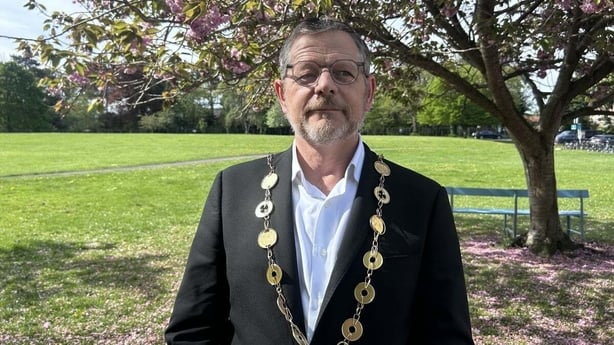
Prof Adshead said that while the mayor was granted a key role in strategic planning, "in fact he has no independent powers of his own".
"It seems that the powers that the authors of the legislation had in mind were soft powers.
"In other words, the mayor would be a local figurehead, a person of influence and authority, but a person whose influence and authority could only be used in the context of pre-existing local government architecture, policymakers and politicians," she said.
Minister and local Fine Gael TD Patrick O'Donovan also said: "There is a need for a very quick review of the legislation".
Tánaiste Simon Harris visited Limerick in the wake of the row and said it is the Government’s intention to commence that review "shortly".
"This is the first place in the country where we have a directly elected mayor and built into the legislation is a review.
"If you do anything for the first time, there will always be areas that may need to be refined, people might have views on what’s working well, what could work better.
"I think it’s important that everybody takes stock here and has an honest conversation," he said.
What the legislation does not provide to the mayor, according to Prof Adshead, "is the political or financial independence to go it alone without the support of existing local government policy-makers and politicians".
So the question is, will the Government be willing to provide Mayor Moran with that independence following the review, and how will it go down with councillors if he had the independence "to go it alone" without their support?