
You could be forgiven for thinking we've been here before. Last June, the United States struck three Iranian nuclear facilities - its only direct military involvement in a conflict between Israel and Iran that later became known as the 12-day war.
In an operation dubbed Operation Midnight Hammer, B-2 bombers carrying so-called bunker-buster bombs targeted the facilities at Fordow, Natanz and Isfahan. It was over almost before anyone knew it had begun.
Defence Secretary Pete Hegseth later remarked that the bombers "went in and out and back without the world knowing at all".
It was the first US strike on Iranian soil since a naval offensive in 1988 that destroyed roughly half of Iran's naval fleet in the Persian Gulf.
In announcing the June operation, between the threats, bluster and tough talk, President Trump was at pains to frame it as limited and surgical - intended to set Iran's nuclear ambitions back, nothing more. The mission was over. The US was not looking for a war, unless Iran decided it wanted it.
That was then.
This morning’s operation is of an entirely different order. The United States and Israel have struck not just military installations but political ones - including, according to multiple reports, the area of Tehran where Supreme Leader Ayatollah Ali Khamenei has his offices.
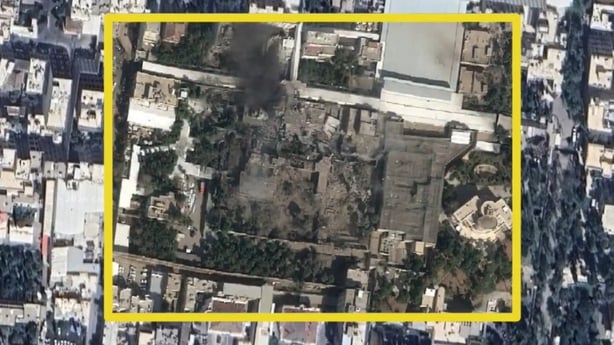
Multiple US officials are briefing American media outlets to suggest that the goal is to decapitate the Iranian regime entirely.
And the scale of ambition is written into the language. This is not Operation Midnight Hammer - a hammer, for all its force, is a tool of precision. It strikes at a single point and withdraws.
This is Operation Epic Fury.
Speaking in a video released on his Truth Social platform, US President Trump did not pretend otherwise.
"A short time ago," he said, "the US military began a major combat operation in Iran. Our objective is to defend the American people by eliminating imminent threats from the Iranian regime."
He spoke of annihilating Iran's navy and razing its missile industry "to the ground". He told the Iranian people: "The hour of your freedom is at hand."
Israeli Prime Minister Benjamin Netanyahu was equally unambiguous.
He called on Iranians to "cast off the yoke of tyranny", promising that the joint operation would "create the conditions for the brave Iranian people to take their destiny into their own hands".
In other words, this is regime change - stated plainly, pursued openly, and without apology.
Whether air strikes alone can achieve that is another question. The lessons from Iraq and Libya suggest that air power can destroy a regime’s infrastructure, but it cannot, by itself, determine what comes next.
Mr Trump appears to understand this, at least implicitly. In telling the Iranian people that their freedom is "at hand", he has suggested that the completion of this mission will fall to them.
RTÉ Deputy Foreign Editor Edmund Heaphy live on RTÉ News
It is, in its way, an outsourcing of the hardest part - a regime that has survived revolution, war, sanctions and assassination is unlikely to read Mr Trump's Truth Social post and conclude that the game is up.
The assumption, apparently, is that the Revolutionary Guards will set down their weapons, fold their uniforms neatly, and hand the keys of the presidential palace to the nearest available Iranian.
What makes this gamble all the more remarkable is that, just 48 hours ago, diplomats from both sides were sitting in Geneva.
Those negotiations now look, depending on your vantage point, like either a diplomatic failure or a diplomatic fiction.
Iran's critics will argue, with some justification, that Tehran was foolish not to offer more, that its refusal to countenance any discussion of its ballistic missile programme gave Washington the pretext it needed for today’s operation.
Iran will argue, with equal justification, that the talks were always a sham - that the USS Gerald R Ford, the world’s largest aircraft carrier, was already heading for the Middle East before the delegations had even left Geneva, and that no concession short of complete capitulation would have satisfied an administration that had already made up its mind.
The troubling thing is that both arguments have merit. And that, perhaps, is the point - when two entirely contradictory readings of the same events are equally plausible, it tells you something about the nature of the diplomacy involved.
What is beyond dispute is that the wider region did not want this.
Gulf states that have spent years cautiously rebuilding ties with Tehran saw no compelling case for military action.
They had watched Iran's position weaken steadily - through sanctions, through the losses of last year's 12-day war, through the nationwide protests that brought hundreds of thousands onto the streets in the past few months. Iran, in their assessment, was already on its knees.
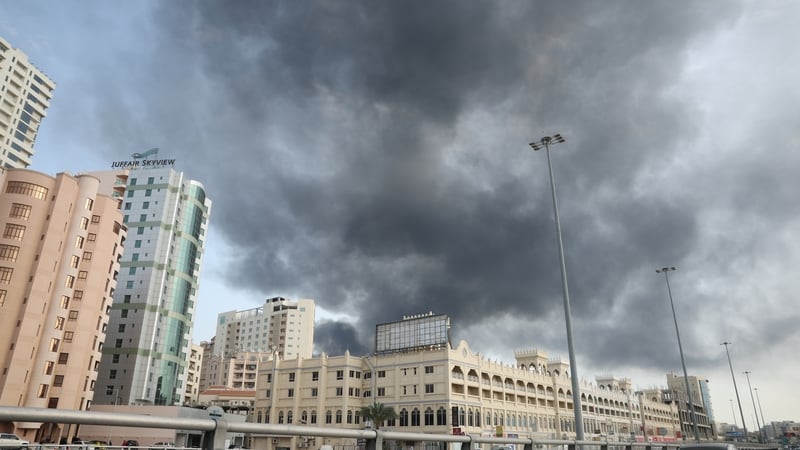
They are now paying the price for a decision that was not theirs to make. Iranian missiles struck targets in Qatar, Bahrain and the UAE this morning - American allies, dragged into a conflict not of their choosing.
For the Iranian regime, the calculus is now brutally simple. It cannot confront the United States directly.
What it can do - what it has already begun to do - is cause maximum regional chaos, draw in as many actors as possible, and make the cost of this operation as high as it can.
Its goal, above all else, is the survival of its regime. And if it cannot win, it will make absolutely certain that winning comes at a price.
Follow live updates: Oman tells US 'this is not your war' after Iran strikes