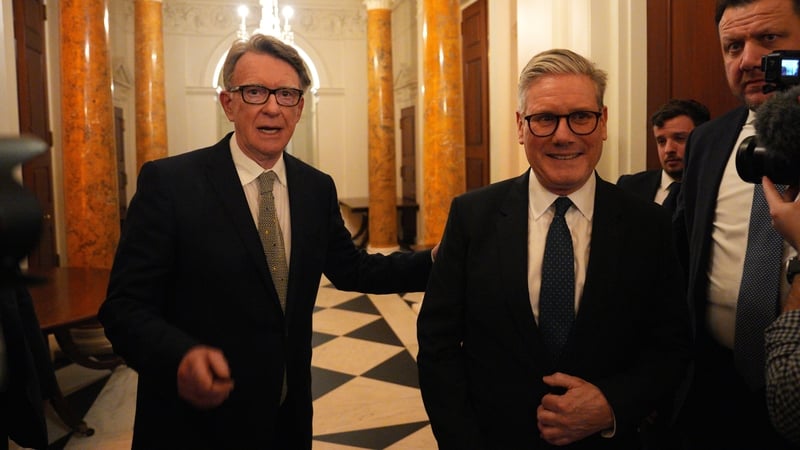

Political scandals usually follow a script. Someone close to power falls from grace - a minister, an adviser, an ambassador. The leader expresses shock and disappointment.
They insist they didn't know - and often they’re telling the truth. The damage is real but containable, because it amounts to a failure of judgement, not character. It’s trust misplaced, rather than knowingly granted to someone compromised.
British Prime Minister Keir Starmer cannot say he didn’t know about Peter Mandelson when he appointed him as ambassador - because everyone knew about Peter Mandelson.
They knew he had been forced to resign from Tony Blair’s cabinet in 1998 over an undeclared £373,000 loan from a wealthy colleague.
They knew he had clawed his way back, only to resign again in 2001 amid allegations he had used his position to help a billionaire secure a British passport.
They knew about his decades-long fascination with the wealthy and powerful, his comfort in their company, his willingness to overlook inconvenient truths when the inexhaustible glamour of money was involved.
And they knew - because it had been public knowledge since at least 2019 - that he had maintained a friendship with Jeffrey Epstein, the convicted child sex offender, even after Epstein’s imprisonment.
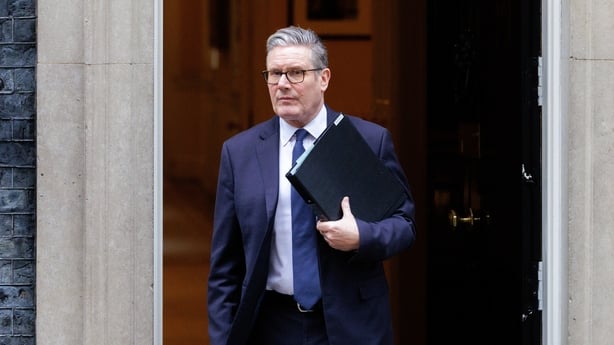
Mr Starmer has tried to claim that Mr Mandelson lied to him about the depth of that relationship. But everyone knew that Peter Mandelson lies. It’s not a character flaw that caught his colleagues by surprise - it’s the kind of thing that earned him the nickname the Prince of Darkness.
Appointing a man who is known for treating the truth as something to be negotiated with - and then claiming you were lied to - is hardly a good defence.
And that is precisely why there is a growing sense - among Labour MPs, among political journalists, even among those who helped deliver his landslide just 18 months ago - that Keir Starmer’s days in Downing Street are numbered.
What makes the Mandelson scandal all the more damaging, of course, is that this is not an isolated misstep - but rather the latest episode in a relentless succession of troubles that has left the prime minister’s authority in tatters.
But this scandal has ensnared not just the prime minister, but his closest advisor - a Corkman who wields so much influence that Labour MPs have openly questioned who is really in charge in Downing Street.
Morgan McSweeney, Mr Starmer’s Chief of Staff, would be damaged by association alone.
But his problems run deeper: according to multiple accounts, he personally spearheaded Mr Mandelson’s appointment, championing it despite raised eyebrows from senior colleagues and concerns from the British Foreign Office.
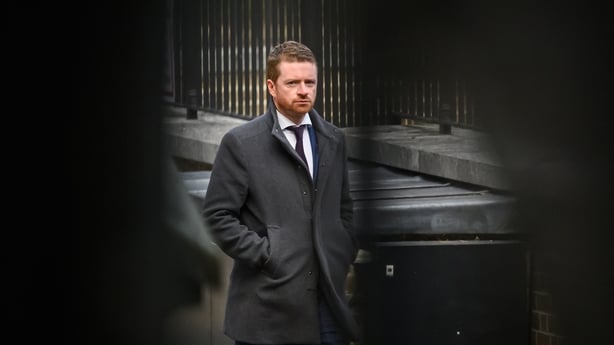
This was no idle recommendation. Mr McSweeney and Mr Mandelson have known each other for more than two decades.
In 2001, when Morgan McSweeney was a young Irishman in London, he was hired to work on the Labour Party’s opposition research database at party headquarters - a system designed to track political opponents and shape campaign messaging.
Mr Mandelson took the Macroom man under his wing, and Mr McSweeney became, in the words of a former adviser to Tony Blair, "the new Peter Mandelson".
Mr Mandelson himself once said of Mr McSweeney: "I don't know who and how and when he was invented, but whoever it was... they will find their place in heaven."
'The Trump Whisperer'
Worse still is that Mr Mandelson's appointment displaced a perfectly capable ambassador.
Karen Pierce, the outgoing ambassador, wanted to stay in Washington. She had established a reputation as "the Trump Whisperer", and was credited with smoothing relations between the US president and Mr Starmer.
The British Foreign Office was content to keep her in post.
But Mr McSweeney was insistent that Mr Mandelson should get the job - and when cabinet ministers wanted Mr Mandelson fired in September 2025 after further revelations about his ties with Epstein became public, Mr McSweeney was initially reluctant and tried to delay the decision.
It’s therefore hard for him to avoid the perception that personal loyalty clouded his judgement.
But there is also no doubt that Mr McSweeney genuinely believed in Mr Mandelson’s ability to handle Donald Trump - and that he convinced Keir Starmer of it.
On paper, the logic had a certain cynical appeal. Mr Mandelson has spent his life cultivating relationships with the wealthy and powerful, charming billionaires and oligarchs with ease.
He understands their world - the private jets, the yachts off Corfu, the comfortable proximity to vast wealth.
If Mr Trump respects anything, it’s the performance of power and the trappings of money. Why not fight fire with fire? Why not send someone who speaks the language of the global elite, who can match the US president’s transactional approach to diplomacy with his own well-honed instinct for the deal?
The problem, of course, is that one of the people he cultivated was Jeffrey Epstein - so the appointment came loaded with risk.
And, as others have noted, the problem with taking risks like this is that they have to pay off.
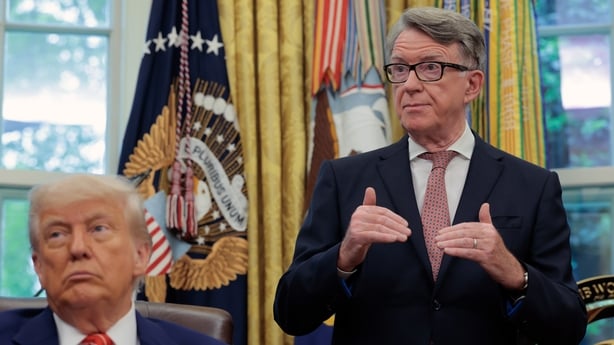
But framing this as a calculated risk gone wrong misses something deeper. The Mandelson appointment reveals how Keir Starmer’s government actually operates - and Mr Mandelson's own memoir, published in 2010, offers an unwitting guide to understanding it.
"The Third Man" was meant to cement Mr Mandelson’s place in history as a statesman, one of the architects of the New Labour movement that swept Tony Blair to power in 1997.
Instead, it exposed what he had always been: someone whose power existed only through proximity to those who actually wielded it, a man desperate for validation, forever chasing the legacy of his grandfather, who served in Clement Attlee’s post-war Labour government.
He was so desperate for validation, in fact, that Mr Mandelson sent a draft of the memoir to Jeffrey Epstein for feedback. In emails released by the US Department of Justice last week, Epstein’s verdict was withering: the book was "gossipy and defensive" and "troubling".
While it's galling that the convicted child sex offender seemed to serve as Mr Mandelson's literary critic, beneath the gossip and defensiveness, the memoir itself laid bare a man whose entire career was spent in the shadows of power.
Mr McSweeney’s own career suggests he learned from this model - how to make himself indispensable to power without wielding it directly, cultivating influence through proximity rather than position.
The tragedy for Keir Starmer is that he seems to have outsourced his political instincts to men who operate this way.
And, now, in the quickening shadow of what feels like his government’s approaching end, he is discovering that the courtiers he relied upon have led him into a scandal from which there may be no escape.
Read more:
Who is Starmer's Irish adviser at centre of Mandelson scandal?
Mandelson quits UK's House of Lords over Epstein scandal
British MPs back plan to release files on Mandelson appointment as US ambassador
Pressure mounts on Starmer amid Mandelson controversy